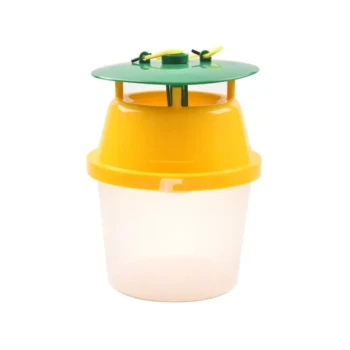
Specialized traps and bait consumables function primarily as a dual-purpose system: they physically intercept the invasive Yellow-legged hornet (Vespa velutina) while simultaneously generating critical data for apiary management. By utilizing specific attractants, such as pheromones or biological matter, these tools serve as an early-warning mechanism that allows beekeepers to track invasion pressure and distribution.
Core Takeaway While trapping offers immediate physical relief by reducing predator density, its strategic value lies in monitoring. It transforms anecdotal sightings into actionable data, enabling beekeepers to gauge infestation levels and trigger necessary mechanical interventions like nest removal.
The Mechanics of Physical Control
Scent-Based Interception
The foundational mechanism of these tools is scent attraction. Traps utilize specialized consumables, such as specific pheromone baits or biological materials like meat and organic matter, to lure the target.
By mimicking food sources or communication signals, the system draws hornets away from honeybee colonies and into the capture device.
Reducing Predatory Density
Once the hornet enters the trap, the device functions as a method of physical control.
This interception precisely reduces the number of active predators surrounding the apiary. Lowering this density decreases the immediate predatory pressure on honeybee colonies, serving as a vital line of defense for maintaining colony safety.
The Strategic Role of Monitoring
Early-Warning Detection
Beyond simple elimination, these traps act as essential early-warning tools.
They provide the first concrete evidence of the hornet's presence in a specific area. This allows beekeepers to identify the onset of an invasion before it becomes visible through colony losses.
Tracking Invasion Pressure
Consumable baits enable beekeepers to quantitatively assess the distribution and intensity of the threat.
By monitoring capture rates across different high-risk zones, apiary managers can determine the "invasion pressure." This data reveals whether the predator population is sporadic or establishing a dense foothold in the region.
Enabling Further Intervention
Triggering Nest Removal
The data gathered from monitoring traps is not an end in itself; it is a catalyst for mechanical nest removal.
High capture rates in specific sectors help triangulate the location of hornet nests. This intelligence allows for targeted destruction of the colony's reproductive center, which is the most effective long-term control measure.
Understanding the Limitations
The Necessity of Maintenance
Bait consumables are not "set and forget" solutions; their efficacy relies on freshness and potency. Beekeepers must regularly replenish pheromone or biological baits to maintain the scent attraction required for accurate monitoring.
Trapping vs. Eradication
It is critical to understand that traps alone are rarely sufficient to eradicate an established population. They are a management tool designed to suppress numbers and provide intelligence, rather than a standalone solution for total elimination.
Making the Right Choice for Your Goal
To maximize the effectiveness of specialized traps and baits, align your usage with your specific management objectives.
- If your primary focus is Threat Assessment: Deploy traps in a wide perimeter to function as sentinels, prioritizing data collection on distribution over mass capture.
- If your primary focus is Colony Defense: Concentrate traps directly around the apiary perimeter to maximize the physical reduction of predator density and relieve immediate stress on the bees.
By integrating these tools as both a shield and a sensor, you gain the upper hand in managing the Vespa velutina threat.
Summary Table:
| Feature | Primary Function | Strategic Value |
|---|---|---|
| Scent-Based Lures | Attracts hornets using pheromones/biology | Minimizes predation on honeybee colonies |
| Physical Traps | Intercepts and captures active predators | Reduces immediate predatory density |
| Monitoring Data | Tracks distribution and invasion pressure | Acts as an early-warning detection system |
| Strategic Intelligence | Triangulates colony locations | Triggers targeted mechanical nest removal |
Protect Your Colonies with Professional-Grade Solutions
As the invasive Vespa velutina continues to threaten global honeybee populations, HONESTBEE provides the tools you need to fight back. We cater to commercial apiaries and distributors with a comprehensive wholesale offering designed for large-scale pest management.
Our portfolio includes high-efficiency traps, specialized consumables, and advanced hardware—from hive-making to honey-filling machinery. Partner with HONESTBEE to access expert beekeeping equipment and industrial consumables that empower your business to maintain healthy, productive apiaries.
Ready to scale your defense? Contact us today to explore our wholesale catalog!
References
- Fiammetta Remotti, Andréa Pieroni. ‘The rules of nature are changing; every year is unpredictable’: perceptions of climate change by beekeepers of Liguria, NW Italy. DOI: 10.1007/s10113-024-02242-3
This article is also based on technical information from HonestBee Knowledge Base .
Related Products
People Also Ask
- What is the function of Pheromone Traps in the biosecurity monitoring of apiaries? Precision Tools for Pest Control
- What role do Pheromone Traps play in the IPM for Large African Hive Beetles? Essential Surveillance & Control Tips
- How do professional wasp traps function? Master Physical Control of Oriental Hornets to Protect Your Apiary
- What are the practical advantages of using professional wasp traps and protective equipment in apiary management? Scale Up
- Why replace sugar syrup bait in wasp traps every three days? Ensure Maximum Attraction and Catch Rates