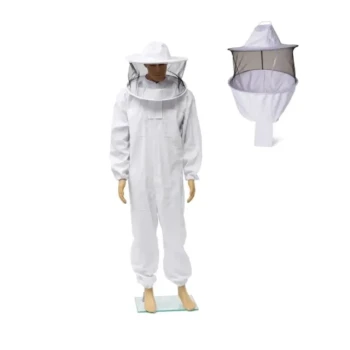
The single most critical requirement for a child's beekeeping veil is the integrity of the seal where the equipment meets the body. To ensure safety, the veil must be properly secured using strings that are pulled tightly against the child's torso. This tension is necessary to eliminate any gaps that could allow bees to slip under the fabric and reach the face or neck.
Safety relies entirely on eliminating entry points. A child's veil must be tied securely with strings to close all gaps between the fabric and the body, preventing bees from crawling underneath.
The Mechanics of a Safe Seal
The Necessity of Tight Strings
The primary mechanism for safety in a child's veil is the drawstring system. These strings must be pulled tightly against the body.
Loose strings create a false sense of security but fail to provide an actual barrier. The tension must be sufficient to hold the fabric flush against the child's clothing.
Eliminating All Gaps
The ultimate goal of securing the veil is to ensure no gaps are present. Bees are naturally inclined to crawl upwards and will exploit even the smallest opening at the bottom of a veil.
If the veil is not flush against the body, bees can easily slip underneath. Once inside, they have direct access to the child's face and neck, which are the most vulnerable areas.
Common Pitfalls to Avoid
Misjudging the Fit
A common error is assuming that simply wearing the veil provides protection. If the strings are tied loosely for comfort, the protective function is compromised.
Overlooking Movement
Children move differently than adults, and their movement can shift the veil. If the strings are not secured tightly enough to withstand movement, gaps can appear while the child is active, instantly reducing safety.
Ensuring a Safe Experience
To maximize protection for a child entering the apiary, follow these specific guidelines:
- If your primary focus is preparation: Verify that the strings are pulled tightly enough to press the veil fabric firmly against the body before approaching any hives.
- If your primary focus is prevention: Inspect the seal to ensure there are zero visible gaps that could allow a bee to bypass the veil and reach the neck or face.
A properly secured veil is the foundation of a child's confidence and safety in beekeeping.
Summary Table:
| Safety Feature | Critical Requirement | Purpose |
|---|---|---|
| Seal Integrity | Zero visible gaps between fabric and body | Prevents bees from crawling upward under the veil |
| Closure System | Heavy-duty drawstrings or elastic | Ensures the fabric stays flush against the torso |
| Fit & Tension | Tight enough to withstand active movement | Maintains protection as the child moves or bends |
| Vulnerable Areas | Face and neck coverage | Protects the most sensitive areas from direct stings |
Secure the Future of Beekeeping with HONESTBEE
Safety is the foundation of a great beekeeping experience, especially for the next generation. As a leading partner for commercial apiaries and distributors, HONESTBEE provides the professional-grade beekeeping tools, machinery, and safety equipment you need to scale your business. From child-safe protective gear to advanced honey-filling machines and unique honey-themed merchandise, our comprehensive wholesale offering is designed to meet every industry demand.
Ready to equip your business with the best in beekeeping hardware and consumables? Contact HONESTBEE today to discuss our wholesale solutions and how we can add value to your supply chain!
Related Products
- Beekeeper Cowboy Hat and Veil for Beekeeping
- White Cotton Beekeeping Jacket and Veil for Bee Keepers
- Professional Square Folding Wire Mesh Beekeeping Veil
- Premium Cotton Beekeeper Suit with Reinforced Fencing Veil
- Premium Cowboy Beekeeper Hat with Visibility Veil Outdoor Professional Beekeeping Protective Gear
People Also Ask
- What is the correct way to wash a beekeeping hat and veil? Safe Hand-Washing Guide to Protect Your Gear
- What are the components and importance of a beekeeper's hat and veil? Essential Safety Gear for Apiary Success
- What are the differences between a separated and an attached beekeeping hat and veil? Security vs. Versatility
- What are the design specifications for an effective beekeeping hat and veil? Professional Standards for Protection
- What is the function of a beekeeping hat and veil? Essential Protection for Safe Hive Management