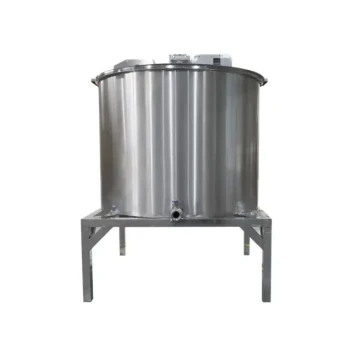
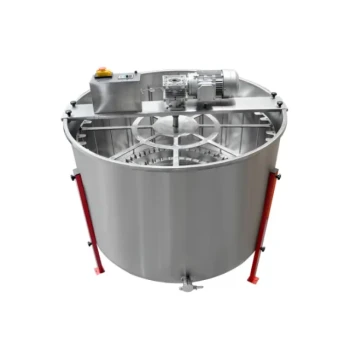
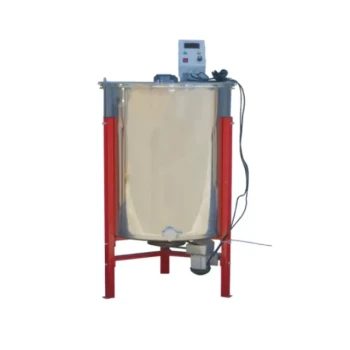
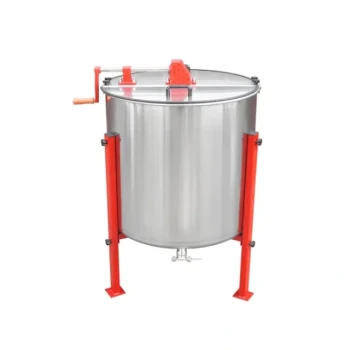
Honey extractor machines fall into three primary categories: manual, electric, and radial. The distinction lies in how the machine is powered and how the frames are arranged, which directly dictates the speed of extraction and the physical labor required from the beekeeper.
The ideal extractor balances your production volume against your budget. Manual units suit hobbyists willing to trade labor for lower costs, while electric and radial models are necessary investments for scaling operations and maximizing efficiency.
Categorizing by Power and Design
Manual Extractors
These machines represent the entry point for honey extraction. They are the most budget-friendly option available, making them the standard choice for hobbyists or those just starting with a few hives.
However, they require significant physical effort. The operator must hand-crank the mechanism to spin the frames, which makes the process labor-intensive and time-consuming.
In terms of throughput, a manual extractor typically processes 2-4 frames in about 30 minutes. This estimate includes the necessary time for uncapping the comb and taking rest breaks.
Electric Extractors
Electric extractors are designed to replace human labor with a motor. They are the preferred choice for medium to large-scale production where time is a critical resource.
The primary advantage is consistency and speed. These machines spin at high, maintained speeds without operator fatigue, allowing for continuous processing.
The efficiency jump is massive. While a manual unit handles a few frames in half an hour, an industrial electric extractor can process up to 100 deep frames in just minutes, potentially extracting hundreds of pounds of honey in a fraction of the time.
Radial Extractors
While often powered electrically, radial extractors are defined by their internal basket design. They are engineered specifically for large operations with high output demands.
In a radial setup, frames are arranged like the spokes of a wheel. This allows for the simultaneous extraction of honey from both sides of the comb at once, unlike tangential models which require flipping the frames.
This design maximizes yield and minimizes handling time. It is the definitive choice for commercial setups aiming for the highest possible throughput.
Understanding the Trade-offs
The Cost of Efficiency
There is a direct inverse relationship between price and effort. Manual extractors save money but demand "sweat equity," making them impractical as soon as your hive count grows beyond a small number.
Durability and Maintenance
Regardless of the type you choose, the material quality is a non-negotiable factor. You should always prioritize stainless steel models.
Stainless steel offers superior durability and rust resistance, which is vital for food safety. It is also significantly easier to clean than other materials, ensuring the long-term purity of your honey.
Control and Stability
Speed is useless without control. When selecting a machine, look for adjustable speed settings to prevent damage to delicate combs.
Furthermore, a stable base is critical. High-speed extraction creates centrifugal force that can cause a machine to "walk" or vibrate dangerously if not properly anchored.
Making the Right Choice for Your Goal
Selecting the right equipment depends entirely on where you are in your beekeeping journey.
- If your primary focus is Budget and Small Scale: Stick to a manual extractor, which handles low volumes cost-effectively if you don't mind the physical workout.
- If your primary focus is Efficiency and Speed: Upgrade to an electric extractor to eliminate physical labor and drastically reduce the time spent per frame.
- If your primary focus is Maximum Commercial Yield: Invest in a radial extractor, as it allows you to process high volumes of frames simultaneously without stopping to flip them.
Match the machine to your hive count today, but keep your future expansion plans in mind.
Summary Table:
| Extractor Type | Power Source | Best For | Throughput Capacity | Key Advantage |
|---|---|---|---|---|
| Manual | Hand-crank | Hobbyists (1-5 hives) | 2-4 frames / 30 mins | Budget-friendly & simple |
| Electric | Motor | Medium-Large Scale | Up to 100 frames in mins | Consistent speed; low labor |
| Radial | Motor | Commercial Operations | High-volume throughput | Extracts both sides at once |
| Tangential | Manual/Electric | Small Scale | Variable | Efficient for small batches |
Scale Your Honey Production with HONESTBEE
Maximize your harvest efficiency with HONESTBEE, the premier partner for commercial apiaries and professional distributors. Whether you are scaling from a hobby to a business or managing a massive commercial operation, we provide the industrial-grade tools you need to succeed.
From high-capacity honey-filling machines and stainless steel radial extractors to specialized hive-making machinery and essential consumables, our comprehensive wholesale portfolio is designed for durability and food safety.
Ready to upgrade your honey processing line?
Contact HONESTBEE today to access our full spectrum of beekeeping equipment and cultural merchandise.
Related Products
- Stainless Steel Manual 8 Frame Radial Honey Extractor Machine for Beehives
- HONESTBEE 72 Frame Industrial Electric Honey Extractor for Beekeeping
- Commercial Electric 12 Frame Honey Extractor Spinner Motorized Honey Extractor
- HONESTBEE 6 Frame Three Use Electric Honey Extractor for Beekeeping
- 10L Stainless Steel Electric Honey Press Machine
People Also Ask
- What types of beehive frames are compatible with honey extractor machines? Find the Perfect Match for Your Apiary
- Which type of honey extractor is generally more durable? Focus on Material & Build Quality for Longevity
- What are the key features and benefits of a stainless steel honey extractor? Upgrade to Professional Purity
- Why are manual extractors popular among beginner beekeepers? A Guide to Starting Simple & Saving Money
- What are the disadvantages of a manual honey extractor? Overcome Efficiency Bottlenecks in Your Apiary