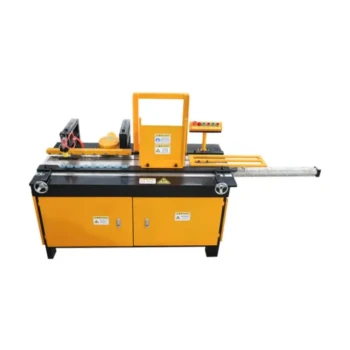
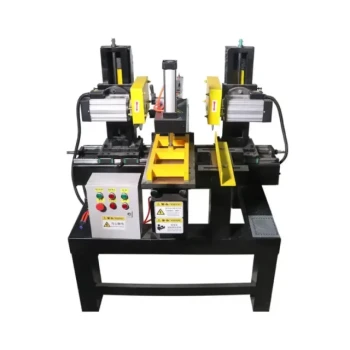
The economic viability of modern commercial beekeeping hinges on the shift from manual craftsmanship to automated precision. Automated hive-making machines drive profitability by ensuring the high standardization of internal components, which is the prerequisite for mechanized harvesting and large-scale colony management. By replacing labor-intensive manual construction with industrial precision, these systems significantly reduce operational costs while increasing the scalability of the apiary.
The core value of automation lies in interchangeability and consistency. In a commercial setting, the ability to swap parts seamlessly between thousands of hives without modification transforms beekeeping from a labor-heavy craft into a streamlined, scalable industrial process.
The Role of Standardization in Profitability
Achieving Dimensional Consistency
Manual hive production inevitably leads to slight variances in measurement. Automated machines eliminate this variable, producing components with exact dimensional consistency every single time. This precision is critical because even minor deviations can disrupt the "bee space," leading to burr comb that slows down management.
Enabling Mechanized Harvesting
Modern commercial apiaries rely on automated lines for honey extraction. These systems require hives to be uniform to function correctly without jamming or damaging equipment. Automated hive manufacturing creates the standardized infrastructure necessary to utilize these high-efficiency harvesting technologies.
Maximizing Part Interchangeability
In a large-scale operation, time spent fitting specific frames to specific boxes is lost revenue. Machine-made components ensure that every frame fits every box across the entire operation. This allows for rapid equipment rotation and simplified inventory management.
Reducing Labor Constraints and Costs
Lowering Unit Production Costs
Transitioning to industrial-grade mechanized equipment drastically lowers the cost per unit compared to manual production. It removes the bottleneck of manual "sculpting," allowing producers to generate hive equipment at a speed and volume impossible for human labor to match.
Solving Labor Shortage Issues
The beekeeping industry faces significant challenges in finding skilled labor for repetitive construction tasks. Automation fills this gap, reducing the reliance on a large manual workforce. This makes the industry more attractive to modern workers by minimizing heavy, repetitive physical labor.
Enhancing Yield and Asset Durability
Optimizing Honey Yields
Precision-made modern frame hives optimize the internal space available for honeycomb construction. Data suggests that standardizing these structures can increase average annual honey yields from roughly 5.6kg in traditional setups to over 10.8kg. This directly correlates to higher revenue per colony.
Improving Hive Longevity
Machine-cut joints and seals are often tighter and more uniform than hand-cut versions. This results in superior structural stability, which is essential for hives undergoing long-distance transport for pollination services. Furthermore, better-sealed hives improve overwintering conditions, protecting the colony and reducing livestock losses.
Understanding the Trade-offs
Initial Capital Expenditure
While operational costs decrease over time, the upfront investment for industrial hive-making machinery is significant. Smaller apiaries may find the Return on Investment (ROI) too slow compared to buying pre-made equipment or sticking to manual methods for small counts.
Dependency on Technical Maintenance
Shifting to automation introduces a new layer of complexity: machine maintenance. The operation becomes dependent on the uptime of the equipment. A breakdown in the manufacturing line can halt expansion or replacement schedules, requiring a new set of technical skills distinct from beekeeping.
Making the Right Choice for Your Scale
- If your primary focus is rapid scaling: Prioritize automation to ensure total interchangeability of parts, which is the backbone of efficient large-colony management.
- If your primary focus is operational efficiency: Leverage automated manufacturing to facilitate mechanized honey harvesting, drastically reducing the labor hours required per kilogram of honey produced.
- If your primary focus is asset protection: Use precision-made hives to ensure structural stability during transport and better environmental control for overwintering colonies.
Automation converts the hive from a variable craft product into a reliable industrial asset, laying the foundation for a high-yield, low-labor commercial enterprise.
Summary Table:
| Economic Driver | Manual Production | Automated Production | Business Impact |
|---|---|---|---|
| Dimensional Consistency | Variable (High margin of error) | Precision-engineered (±0.5mm) | Enables mechanized harvesting & part interchangeability |
| Labor Costs | High cost per unit; labor intensive | Low unit cost; high-speed output | Reduces dependency on skilled manual labor |
| Honey Yield | Average ~5.6kg per colony | Over 10.8kg per colony | ~93% increase in annual revenue per colony |
| Asset Longevity | Basic joints; prone to transport wear | Tight, machine-cut joints | Better overwintering & durable for pollination transport |
| Initial Investment | Low entry cost | Significant capital expenditure | High ROI for commercial scaling & large apiaries |
Scale Your Beekeeping Operation with HONESTBEE Precision
Transitioning from manual labor to industrial automation is the key to unlocking commercial success in the modern beekeeping industry. At HONESTBEE, we empower commercial apiaries and global distributors with the high-performance tools and machinery needed to drive efficiency and maximize honey yields.
Our comprehensive wholesale portfolio includes:
- Precision Machinery: Advanced hive-making and high-speed honey-filling machines.
- Standardized Hardware: Heavy-duty beekeeping tools and industrial-grade equipment.
- Essential Consumables: A wide array of supplies for large-scale colony management.
- Cultural Merchandise: Unique honey-themed retail products to diversify your revenue.
Ready to transform your apiary into a streamlined, high-yield industrial enterprise? Contact us today to discuss your equipment needs and see how our expertise can reduce your operational costs and boost your scalability.
References
- Victor Benno Meyer‐Rochow. Attributes and references to honey bees (Insecta; Hymenoptera; Apidae) and their products in some Asian and Australian societies’ folkloristic domains. DOI: 10.1186/s41610-021-00213-x
This article is also based on technical information from HonestBee Knowledge Base .
Related Products
- Automatic High-Speed Bee Hive Box Stapling Machine
- High-Efficiency Pneumatic Bee Hive Making Machine for Rapid Box Assembly
- Mini Desktop Bee Hive Frame Forming Making Machine
- Beehive Handle and Frame Rest Cutting Machine: Your Specialized Hive Machine
- Beehive Machine Double End Saw for Precision Hive Component Manufacturing
People Also Ask
- How is the Bee Box machine adjusted for different box sizes? Maximize Your Woodworking Versatility and Precision
- How is the Bee Box machine operated? Optimize Your Commercial Hive Production with Scalable Staffing Solutions
- How was the Bee Box machine designed? Industrial Engineering for High-Volume Beekeeping Production
- What is the production capacity of the Bee Box machine? Boost Output up to 1,000 Boxes Daily
- What are the power requirements and control system for the Bee Box machine? Optimize Your Apiary Equipment Production