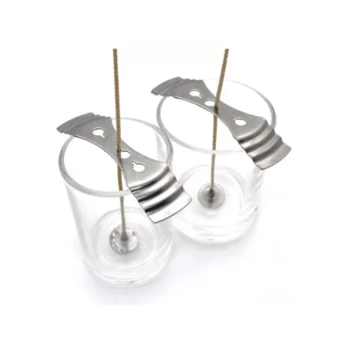
To immediately address your requirements, the essential tools for basic beeswax candle manufacturing are raw beeswax (pellets or blocks), cotton wicking, wick tabs, a double boiler for indirect heating, and vessels such as glass jars, tins, or silicone molds.
Core Insight While the ingredient list is short, the challenge in working with beeswax lies in its high melting point and viscosity. Your equipment selection must prioritize temperature control and wick centering to prevent common issues like tunneling, cracking, or uneven burning.
1. The Raw Materials
The Foundation: Beeswax Formats
You must choose between beeswax pellets and blocks. Pellets are easier to measure and melt significantly faster, making them ideal for beginners. Blocks are generally more cost-effective for bulk manufacturing but require manual chopping, which can be labor-intensive.
The Combustion System: Wicking
This is the most critical technical variable. Beeswax burns slower and cooler than paraffin, requiring a robust cotton wick (often square braid). For container candles, you will need wick tabs (metal bases) to anchor the wick to the bottom of the jar.
Additives for Performance
While pure beeswax is standard for pillars, it can crack in glass containers as it cools and shrinks. To mitigate this, many manufacturers blend in coconut oil or coconut butter (typically a 1:1 ratio with the wax or smaller amounts like 1/4 cup per batch) to soften the wax and ensure smoother adhesion to the glass.
2. The Heating and Processing Setup
Safe Melting: The Double Boiler
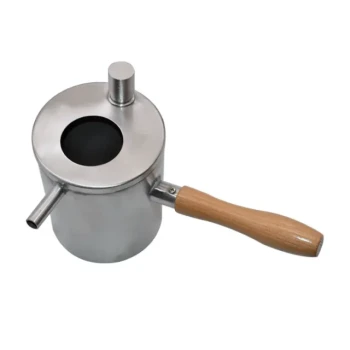
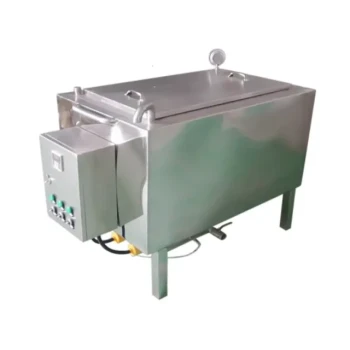
Never apply direct heat to beeswax; it creates a fire hazard and damages the wax. A double boiler system—either a dedicated wax melter or a heat-resistant glass bowl placed over a pot of boiling water—is non-negotiable. This ensures even, indirect heat distribution.
Temperature Monitoring
An infrared thermometer is highly recommended. Beeswax has a specific melting and pouring window; pouring too hot can cause shrinkage voids, while pouring too cold results in poor glass adhesion and "jump lines" on the candle's exterior.
Filtration Equipment
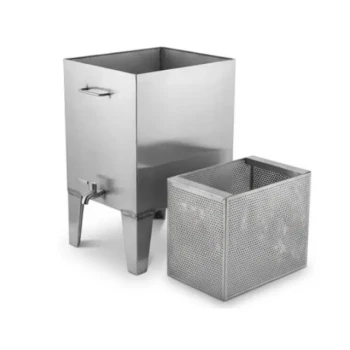
If you are processing raw wax blocks rather than pre-refined pellets, you will need straining materials. Nylon or polyester cloth allows you to filter out natural impurities (propolis or bee parts) that can clog the wick and ruin the burn.
3. Forming and Assembly Tools
Containers and Molds
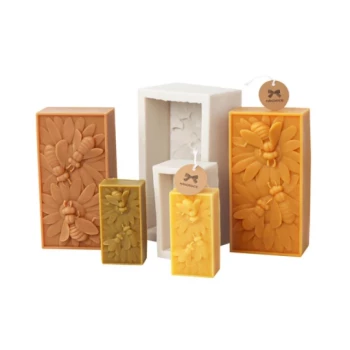
Your choice of vessel dictates your end product. Glass jars and aluminum tins are standard for container candles. For standalone pillars or patterned shapes, use silicone or metal molds.
Wick Stabilization
A loose wick results in a dangerous, uneven burn. You need a hot glue gun to affix the wick tab to the center of the container before pouring. To keep the wick upright while the wax cures, use a wick bar, a pencil, or even a clothespin bridged across the container opening.
Mold Maintenance
If using split molds or complex shapes, you will need rubber bands to hold the mold seams tight and mold release spray to ensure the hardened candle can be removed without damage. A small level is also useful to ensure your molds sit perfectly flat on your workspace.
Understanding the Trade-offs
Pure Wax vs. Blends
Pure beeswax is harder and burns longer, making it perfect for free-standing pillar candles. However, its hardness makes it prone to tunneling in jars. Blended wax (beeswax + coconut oil) is superior for jars, but it is too soft to hold its shape as a pillar candle.
Convenience vs. Cost
Pre-formed beeswax sheets require no heating—you simply roll them around a wick. This is the safest and fastest method but offers less design flexibility and a different aesthetic than melted/poured candles. Conversely, melting bulk blocks is cheaper but requires more equipment and safety precautions.
Making the Right Choice for Your Goal
- If your primary focus is container candles: Prioritize beeswax pellets mixed with coconut oil, and invest in a reliable hot glue gun to secure wicks to the glass.
- If your primary focus is pillar candles: Use 100% pure beeswax and silicone molds, and ensure you have mold release spray and wick pins for easy demolding.
- If your primary focus is strict purity: Avoid additives, use a double boiler for gentle melting, and use nylon strainers to ensure your raw wax is free of particulate matter.
Start with a simple setup, master the temperature control of the double boiler, and scale up to specialized melters only once you have consistent results.
Summary Table:
| Category | Essential Items | Purpose in Manufacturing |
|---|---|---|
| Raw Materials | Beeswax (Pellets/Blocks), Cotton Wicks, Wick Tabs | Core candle structure and combustion system. |
| Heating Setup | Double Boiler, Infrared Thermometer | Safe, indirect melting and precise temperature control. |
| Additives | Coconut Oil/Butter | Prevents cracking and improves adhesion in containers. |
| Assembly Tools | Wick Bars, Hot Glue Gun, Silicone Molds | Secures wick centering and shapes the final product. |
| Refining | Nylon/Polyester Strainers | Filters impurities from raw wax to ensure a clean burn. |
Scale Your Candle Production with HONESTBEE
At HONESTBEE, we empower commercial apiaries and distributors with high-performance beekeeping machinery and manufacturing tools. Whether you are expanding into artisanal beeswax products or scaling up industrial production, we provide the full spectrum of equipment—from honey-filling and hive-making machines to essential consumables.
Our value to you:
- Wholesale Efficiency: Access bulk supplies and professional-grade machinery designed for durability.
- Industry Expertise: Benefit from a portfolio that covers everything from hardware to honey-themed cultural merchandise.
- Global Support: Reliable solutions tailored for large-scale distributors.
Ready to elevate your beekeeping business? Contact us today for a comprehensive wholesale quote!
Related Products
- Beeswax Melter for Candle Making Honey Bee Wax Melter
- 3D Square Honeycomb Pillar Silicone Candle Molds for Making Beeswax Candles
- Beeswax Machine Press Embosser Wax Foundation Mold Printer Bee Hive Equipment Making Sheet
- Fully Automatic Beeswax Embossing Machine Foundation Mill
- Manual Beeswax Flat Sheet Machine for Beeswax Processing
People Also Ask
- What is the best way to melt beeswax? Safely Preserve Quality with Indirect Heat
- What is the best way to melt beeswax? Use a Solar Wax Melter for Simple, Pure Results
- What types of beeswax melters are available for beekeepers? Choose the Right One for Your Operation
- What safety precautions should be taken when melting beeswax? A Guide to Flammable Wax Handling
- What types of beeswax melters are available for different scales of beekeeping? Solar vs. Electric Melters Compared