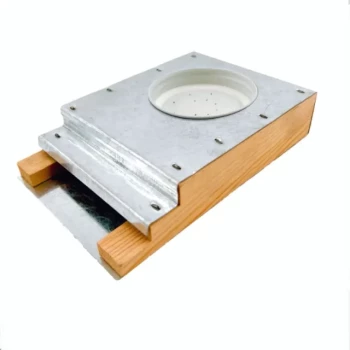
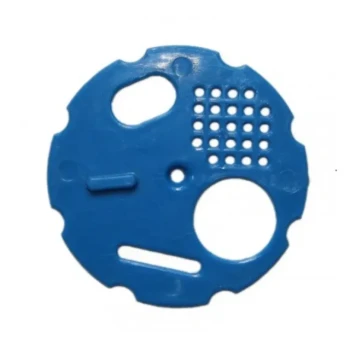
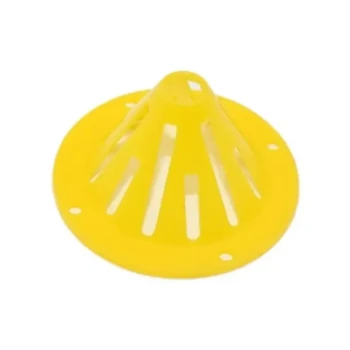
The bottom board and entrance reducer act as the structural foundation and the security gate of your apiary. The bottom board serves as the physical floor that supports the entire weight of the hive stack, while the entrance reducer is an adjustable barrier used to regulate airflow, maintain internal temperature, and defend the colony against external threats.
Core Takeaway The bottom board provides the essential base for the hive's four fundamental components, but it is the entrance reducer that transforms that base into a defensible shelter. Together, they allow you to manage the colony’s exposure to the elements and predators based on the season and the colony's strength.
The Foundation: The Bottom Board
Structural Support
The bottom board is the base upon which the entire hive rests. It functions as the structural floor, supporting the weight of the hive bodies, honey supers, frames, and covers that are stacked above it.
Creating the Threshold
By providing a solid floor, the bottom board creates the physical platform for the hive's entrance. It defines the lower boundary of the colony's living space, separating the bees from the ground and dampness.
The Gatekeeper: The Entrance Reducer
Climate Control and Winterizing
The primary function of the entrance reducer during colder months is thermal regulation. By restricting the size of the hive opening, it minimizes drafts and helps the colony retain critical warmth.
Weather Protection
Beyond temperature, the reducer acts as a physical shield against precipitation. It prevents snow from blowing into the hive, which could chill the cluster or accumulate moisture inside the colony.
Pest and Predator Defense
A wide-open entrance is difficult for a colony to guard. The reducer narrows this opening, making it easier for bees to defend against predators and protect the hive from pests, particularly mice looking for a warm winter nest.
Preventing Robbing
For new or weak colonies, the entrance reducer is a vital defense mechanism against robbing. By shrinking the entrance, you allow a smaller workforce to effectively defend their stores against intruder bees from stronger, competing colonies.
Transport and Treatment
The reducer serves a logistical purpose when you need to relocate the hive or apply specific treatments. It can be used to temporarily seal the entrance entirely, keeping the bees contained safely inside.
Understanding the Trade-offs
Airflow vs. Protection
While the entrance reducer is critical for protection, it restricts ventilation. Leaving it on during hot weather with a strong colony can lead to overheating and congestion at the entrance.
Accessibility vs. Defense
A fully open bottom board entrance maximizes traffic flow for foraging but leaves the colony vulnerable. You must balance the need for high-volume bee traffic in summer against the need for security and warmth in winter.
Making the Right Choice for Your Goal
- If your primary focus is winter survival: Install the entrance reducer to block drafts, exclude mice, and prevent snow ingress.
- If your primary focus is establishing a new colony: Use the reducer to minimize the entrance size, preventing robbing until the population is strong enough to defend itself.
- If your primary focus is hive relocation: Use the reducer (or a similar blocking mechanism) to temporarily seal the hive, ensuring no bees escape during transport.
Successful hive management relies on adjusting the entrance to match the colony's immediate environmental capability.
Summary Table:
| Component | Primary Function | Seasonal Role | Key Benefit |
|---|---|---|---|
| Bottom Board | Structural Foundation | Year-round | Supports hive weight and isolates colony from ground moisture. |
| Entrance Reducer | Security & Regulation | Winter/Early Spring | Controls airflow, retains heat, and prevents robbing or pest entry. |
Elevate Your Apiary Operations with HONESTBEE
As a dedicated partner to commercial apiaries and global distributors, HONESTBEE understands that the right equipment is the foundation of a productive season. We provide a comprehensive wholesale catalog including professional-grade bottom boards, entrance reducers, and the full spectrum of beekeeping tools.
From high-efficiency hive-making and honey-filling machinery to essential industry consumables and honey-themed merchandise, our portfolio is designed to scale your business and enhance colony health.
Ready to upgrade your wholesale supply chain?
Contact HONESTBEE Today to access premium beekeeping equipment and expert manufacturing solutions tailored to your needs.
Related Products
- Beehive Entrance Reducer Guardian Metal Hive Entrance for Bees
- Steel Round Disc Entrance Reducer for Flexzion Bee Hive Nuc Box Gate
- Solid Bottom Board Australian Pine Wood Langstroth Bottom Board for Wholesale
- Langstroth Solid Bottom Board for Beekeeping
- Australian Pine Wood Langstroth Screen Bottom Board for Wholesale
People Also Ask
- Why are entrance reducers used to counter hornet infestations? Protect Your Hive with Strategic Choke Points
- What is the purpose of an entrance reducer for a beehive? Strengthen Colony Defense and Prevent Robbery
- What are the proper guidelines for using hive entrance reducers? Master Temperature Control & Colony Defense
- Why is it critical to maintain a smaller entrance for a newly established bee hive? Boost Colony Growth and Security
- What is the physical mechanism behind the use of hive entrance reducers? Protect Your Bees from Vespa velutina