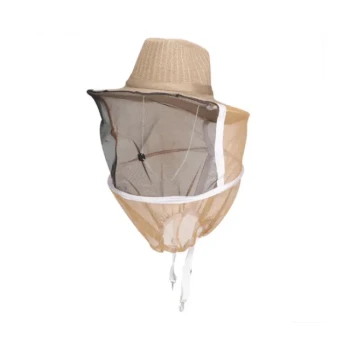
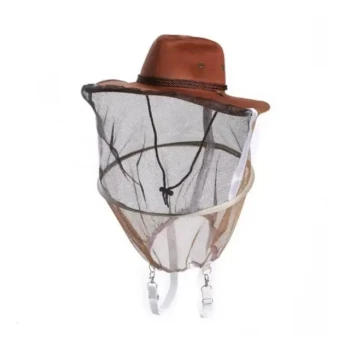
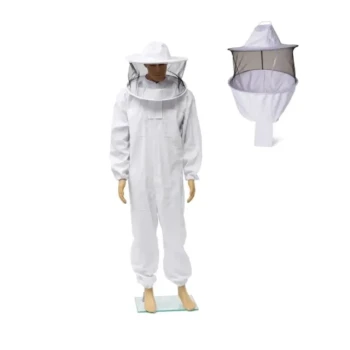
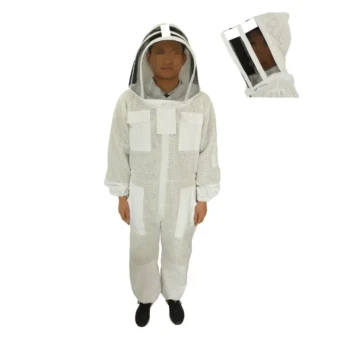
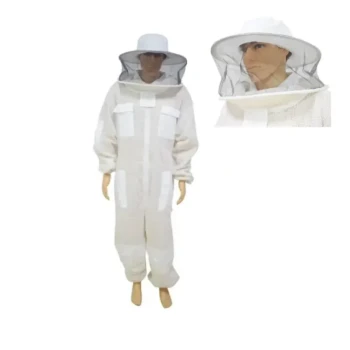
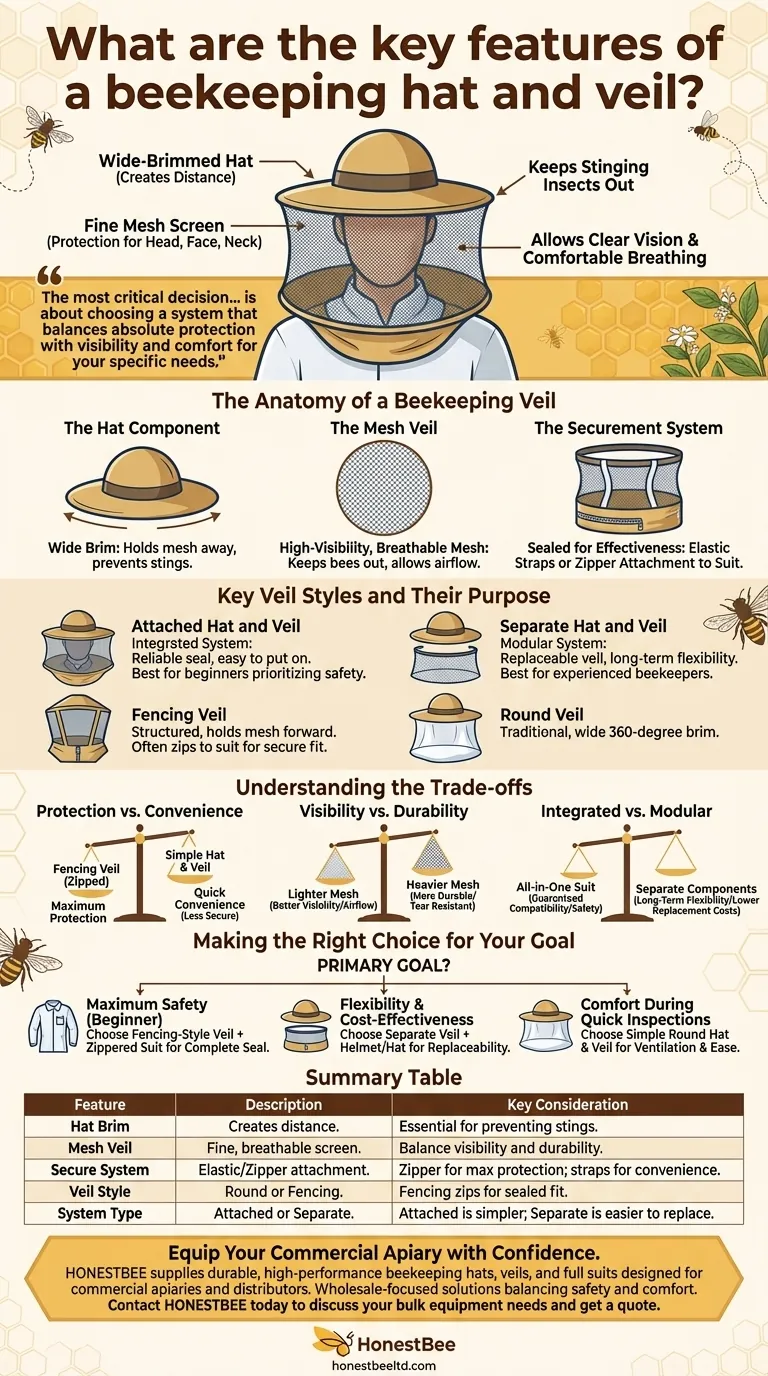
The key features of a beekeeping hat and veil are a wide-brimmed hat that creates distance from the face and a fine mesh screen that provides protection for the head, face, and neck. This design ensures that stinging insects are kept out while allowing the beekeeper to see clearly and breathe comfortably during hive inspections.
The most critical decision when selecting a beekeeping hat and veil is not about a single feature, but about choosing a system that balances absolute protection with visibility and comfort for your specific needs.
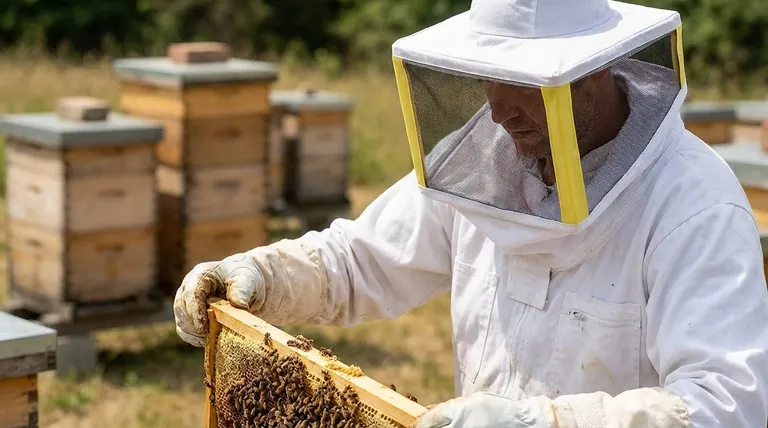
The Anatomy of a Beekeeping Veil
A beekeeping hat and veil is more than just a simple screen; it's a carefully designed piece of protective equipment. Understanding its core components helps clarify its function.
The Hat Component
The hat provides the essential structure. Its wide brim serves a crucial purpose: to hold the mesh veil away from your face and neck, preventing bees from stinging through the material.
The Mesh Veil
This is the protective screen itself. It is made from a high-visibility, breathable mesh that keeps bees out without significantly obstructing your view or airflow. The veil is typically oversized to drape over the neck and shoulders for complete coverage.
The Securement System
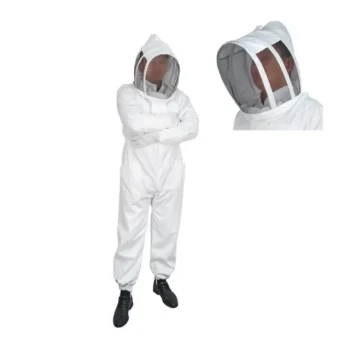
To be effective, the veil must be sealed. This is achieved with elastic shoulder straps that hold it securely in place or, for maximum protection, a zipper that attaches the veil directly to a beekeeping jacket or suit.
Key Veil Styles and Their Purpose
Beekeeping veils generally fall into two primary configurations, each with distinct advantages depending on the beekeeper's experience level and priorities.
Attached Hat and Veil
In this common design, the veil is permanently attached to the hat. This integrated system provides a reliable seal and is easy to put on, making it a highly recommended choice for beginners who prioritize safety and simplicity.
Separate Hat and Veil
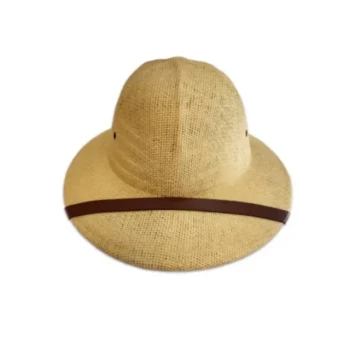
This system allows the veil to be detached from the hat or helmet. The main advantage is replaceability; if the delicate mesh gets torn, you can replace just the veil instead of the entire unit. This offers more flexibility for experienced beekeepers.
Fencing vs. Round Veils
You will often see veils described by their shape. Round veils are the traditional style with a wide, 360-degree brim. Fencing veils have a structure that holds the mesh forward, away from the face, and are often designed to zip directly onto a suit for a more secure, protected fit.
Understanding the Trade-offs
Choosing the right veil involves balancing competing factors. What works best for a seasoned professional may not be ideal for a novice.
Protection vs. Convenience
A fencing veil fully zipped to a suit offers the highest level of protection by eliminating any gaps for bees to enter. However, a simple, non-attached hat and veil is often quicker to put on for a brief inspection, offering greater convenience at the cost of a less secure seal.
Visibility vs. Durability
The mesh material is a critical trade-off. Lighter, finer mesh often provides better visibility and airflow, which is crucial for comfort on hot days. However, a slightly heavier or reinforced mesh may be more durable and resistant to tears over the long term.
Integrated vs. Modular Systems
An all-in-one suit with an attached veil is a straightforward initial investment that guarantees compatibility and safety. A modular approach with a separate veil offers long-term flexibility and potentially lower replacement costs for individual components.
Making the Right Choice for Your Goal
Your experience level and beekeeping philosophy should guide your selection.
- If your primary focus is maximum safety (especially as a beginner): Choose a fencing-style veil that zips directly onto a beekeeping jacket or full suit for a completely sealed system.
- If your primary focus is flexibility and cost-effectiveness: A separate veil that can be used with a dedicated beekeeping helmet or your own hat offers easy replaceability.
- If your primary focus is comfort during quick inspections: A simple, all-in-one round hat and veil provides good protection with excellent ventilation and is easy to pull on and off.
Ultimately, the right veil is one that allows you to feel secure, enabling the calm and confident focus required for effective hive management.
Summary Table:
| Feature | Description | Key Consideration |
|---|---|---|
| Hat Brim | Creates distance between mesh and face/neck. | Wide brim is essential for preventing stings. |
| Mesh Veil | Fine, breathable screen for visibility and airflow. | Balance between visibility and durability. |
| Secure System | Elastic straps or zipper to attach to a suit. | Zipper offers maximum protection; straps offer convenience. |
| Veil Style | Round (traditional) or Fencing (structured). | Fencing veils zip to suits for a sealed fit. |
| System Type | Attached (integrated) or Separate (modular). | Attached is simpler; Separate is easier to replace. |
Equip Your Commercial Apiary with Confidence
Choosing the right protective gear is critical for the safety and efficiency of your beekeeping operations. HONESTBEE supplies durable, high-performance beekeeping hats, veils, and full suits designed for the demands of commercial apiaries and equipment distributors.
We offer wholesale-focused solutions to ensure your team has reliable protection that balances maximum safety with essential comfort.
Contact HONESTBEE today to discuss your bulk equipment needs and get a quote.
Visual Guide
Related Products
- Beekeeper Cowboy Hat and Veil for Beekeeping
- High-Definition Beekeeper Hat with Round Veil Mesh for Beekeeping
- White Cotton Beekeeping Jacket and Veil for Bee Keepers
- Premium Cowboy Beekeeper Hat with Visibility Veil Outdoor Professional Beekeeping Protective Gear
- Rigid Pith Style Beekeeper Hat for Square Folding Veils
People Also Ask
- What is the correct way to wash a beekeeping hat and veil? Safe Hand-Washing Guide to Protect Your Gear
- What are the components and importance of a beekeeper's hat and veil? Essential Safety Gear for Apiary Success
- What are the differences between a separated and an attached beekeeping hat and veil? Security vs. Versatility
- What are the design specifications for an effective beekeeping hat and veil? Professional Standards for Protection
- What is the function of a beekeeping hat and veil? Essential Protection for Safe Hive Management