Temperature sensitivity is the primary operational limitation of the 'crush & strain' method. Because this technique relies on gravity to filter honey through a mesh, its efficiency is directly tied to ambient heat. In colder conditions, the honey becomes too viscous to flow effectively, turning a simple task into a significantly slower process.
The effectiveness of the 'crush & strain' method is dictated by the temperature of your workspace. While effective in warm weather, the process slows significantly in the cold, potentially requiring inconvenient supplemental heating to complete the harvest.
The Impact of Environment on Efficiency
The Role of Viscosity
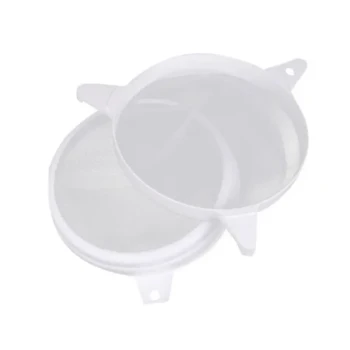
The 'crush & strain' method works on the principle of gravity filtration. After the honeycomb is mashed, the honey must drip through a double strainer into a collection bucket.
For this to happen efficiently, the honey needs to be liquid and free-flowing. The primary reference emphasizes that this method is most effective in warm temperatures, where natural heat reduces the honey's viscosity.
The Cold Weather Bottleneck
In colder weather, the physics of the method work against the beekeeper. As the ambient temperature drops, the straining process slows down significantly.
What might be a quick flow in summer can turn into an agonizingly slow drip in cooler seasons. This delay is a direct result of the honey thickening and refusing to pass easily through the strainer mesh.
Understanding the Trade-offs
The Inconvenience of Mitigation
It is possible to force the process to work in cold weather by introducing an external heat source. A heater can be used to warm the setup and encourage the honey to flow.
However, relying on a heater is widely considered a drawback. The primary reference notes that using a heater may not always be a convenient option.
Complexity vs. Simplicity
The 'crush & strain' method is often chosen for its low barrier to entry and simplicity.
Having to engineer a heating solution to combat cold weather complicates the workflow. It introduces additional equipment and setup time to a process that is intended to be straightforward.
Making the Right Choice for Your Harvest
Before selecting this method, evaluate your working environment and the timing of your harvest.
- If your primary focus is harvesting during peak summer heat: This method will be effective, as the warm temperatures will allow the honey to flow easily through the strainers.
- If your primary focus is harvesting in cool autumn or winter months: Expect the process to be slow and inefficient unless you are willing to set up inconvenient supplemental heating.
Aligning your harvesting method with the ambient temperature is the key to ensuring an efficient workflow.
Summary Table:
| Factor | Impact on 'Crush & Strain' | Requirement for Efficiency |
|---|---|---|
| Temperature | High sensitivity; flow stops in cold weather | Warm ambient environment (Summer) |
| Viscosity | Thick honey clogs strainers/mesh | Low viscosity for gravity filtration |
| Equipment | Minimal; requires only buckets and mesh | May need supplemental heaters in winter |
| Speed | Slow and labor-intensive | High temperatures to maintain flow |
| Complexity | Simple, but becomes difficult if heating is needed | High-flow environments |
Maximize Your Harvest Efficiency with HONESTBEE
While the 'crush & strain' method is simple, growing commercial apiaries need professional solutions to overcome temperature limitations and slow workflows. HONESTBEE specializes in supporting commercial beekeepers and distributors with industrial-grade tools designed for speed and reliability. From high-capacity honey-filling machines to specialized hive-making machinery and essential consumables, we provide the full spectrum of equipment needed to scale your operation.
Don't let cold weather or manual straining slow your production. Contact us today to discover how our wholesale beekeeping machinery and premium hardware can streamline your honey processing and boost your bottom line.
Related Products
- Stainless Steel Double Layer Honey Strainer Sieve Filters
- Stainless Steel Triangle Support Honey Strainer and Filters
- Nylon Honey Strainer Square Filter Cloth for Honey Filters
- All-Stainless Steel Pivoting Honey Uncapping Fork for Beekeeping
- Two-Stage Plastic Honey Filter for Buckets
People Also Ask
- What are some typical mesh size combinations found in double sieve honey strainers? Expert Guide to Honey Filtration
- How is a double-layer honey filter used for monitoring Varroa mite infestation? Achieve Precise Pest Control Data
- How do double-layer honey filters and white blotting paper function together in Varroa mite detection? Expert Guide
- What is the function of honey sieves, strainers, and filters in processing? Master the 3 Stages of Honey Purity
- What mesh sizes are commonly used in double sieve honey strainers? Achieve Clean, Raw Honey Efficiently