Commercial apiaries generally use three queen-marking options: direct manual handling, press-on cages, and plunger-style queen catchers. The safest and most repeatable approach is a purpose-built catcher or cage that gently immobilizes the queen against a protective screen, allowing the operator to apply a small paint mark or identification disc to her thorax without squeezing or gripping her body. Proper preparation, gentle restraint, suitable marking materials, and adequate drying time are essential to prevent injury and maintain efficient inspections.
The best commercial procedure combines a soft-contact queen catcher or marking cage with a water-based marking pen and the international five-year color code. This reduces handling risk, speeds queen identification, and creates reliable records for age tracking, stock selection, and queen replacement.
Choosing the Right Queen-Marking Equipment
Direct Manual Handling
Experienced operators may hold a queen by her wings and support her legs while applying the mark. This method requires precise control and carries the greatest risk of accidentally injuring the queen or provoking worker stings.
Manual handling can be appropriate for highly experienced beekeepers in controlled conditions, but it is a poor default for training programs, high-throughput operations, or teams with varying skill levels.
Press-On Queen Cages
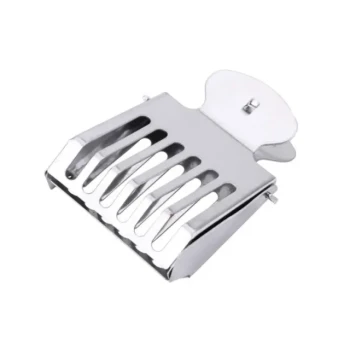
A press-on grid cage, including a round push-in marking cage, holds the queen against the comb or another surface while leaving the thorax accessible through the mesh. The operator can apply the mark without grasping the queen directly.
These cages are often among the easiest tools for less-experienced operators to learn because they provide a stable restraint method and reduce the chance of excessive pressure.
Plunger-Style Queen Catchers
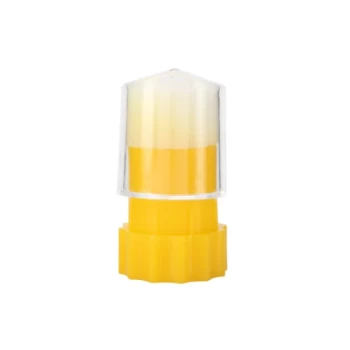
A plunger-style catcher uses a clear tube or cage with a soft sponge or foam plunger. The queen is gently guided inside, and the plunger moves her against a protective mesh grid so that her thorax aligns with the opening.
The transparent body improves visibility, while the soft plunger provides controlled restraint. One-handed catch cages and plastic piston devices are useful variations for operators who need to work quickly during routine inspections.
Marking Pens and Identification Materials
Commercial operators typically use a queen-marking pen containing suitable water-based paint. The pen should be shaken thoroughly, and excess paint should be dabbed off before application.
Some operations also use specialized adhesive identification discs. Whichever material is selected, it should create a visible mark without running, requiring excessive paint, or delaying the queen’s return to the colony.
The Safe Marking Procedure
Prepare the Equipment and Colony
Have the catcher or cage, marking pen, gloves, and any recording materials ready before removing the queen. Minimize the time the colony remains open and avoid unnecessary disturbance to the frame.
The operator should work in suitable weather and lighting conditions, with enough time to hold the queen safely while the mark dries.
Capture the Queen Gently
With a plunger catcher, guide the queen into the clear tube without chasing or crushing her. Move the soft plunger gradually until her thorax is held lightly against the mesh.
With a press-on cage, position the cage so the queen is contained securely and the thorax is accessible. Restraint should be firm enough to prevent sudden movement but never forceful.
Apply the Mark to the Thorax
Apply a small dot to the center of the thorax, avoiding the head, wings, abdomen, and joints. The mark should be visible but small enough that it does not interfere with movement or normal behavior.
A paint-filled pen should be dabbed rather than dragged across the body. Excess paint increases drying time and creates a greater risk of contaminating the queen’s wings or other body parts.
Allow the Paint to Dry
Hold the queen securely for approximately 30 seconds to one minute, or until the mark is dry enough that it will not smear. Releasing her too soon can transfer wet paint to the comb, workers, or her wings.
Once dry, return her to the same frame or an equivalent position in the colony. Observe briefly to confirm that she is moving normally and has been accepted by the surrounding workers.
Record the Queen’s Identity
Record the marking color, colony location, queen source, emergence year, and genetic line where relevant. A consistent record turns a visible mark into a useful management system.
If a colony that previously contained a marked queen later has an unmarked queen, the change may indicate supersedure, swarming, or accidental queen replacement.
Using the International Color Code
Apply the Five-Year Cycle
Commercial queen producers commonly follow the international color system based on the final digit of the queen’s emergence year:
- White: Years ending in 1 or 6
- Yellow: Years ending in 2 or 7
- Red: Years ending in 3 or 8
- Green: Years ending in 4 or 9
- Blue: Years ending in 0 or 5
The cycle allows beekeepers to estimate queen age at a glance during inspections and helps distributors and producers maintain consistent identification across operations.
Support Stock Selection and Queen Rearing
Color coding is particularly valuable when managing multiple genetic lines, breeder queens, mating yards, or replacement programs. It provides a fast visual reference that complements written records and production software.
Marking tools should be considered part of a broader queen-management system that may also include grafting tools, queen cups, transport cages, and inspection equipment. The marking device identifies the queen; the record system preserves the commercial value of that identification.
Improving Commercial Workflow
Standardize the Operator Method
Use one approved marking procedure across the apiary and train staff with the same catcher, pen, restraint pressure, drying time, and record format. Standardization reduces operator variation and makes quality control easier.
New operators can build confidence by practicing the restraint technique on drones before working with valuable queens. Practical training should focus on controlled movement and minimal contact.
Prepare a Complete Equipment Set
A reliable procurement set may include plunger-style queen catchers, press-on marking cages, soft replacement plungers, queen-marking pens in all five colors, spare mesh components, gloves, and record labels or digital tracking tools.
For distributors and resellers, offering these items as a coordinated product range improves purchasing efficiency for commercial customers. Rapid availability is especially important during queen-rearing and inspection periods when a missing consumable or replacement part can interrupt operations.
Match Tools to Throughput and Skill
Small operations may need only a basic push-in cage and one marking pen. Larger apiaries benefit from multiple standardized catchers, backup tools, color-coded pen inventory, and clear replenishment schedules.
Dedicated technical support also matters because tool selection depends on queen volume, operator experience, colony layout, and whether the customer needs marking equipment for routine inspections or queen production.
Understanding the Trade-offs
Manual Handling Is Fast but Less Forgiving
Direct handling may be efficient in skilled hands, but it exposes the queen to accidental compression, wing damage, leg damage, and escape. It also creates greater variation between operators.
The apparent time savings can be outweighed by the cost of replacing an injured queen or losing valuable breeding stock.
Cages Improve Safety but Require Practice
Press-on cages and push-in devices reduce direct contact, but incorrect positioning can still trap legs or apply excessive pressure. Operators must learn how to align the queen with the screen and move the restraint gradually.
The tool is not a substitute for technique. A short training period and supervised practice are appropriate before independent use.
Paint Adds Identification Value but Needs Control
A visible mark accelerates inspections, but too much paint can smear or interfere with the queen’s body. Wet paint can also contaminate the colony when the queen is released too quickly.
Operators should use a small, centered mark, remove excess paint from the pen, and respect the drying period every time.
Color Coding Does Not Replace Records
The five-year color system identifies approximate age, but it does not identify the exact source, mating, genetic line, or date of introduction. Those details still require written or digital records.
A complete commercial system combines visible marking with colony-level documentation.
Making the Right Choice for Your Goal
Select equipment and procedures according to the value of the queens, operator skill, inspection volume, and record-keeping requirements.
- If your primary focus is queen safety: Use a soft-plunger catcher or press-on grid cage that immobilizes the queen against a screen without direct gripping.
- If your primary focus is inspection speed: Standardize plunger catchers, marking pens, color coding, and colony records across the apiary.
- If your primary focus is staff training: Begin with a round push-in marking cage and supervised practice, using drones to develop restraint confidence.
- If your primary focus is commercial sourcing: Stock a complete, compatible range of catchers, cages, replacement parts, pens, and identification supplies with dependable fulfillment.
- If your primary focus is queen-rearing records: Combine the international color code with detailed records covering age, origin, genetic line, and colony location.
A standardized soft-contact marking system gives commercial apiaries safer handling, faster inspections, and more reliable queen-management decisions.
Summary Table:
| Equipment Type | Description | Best For |
|---|---|---|
| Direct Manual Handling | Holding the queen by wings/legs; high risk of injury | Experienced operators in low-throughput settings |
| Press-On Queen Cages | Grid cage pressing queen against comb; thorax accessible | Easy learning; stable restraint for moderate use |
| Plunger-Style Queen Catchers | Tube with soft plunger; queen held against mesh | Fast, safe use; good visibility; commercial volumes |
| Marking Pens & Discs | Water-based paint or adhesive discs for thorax marking | Identifying age/stock; must be applied with care |
At HONESTBEE, we equip commercial apiaries and distributors with a complete range of queen-marking tools—from plunger catchers and press-on cages to five-color marking pens and replacement parts. Our one-stop sourcing, rapid order fulfillment, and dedicated support ensure you always have the right gear when queen season peaks. Whether you need OEM/ODM customization, certified quality, or bulk supply for resale, partner with us to boost efficiency and protect your queen stock. Contact us today to discuss your requirements and enjoy fast, reliable delivery!
Related Products
- Transparent Plastic Bee Catcher Queen Marker Tube Cage Beekeeping Tool Equipment
- Plastic Long Marker Device for Catching and Marking Bees Queen Bee Marking Tube and Cage
- One Hand Yellow Queen Marking Catcher Tube Cage Beekeeper Tool Accessory for Queen Bee
- Queen Bee Marking Tube Cage Bottle Catcher Holder with Clear Plastic Plunger Marker
- Queen Bee Marking Pen POSCA Queen Marking Pens for Beekeeping Bee Markers
People Also Ask
- What are the specific advantages of using international standard marking tools in queen bee production and management?
- What tools are available to assist in safely marking a queen bee? Essential Gear for Professional Beekeepers
- What equipment is needed to mark a queen bee? A Simple 3-Tool Guide for Every Beekeeper
- Why are high-quality queen bee marking tools essential for pedigree tracking? Master Honey Bee Genetic Integrity
- What is the purpose of a queen catcher in beekeeping? Safely Handle Your Queen Bee