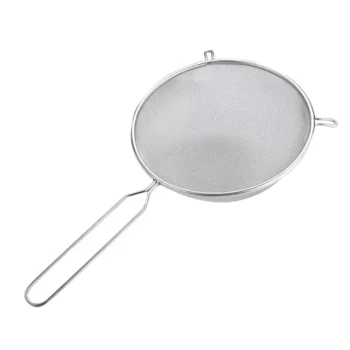
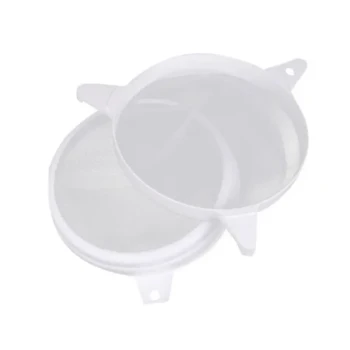
Industrial-grade fine filtration is the definitive requirement for entering the global honey market. To export commercial honey, you must utilize this equipment to physically remove water-insoluble impurities—such as wax debris and bee fragments—that are inevitably collected during harvesting. This process is not merely about aesthetics; it is the primary method for meeting international grading metrics and chemically stabilizing the product against crystallization.
The Core Insight Export-grade honey is defined by its purity and stability, not just its origin. Industrial filtration transforms raw harvest into a tradable commodity by removing the microscopic "seeds" that cause crystallization and the physical debris that violates strict international food safety standards (such as Codex Alimentarius).
The Mandate for Purity and Compliance
Removing Water-Insoluble Solids
The primary function of this equipment is the removal of water-insoluble solids. During extraction, raw honey is contaminated with bee fragments, larvae debris, and hive particles. These impurities are strictly regulated; you cannot export honey that fails to meet the low-impurity thresholds set by standards like the Codex Alimentarius Commission and EU directives.
Achieving Export-Grade Clarity
International buyers use clarity as a primary grading metric for commercial honey. Industrial filtration systems ensure the final product is transparent and free of visible sediment. This visual consistency is often the difference between a product accepted for high-value retail packaging and one downgraded to bulk industrial use.
Precision at the Microscopic Level
To meet these rigorous standards, operators often utilize 80-micron precision filters. This specific grade of filtration physically intercepts the smallest hive particles that standard straining misses. It ensures the honey meets the purity requirements of strict sectors, including the pharmaceutical and food industries.
Stabilizing the Product for Logistics
Retarding Crystallization
Filtration is a critical tool for extending shelf life during long export transit times. Suspended particles in raw honey act as "crystal nuclei"—seeds around which sugar crystals form. By filtering out these microscopic nuclei, industrial equipment significantly slows the crystallization process, maintaining the liquid state required by most foreign markets.
Ensuring Consistency at Scale
For high-volume producers, such as those dealing with the rapid output of Africanized honeybees, manual processing is impossible. Industrial automation allows for the standardized processing of massive volumes without bottlenecks. This ensures that every batch meets the same "physical and chemical indicators," regardless of when it was harvested.
Understanding the Trade-offs
Balancing Flow with Flavor
While filtration is necessary, the process presents a risk to the honey's sensory profile. Effective filtration often requires heating the honey to lower its viscosity, especially with thicker varieties. However, the equipment must provide controlled thermal treatment to avoid "cooking" the honey, which damages delicate flavor profiles and biological ingredients.
The Risk of Over-Processing
There is a fine line between purification and stripping the product. The goal is to remove impurities (wax, legs, wings) without removing the essential characteristics that define the honey's origin. Using equipment with precise temperature and pressure controls is vital to ensure you remove the debris without degrading the biological activity that adds market value.
Making the Right Choice for Your Goal
To select the right filtration strategy, you must define your end-market requirements.
- If your primary focus is the Pharmaceutical Industry: Prioritize systems with 80-micron precision filters and closed-loop operation to guarantee sterility and maximum purity.
- If your primary focus is Mass Market Retail: Focus on equipment that combines filtration with thermal treatment to maximize shelf stability and delay crystallization for long-term storage.
- If your primary focus is High-Volume Bulk Export: Ensure your system features automated, multi-stage filtration to handle rapid throughput (like seasonal surges) without clogging or slowing down operations.
Industrial filtration is the bridge that allows a natural agricultural product to meet the rigorous, standardized expectations of the global supply chain.
Summary Table:
| Feature | Purpose | Impact on Export |
|---|---|---|
| Insoluble Solid Removal | Eliminates bee debris, wax, and larvae | Meets Codex Alimentarius & EU safety standards |
| 80-Micron Precision | Filters microscopic hive particles | Ensures pharmaceutical and high-end food grade purity |
| Crystallization Delay | Removes "crystal nuclei" (seeds) | Extends shelf life during long-distance logistics |
| Controlled Heating | Lowers viscosity for flow control | Maintains sensory profile and biological activity |
| Automated Throughput | Handles large-scale seasonal surges | Ensures consistent batch quality for bulk distributors |
Elevate Your Honey Quality with HONESTBEE
As a global leader in beekeeping solutions, HONESTBEE empowers commercial apiaries and distributors to master the global market. Our comprehensive wholesale offering includes high-precision filtration systems, honey-filling machinery, and specialized hive-making equipment designed to meet the most rigorous international standards.
Whether you are processing for pharmaceutical use or mass-market retail, we provide the industrial tools and consumables necessary to ensure your honey remains pure, stable, and profitable. From hardware to honey-themed cultural merchandise, we are your strategic partner in growth.
Ready to scale your export operations?
Contact HONESTBEE Today to Discuss Your Equipment Needs
References
- LUTSIV Nataliya, SENYK Lesya. NATURAL HONEY MARKET. DOI: 10.31617/tr.knute.2020(36)04
This article is also based on technical information from HonestBee Knowledge Base .
Related Products
- Electric Double Wall Honey Filtering Machine Purifier Equipment for Honey Processing Plant
- Professional Stainless Steel Honey Filtering Machine with Water Bath Heating for Beekeeping
- 0.5T Capacity Honey Dehumidifier Dryer with Vacuum Heating and Thickening Filtering Machine
- Honey Concentrating and Filtering Dehumidifier Machine 2T Capacity for Honey
- Professional Stainless Steel Honey Filter with Support Handle
People Also Ask
- What types of equipment are used in honey filtering? Build an Efficient System for Pure, Marketable Honey
- What is the process of filtering honey? A Guide to Clean, Pure, and Market-Ready Honey
- What is the overall importance of using the right equipment in honey filtering? Boost Quality & Marketability
- Why is filtering important in honey processing, and what equipment is used? A Guide to Quality & Efficiency
- What role do professional honey harvesting and filtering equipment play in meeting honey market quality standards? Boost ROI