Beeswax offers superior thermal resistance and mechanical stability compared to standard paraffin wax, driven primarily by its naturally high melting point of approximately 63.5 to 64.5 °C. This physical characteristic ensures that products retain their structural integrity in warmer environments where softer waxes might deform.
Core Takeaway Beeswax distinguishes itself through physical hardness and thermal stability, allowing it to maintain complex shapes without sagging. While paraffin is a standard option, beeswax is the high-performance choice for precision mold casting and creating long-burning, structurally sound candles.
Thermal Properties and Structural Integrity
The Advantage of a High Melting Point
The defining physical advantage of beeswax is its melting point, which consistently ranges between 63.5 and 64.5 °C.
This is significantly higher than many standard paraffin blends. Because it requires more heat to transition to a liquid state, beeswax products remain solid and durable in conditions that would cause softer waxes to soften or lose their shape.
Mechanical Strength in Mold Casting
For applications like sculpture and mold casting, mechanical strength is paramount.
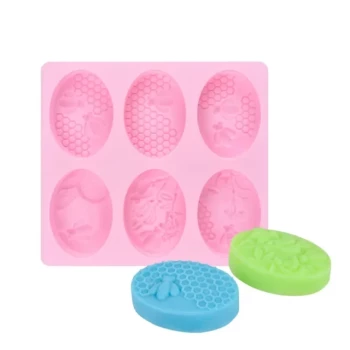
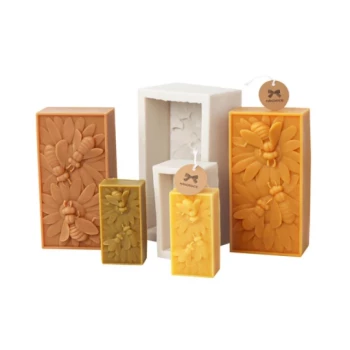
Beeswax provides exceptional physical stability, allowing artists and manufacturers to cast intricate details that hold firm. This rigidity prevents the warping or structural collapse often seen in lower-quality waxes when exposed to ambient heat or handling.
Combustion Physics and Environmental Impact
Extended Burn Duration
Due to its density and high melting point, beeswax acts as a more efficient fuel source in candle manufacturing.
It is consumed at a slower rate than softer waxes, resulting in a significantly longer burn time. This makes it a more efficient material, yielding a product that lasts longer despite a similar volume.
Clean Burning Characteristics
Physically, the combustion of beeswax differs from petroleum-based paraffin.
It produces a clean, smokeless flame rather than generating the soot associated with paraffin. This results in a healthier physical environment, minimizing indoor air pollution and reducing risks for individuals with asthma or allergies.
Understanding the Trade-offs
working Temperature Requirements
The very advantage of beeswax—its high melting point—can also present a processing challenge.
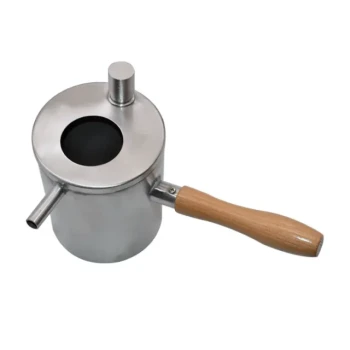
Manufacturers must utilize higher temperatures to melt and pour the wax compared to softer paraffin blends. This requires more robust heating equipment and careful temperature management to prevent scorching while ensuring the wax flows distinctively into molds.
Making the Right Choice for Your Goal
To determine if beeswax is the correct material for your specific project, consider your primary performance metrics:
- If your primary focus is structural durability: Choose beeswax for its high melting point, which prevents deformation in sculptures and detailed castings.
- If your primary focus is air quality and health: Choose beeswax for its smokeless combustion and lack of petroleum-based irritants.
Beeswax transforms the casting and manufacturing process by offering a material that is physically tougher, thermally more stable, and chemically cleaner than the industry standard.
Summary Table:
| Physical Property | Beeswax Advantage | Impact on Manufacturing |
|---|---|---|
| Melting Point | 63.5°C - 64.5°C | Ensures structural integrity in warm environments; prevents sagging. |
| Mechanical Strength | High Density & Hardness | Ideal for intricate mold casting; holds fine details without warping. |
| Combustion Rate | Slower Burn Time | Provides a more efficient fuel source and longer-lasting candle life. |
| Burn Quality | Smokeless & Soot-free | Creates a cleaner physical environment; reduces indoor air pollution. |
Elevate Your Beekeeping Business with HONESTBEE
Are you looking to supply your commercial apiary or distribution network with the highest quality materials? HONESTBEE specializes in providing professional-grade beekeeping tools, advanced machinery, and essential consumables designed for peak performance.
From high-precision hive-making and honey-filling machines to premium hardware, we empower our partners to produce superior products like the beeswax discussed above. Our comprehensive wholesale offering ensures you have the tools to scale your operations efficiently.
Ready to optimize your production? Contact us today to discuss your wholesale needs and let HONESTBEE bring industry-leading expertise to your business.
References
- Gıyasettin Baydaş, Zümra Kul. BEE PRDUCTS AND THE POTENTIAL HEALTH ISSUES ARISING FROM THEIR UNCONTROLLED USE. DOI: 10.46810/tdfd.1429727
This article is also based on technical information from HonestBee Knowledge Base .
Related Products
- Beeswax Machine Press Embosser Wax Foundation Mold Printer Bee Hive Equipment Making Sheet
- Beeswax Foundation Sheets Beehive Foundation for Wholesale
- Colorful Silicone Beeswax Foundation Mold Mould for Beekeeping
- Economy Manual Beeswax Embossing Mill Wax Foundation Machine Roller
- Electric Beeswax Flat Sheet Machine with Operating Tray for Wax Processing
People Also Ask
- What equipment is needed to make beeswax foundation? A Guide to DIY Wax Sheet Production
- What miscellaneous equipment is needed for making foundation? A Guide to the Essential Tools
- What miscellaneous equipment is useful when making beeswax foundation? Essential Support Tools for Beekeepers
- What specific equipment is required for making beeswax foundation? Essential Tools for High-Quality Production
- What is the recommended temperature for melting beeswax to make foundation sheets? Master the 70°C-80°C Ideal Range