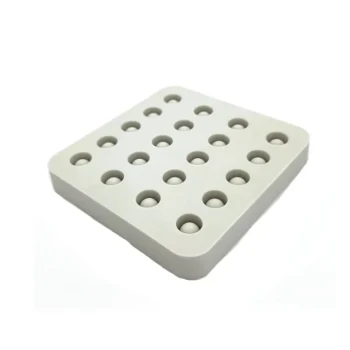
The primary distinction lies in diameter. Natural honey bee cells typically measure around 5.3 mm, whereas specific commercial "small cell" foundations are manufactured to approximately 4.9 mm. This variance is not arbitrary; it represents a specific apiary management choice.
Core Takeaway: While bees naturally build larger cells, beekeepers often utilize smaller commercial foundations as a biological control strategy. The manipulation of cell diameter is a primary lever used to inhibit Varroa mite populations or, conversely, to bait and trap them.
The Standard vs. The Strategy
The difference between natural construction and commercial foundation is a matter of biological tendency versus human intervention.
Natural Cell Architecture
In a natural environment, honey bees build comb based on their instinctual requirements. Without human intervention, the typical diameter of a worker bee cell is generally 5.3 mm.
Commercial Small Cell Foundations
Commercial foundations are pre-formed sheets used to guide the bees' construction. "Small cell" foundation is a specific product category where the cell base is reduced to approximately 4.9 mm. This forces the bees to draw out comb that is significantly tighter than what they would construct in the wild.
The Role of Cell Size in Pest Management
The deviation from natural cell sizes is primarily driven by the need to manage parasites, specifically the Varroa mite.
Inhibiting Mite Growth
The transition to the 4.9 mm cell size is a proactive defense strategy. Many beekeepers believe that these smaller cells create an environment that inhibits the ability of Varroa mites to thrive. By restricting the space within the cell, the reproductive success of the mite may be reduced.
Baiting with Larger Cells
Beekeepers also manipulate cell size in the opposite direction. Larger cells, typically used for rearing drones (male bees), are attractive to mites. Beekeepers introduce these larger cells to act as bait, trapping the mites so they can be removed from the colony.
Understanding the Trade-offs
While manipulating cell size is a common tactic, it is important to understand the implications of deviating from nature.
Management vs. Biology
Using small cell foundation is an active management tactic, not a passive one. It requires the colony to adapt to dimensions that differ from their natural inclination (5.3 mm).
The Limits of Efficacy
The use of 4.9 mm foundation is believed to inhibit mites, but it serves as a suppression tool rather than a total solution. It is often used in conjunction with other methods, such as the baiting technique mentioned above.
Making the Right Choice for Your Goal
When selecting foundation or managing comb, your decision should depend on your specific pest management strategy.
- If your primary focus is natural mimicry: Acknowledge that bees naturally build cells around 5.3 mm and standard foundations often align closer to this measurement.
- If your primary focus is passive mite suppression: Consider implementing small cell foundation (4.9 mm) to potentially inhibit Varroa mite reproduction.
- If your primary focus is active mite removal: Utilize frames with larger drone cells to bait and trap mite populations for physical removal.
Understanding cell size allows you to move from passive beekeeping to active biological management.
Summary Table:
| Feature | Natural Bee Cells | Commercial Small Cell Foundation | Commercial Drone/Bait Cells |
|---|---|---|---|
| Cell Diameter | Approx. 5.3 mm | Approx. 4.9 mm | Larger than 5.3 mm |
| Primary Purpose | Instinctual colony growth | Passive Varroa mite suppression | Active mite baiting & trapping |
| Biological Basis | Natural worker bee instinct | Human-guided pest management | Targeted drone rearing |
| Management Style | Passive/Natural | Proactive defense | Active intervention |
Elevate Your Apiary Management with HONESTBEE
Choosing the right cell size is a critical step in professional pest management. At HONESTBEE, we understand the needs of commercial apiaries and distributors. We provide a comprehensive range of beekeeping tools, from high-precision foundation molds and honey-filling machines to specialized hive hardware and essential consumables.
Whether you are scaling your operation or supplying the industry, our wholesale solutions are designed to enhance productivity and colony health. Contact us today to discuss how our professional equipment and industry expertise can bring superior value to your business.
Related Products
- High-Efficiency 20-Cell Silicone Mold for Beeswax Bee Queen Cup Production
- Portable Queen Bee Incubator with 12V Car Adapter for Safe Transport
- Wholesales Dadant Size Wooden Bee Hives for Beekeeping
People Also Ask
- What is the first tip for pouring beeswax into a silicone mold? Ensure a Perfect Release
- What are the technical advantages of using precision silicone molds for the manufacturing of beeswax queen cups? - Scale
- How do beeswax queen cell cups function? Optimize Queen Rearing with Biological Mimicry
- What is the biological function of beeswax queen cell cups? Boost Acceptance in Artificial Queen Rearing
- What are the advantages of using tapered wooden dowels for queen cups? Boost Rearing Consistency & Acceptance