The main productivity barrier is not simply the hive type—it is the lack of control, repeatability, and scalable management. Traditional hives often deliver low yields because colonies cannot be inspected or manipulated efficiently, while harvesting may damage comb, brood, and bee populations. Modern movable-frame hives, supported by standardized equipment and management practices, make colony monitoring, disease control, non-destructive harvesting, and commercial expansion far more practical.
Traditional beekeeping limits productivity because the colony’s structure is difficult to access and difficult to manage consistently. Standardized frame hives convert beekeeping from a destructive, experience-dependent process into a repeatable production system.
Why Traditional Beekeeping Creates Productivity Bottlenecks
Low Yield per Colony
Primitive hives such as hollow logs, bamboo baskets, and earthen cavities provide limited control over how bees build comb and store honey. Their irregular internal spaces make it difficult to optimize brood organization, honey storage, or colony strength.
Because the comb cannot usually be rearranged, beekeepers have fewer options for improving colony development or directing bees toward productive areas. This restricts both yield per colony and the ability to compare performance across an apiary.
Destructive Honey Harvesting
Traditional harvesting often requires cutting, breaking, or severely disturbing the comb. This can damage the brood nest, destroy future production capacity, and cause unnecessary bee mortality.
The colony must then rebuild comb before it can return fully to honey production. Energy that could have supported population growth and honey storage is instead diverted to reconstruction.
Limited Colony Inspection
In a traditional hive, inspecting the queen, brood pattern, food reserves, and colony strength can be difficult or impossible without significant disturbance. Problems may remain hidden until they have already reduced productivity.
This lack of visibility also makes it harder to identify weak colonies, queen failure, overcrowding, or abnormal brood development at an early stage.
Difficult Pest and Disease Control
Pest and disease management depends on timely observation and targeted intervention. When combs cannot be removed and examined individually, detecting problems and applying corrective management becomes less precise.
The result is a reactive approach rather than a planned one. Colonies may weaken before the beekeeper can determine the cause or isolate the affected equipment.
Inconsistent Management Practices
Traditional equipment varies widely in shape, dimensions, construction quality, and internal capacity. This fragmentation makes it difficult to establish consistent inspection routines or train workers to follow the same procedures.
For commercial apiaries, inconsistency also complicates purchasing, replacement, maintenance, and workforce deployment. A beekeeper may need different methods for every hive rather than applying one repeatable operating standard.
How Standardized Frame Hives Improve Productivity
Removable Frames Enable Non-Destructive Inspection
Modern frame hives organize comb on removable, rectangular frames. Beekeepers can lift individual frames to inspect brood, food stores, queen performance, pests, and diseases without dismantling the colony.
This changes the central management task from “harvest and rebuild” to “inspect, adjust, and preserve.” The colony retains its established comb, allowing it to resume production more efficiently.
Standard Dimensions Improve Colony Management
Precision-built hive boxes and frames follow consistent dimensions and maintain the biological spacing bees require to build organized comb. Correct spacing encourages bees to construct comb in predictable locations rather than attaching it irregularly to the hive structure.
Organized comb supports routine inspections, controlled colony manipulation, and more accurate yield monitoring. It also makes equipment interchangeable within a compatible hive system.
Honey Extraction Becomes More Efficient
Frames filled with surplus honey can be removed, processed, and returned without destroying the brood nest or the entire comb structure. This permits repeated harvesting while preserving the colony’s productive infrastructure.
Standardized comb placement also allows the use of honey extractors. Extraction can therefore become faster, cleaner, and less wasteful than traditional comb destruction.
Colony Health Can Be Monitored Systematically
Movable frames give beekeepers a practical way to observe colony condition at regular intervals. They can assess brood development, food availability, queen performance, and signs of pest or disease pressure.
Systematic monitoring improves decision-making. Beekeepers can intervene earlier, separate problem colonies, and manage resources according to actual colony needs rather than visual guesswork.
Scientific Colony Manipulation Becomes Possible
Standardized frames support management practices such as artificial swarming, queen introduction, colony multiplication, and targeted frame movement. These activities are difficult to perform reliably in fixed-comb or irregular traditional hives.
The benefit is not a single tool or procedure. It is the ability to manage colonies as units that can be inspected, compared, strengthened, and reproduced using a consistent method.
Why Standardization Matters Beyond the Individual Hive
It Creates a Repeatable Apiary Workflow
When hive boxes, frames, tools, and accessories use compatible specifications, workers can follow the same inspection and harvesting process across the apiary. This reduces dependence on improvised techniques and makes training more efficient.
Repeatability is particularly important when an operation grows beyond a small number of colonies. Standard equipment allows labor, inspections, replacement parts, and harvesting schedules to be organized more systematically.
It Supports Commercial Scaling
Commercial honey production requires more than increasing the number of colonies. It requires equipment that can support predictable colony management, efficient extraction, and reliable replacement.
A standardized system helps apiaries expand without creating a separate operating method for every hive. It also makes it easier for distributors, wholesalers, and resellers to supply a coherent product range rather than disconnected components.
It Improves Procurement and Fulfillment
For equipment suppliers, standardization enables a full-spectrum product portfolio built around compatible hive bodies, frames, covers, bases, feeders, tools, and extraction equipment. Customers can source a complete operating system instead of assembling products with uncertain compatibility.
Consistent specifications also simplify repeat orders, inventory planning, technical support, and rapid replacement. These are practical advantages for both large apiaries and agricultural programs managing multiple locations.
It Strengthens Training and Technical Support
Standard equipment creates a shared technical language. Instructions for frame inspection, queen management, disease monitoring, and honey extraction can be applied consistently when the underlying equipment is uniform.
This makes professional training more transferable and helps suppliers provide more effective customer service. Expertise becomes easier to deliver at scale because the same operating principles apply across compatible equipment.
Understanding the Trade-offs
Modernization Requires Upfront Investment
Modern frame hives and extraction equipment require greater initial investment than improvised or locally available traditional hives. The financial return depends on colony survival, management quality, honey markets, and the operation’s ability to use the equipment correctly.
The right comparison is therefore not only purchase price. It is total productivity over time, including reusable comb, reduced colony damage, easier labor allocation, and improved extraction efficiency.
Standardization Does Not Replace Training
A standardized hive creates the conditions for better management, but it does not automatically produce better results. Beekeepers still need training in inspections, seasonal management, pest and disease control, queen management, and hygienic harvesting.
Equipment and training should be treated as a combined transition program. Supplying boxes and frames without practical guidance may leave the underlying productivity problem unresolved.
Compatibility Must Be Confirmed
“Modern” equipment is not necessarily interchangeable across every hive system. Frame dimensions, box specifications, accessories, and extractor capacity must be matched before purchasing or combining products.
Distributors and resellers should verify technical compatibility and offer complete, coordinated product selections. This reduces installation problems, customer dissatisfaction, and delays caused by unsuitable components.
Local Conditions Still Matter
Hive design and management must be appropriate for the local climate, bee stock, forage conditions, and operating environment. Insulation, storage capacity, ventilation, and seasonal handling requirements may affect the most suitable configuration.
Standardization should create consistency without ignoring biological and environmental realities. A good supply program combines reliable specifications with practical adaptation to the customer’s conditions.
Making the Right Choice for Your Goal
A successful transition should connect equipment selection with the intended productivity outcome.
- If your primary focus is increasing honey yield: Adopt removable-frame hives and compatible extraction equipment so surplus honey can be harvested without destroying productive comb or disturbing the brood nest.
- If your primary focus is improving colony health: Prioritize standardized frames and inspection tools that allow routine monitoring of brood, food reserves, queen performance, pests, and diseases.
- If your primary focus is scaling an apiary: Build around a compatible equipment platform with uniform boxes, frames, accessories, and management procedures that workers can apply across many colonies.
- If your primary focus is supplying commercial customers: Offer one-stop sourcing, verified equipment compatibility, responsive technical support, and fast fulfillment for complete hive systems rather than isolated products.
- If your primary focus is reducing operational inconsistency: Standardize hive dimensions, frame specifications, inspection routines, and replacement processes so training and daily management become repeatable.
Standardized modern beekeeping equipment gives beekeepers the visibility, control, and repeatability needed to turn colony management into a scalable production system.
Summary Table:
| Challenge | Traditional Beekeeping | Modern Frame Hives |
|---|---|---|
| Yield per Colony | Low yields due to irregular comb and limited control | Higher yields through organized comb and management |
| Harvesting | Destructive, damages comb and brood | Non-destructive, preserves colony structure |
| Inspection | Difficult and disruptive | Easy with removable frames |
| Pest/Disease Control | Reactive and imprecise | Proactive and targeted |
| Management Consistency | Inconsistent equipment and methods | Standardized, repeatable workflows |
Ready to modernize your apiary or expand your product line? HONESTBEE offers a comprehensive range of standardized beehive systems, extraction equipment, and apiary tools. Our one-stop sourcing, rapid response, and dedicated support help you increase yields, improve colony health, and scale efficiently. For distributors and wholesalers, we provide OEM/ODM options, certifications, and reliable supply. Contact us today to discuss your needs!
Related Products
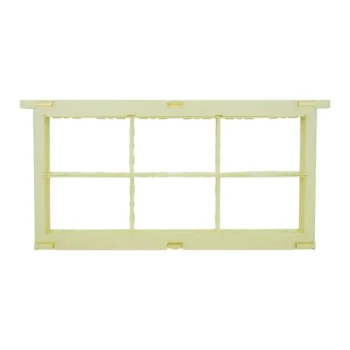
- Wooden Bee Hive Frames for Beekeeping and Wholesale
- Assembled Wooden Bee Frames with Plastic Foundation for Durability and Convenience by HONESTBEE
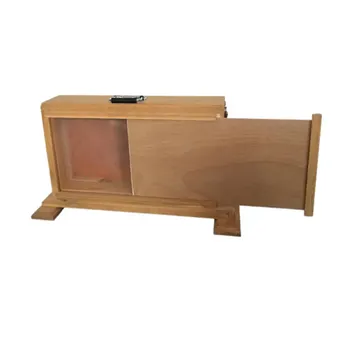
- Professional Observation Hive: The Ultimate Portable Solution for Beekeeping Education, Exhibitions, and Colony Displays
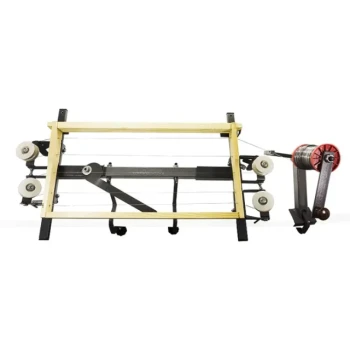
- HONESTBEE Wired and Assembled Wooden Bee Frames Foundation for a Thriving Hive
- Plastic Bee Frame Beekeeping Hive Frames for Wholesale
People Also Ask
- How does balancing the number of frames impact hive productivity? Optimize Your Apiary's Biological Output
- How do wooden and plastic hive frames compare in terms of durability? Wood vs. Plastic Longevity & Repairability
- What are the main considerations when choosing between wooden and plastic bee hive frames? Optimize Your Apiary's Efficiency
- How should beehive frames be maintained to prolong their lifespan? 5 Pro Tips for Durable Beekeeping Equipment
- What is the primary function of frames within a beehive system? Structural Foundation and Hive Management