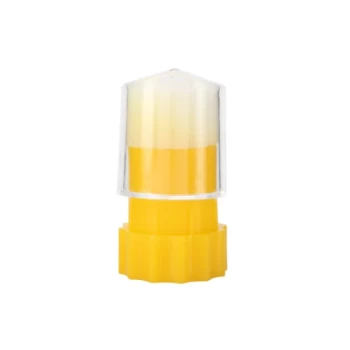
The respective functions of specialized marking paint and silk mesh materials are to facilitate visual tracking and physical traffic control within a honey bee colony. Specialized marking paint is utilized to visually categorize and identify specific bees among thousands, while silk mesh materials temporarily alter the hive entrance to enable the counting or interception of foragers.
Effective field observation requires transforming a chaotic colony into a controlled data source. These tools provide the mechanism to isolate specific variables—individual identity and hive traffic—without permanently disrupting the natural environment.
Visual Identification in Dense Colonies
To study behavior effectively, researchers must be able to distinguish specific subjects from the rest of the colony population.
Distinguishing Experimental Groups
Specialized marking paint serves the critical function of visually grouping honey bees. By applying distinct colors or marks, researchers can instantly separate experimental subjects from control groups.
Precision Amidst Numbers
A natural colony contains thousands of individual bees, making unassisted tracking impossible. Marking paint ensures the precise identification of specific individuals, allowing for consistent observation of distinct bees over time.
Managing Hive Traffic for Data
While paint tracks identity, silk mesh materials are employed to manage the physical movement of the bees at the hive entrance.
Modifying Physical Structure
Silk mesh is used to create a temporary modification to the beehive entrance. This material is flexible enough to alter the architecture of the entry point without requiring permanent construction or damage to the hive.
Enabling Quantification
The primary purpose of this structural modification is to channel bee traffic. This allows researchers to accurately count returning foragers or physically intercept them for sampling, making the mesh an essential tool for quantifying field behaviors.
Operational Considerations
Using these tools involves a strategic balance between observation and intervention.
The Necessity of Temporary Intervention
The use of silk mesh is explicitly designed to be temporary. This suggests a research approach that prioritizes gathering snapshot data—such as count intervals or specific samples—before restoring the hive's natural structure.
Overcoming the Scale Challenge
Both tools address the sheer scale of a honey bee colony. Without marking paint, individual behaviors are lost in the "noise" of thousands of bees; without mesh, traffic flow is too chaotic for accurate quantification.
Making the Right Choice for Your Goal
To select the correct tool for your observation protocol, consider your primary data objective.
- If your primary focus is tracking individual longevity or behavior: Rely on specialized marking paint to maintain precise identity verification within the mass of the colony.
- If your primary focus is gathering quantitative metrics on foraging activity: Utilize silk mesh materials to physically structure the entrance for accurate counting and sampling.
These tools transform the beehive from a black box into a measurable scientific environment.
Summary Table:
| Tool | Primary Function | Research Application |
|---|---|---|
| Specialized Marking Paint | Visual Identification | Distinguishing experimental groups and tracking individuals over time. |
| Silk Mesh Materials | Traffic Management | Modifying hive entrances for counting foragers and sampling traffic flow. |
Maximize Your Research Precision with HONESTBEE
Are you looking to scale your apiary operations or provide top-tier scientific tools to your distribution network? At HONESTBEE, we specialize in supporting commercial apiaries and distributors with a comprehensive wholesale offering.
Our extensive portfolio includes everything from specialized hardware like hive-making and honey-filling machines to essential consumables and honey-themed cultural merchandise. Whether you need professional-grade marking equipment or heavy-duty machinery, we provide the tools you need to achieve superior results.
Ready to elevate your beekeeping business? Contact us today to discuss our wholesale solutions and how we can support your growth!
References
- Mike Goblirsch, Marla Spivak. Physiological and Behavioral Changes in Honey Bees (Apis mellifera) Induced by Nosema ceranae Infection. DOI: 10.1371/journal.pone.0058165
This article is also based on technical information from HonestBee Knowledge Base .
Related Products
- Queen Bee Marking Pen POSCA Queen Marking Pens for Beekeeping Bee Markers
- Queen Bee Marking Pen UNI Medium Point for Queen and Bee Marking
- Queen Bee Catcher Plastic Bee Marker Bottle with Piston Marking Tube
- One Hand Yellow Queen Marking Catcher Tube Cage Beekeeper Tool Accessory for Queen Bee
- Queen Bee Marking Tube Cage Bottle Catcher Holder with Clear Plastic Plunger Marker
People Also Ask
- What role do specialized marking pens and color-coding systems play in honeybee tracking? Enhance Research Precision
- Why are specialized marking pens used for stingless bee queens? Essential Tools for Large-Scale Breeding Success
- How should a new paint pen be primed before marking a queen bee? Essential Tips for Safe & Clear Markings
- How should a queen bee marking pen tip be properly primed? Master the Art of Safe Queen Marking
- What specifications are required for a high-quality queen bee marking pen? Ensure Safety and Precision for Your Colony