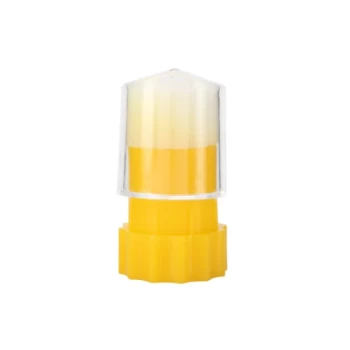
Precision in population monitoring is the foundational role of specialized marking pens and color-coding systems in honeybee research. These tools allow researchers to visually tag newly emerged honeybees on a daily basis, effectively creating a physical database within the hive. This enables the accurate identification and recovery of specific honeybee samples based on age and treatment group, even when they are housed in complex, mixed-rearing mini-hives.
In multi-group, long-cycle comparative experiments, visual marking is the critical control mechanism that ensures samples collected at various time points are chronologically accurate and belong to the correct treatment cohort.
Enabling Accurate Comparative Analysis
Visualizing Demographics
In long-term studies, hives contain bees of overlapping generations. By marking newly emerged bees daily with specific color codes, researchers can visually determine the exact age of any bee in the colony. This allows for the precise isolation of specific age cohorts for time-dependent analysis.
Segregating Treatment Groups
Complex experiments often involve mixing different study groups within the same environment. Color coding assigns a distinct visual identity to these groups, such as distinguishing between control subjects and those subjected to variables like anesthesia. This prevents data cross-contamination during observation or collection.
Recovery from Mixed Environments
Semi-field studies often utilize mixed-rearing mini-hives where populations mingle freely. The marking system acts as a high-fidelity filter. It ensures that when a researcher retrieves a sample, they are collecting the exact specimen required by the study protocol, eliminating guesswork.
Technical Requirements for Data Integrity
Ensuring Durability in the Field
The physical environment of a hive and the field is abrasive. Industrial-grade markers must provide high visibility and long-lasting adhesion to the bee's thorax. This ensures the identification remains legible throughout the bee's lifespan, preventing "lost" data points due to faded or detached marks.
The Importance of Chemical Safety
The marking tool itself must not introduce new variables. Consumables must be fast-drying and possess low toxicity. This prevents the marking process from altering the bees' natural physiological behaviors, which is essential for maintaining the validity of the control and test groups.
Common Pitfalls to Avoid
Overlooking Toxicity Risks
Using non-specialized markers can ruin a long-term study. If the ink carries high toxicity, it may cause premature mortality or behavioral changes that are unrelated to the experimental treatment, leading to skewed results.
Inconsistent Application Standards
The effectiveness of a color-coding system relies entirely on consistency. Failing to mark newly emerged bees on a strict daily schedule creates "blind spots" in the population data, making it impossible to guarantee the age accuracy of unmarked or late-marked samples.
Making the Right Choice for Your Goal
- If your primary focus is Age-Based Physiology: Prioritize a high-contrast color rotation system that allows you to instantly identify the day of emergence for precise chronological sampling.
- If your primary focus is Behavioral Toxicology: Ensure your marking consumables are certified low-toxicity and fast-drying to prevent the marker solvent from influencing the bee's activity levels or survival rate.
By rigorously applying these visual tracking systems, you transform a chaotic hive environment into a structured, verifiable data set.
Summary Table:
| Feature | Role in Long-Term Tracking | Impact on Data Integrity |
|---|---|---|
| Color-Coding | Daily cohort identification | Ensures precise age-based sampling |
| Visual Tagging | Treatment group segregation | Prevents data cross-contamination in mixed hives |
| Industrial Durability | Long-lasting thorax adhesion | Eliminates lost data points from fading or wear |
| Low-Toxicity Ink | Safety-first application | Prevents physiological/behavioral bias in results |
Elevate Your Apiary’s Precision with HONESTBEE
At HONESTBEE, we understand that whether you are conducting scientific field trials or managing a large-scale commercial operation, the right tools are the foundation of success. We cater to commercial apiaries and distributors with a comprehensive wholesale offering designed to streamline your workflow and enhance productivity.
From specialized marking consumables and beekeeping tools to industrial-grade hive-making and honey-filling machinery, our portfolio covers the full spectrum of industry needs. Partner with us to access high-quality hardware and honey-themed cultural merchandise that adds value to your brand and efficiency to your operations.
Ready to scale your beekeeping business? Contact us today to explore our wholesale solutions!
References
- Agnieszka Murawska, Ralf Einspanier. Metabolism gene expression in worker honey bees after exposure to 50Hz electric field - semi-field analysis. DOI: 10.1186/s12983-024-00535-1
This article is also based on technical information from HonestBee Knowledge Base .
Related Products
- Queen Bee Marking Pen POSCA Queen Marking Pens for Beekeeping Bee Markers
- Queen Bee Marking Pen UNI Medium Point for Queen and Bee Marking
- Plastic Long Marker Device for Catching and Marking Bees Queen Bee Marking Tube and Cage
- Queen Bee Catcher Plastic Bee Marker Bottle with Piston Marking Tube
- One Hand Yellow Queen Marking Catcher Tube Cage Beekeeper Tool Accessory for Queen Bee
People Also Ask
- Why are specialized marking pens used for stingless bee queens? Essential Tools for Large-Scale Breeding Success
- How should a new paint pen be primed before marking a queen bee? Essential Tips for Safe & Clear Markings
- How should a queen bee marking pen tip be properly primed? Master the Art of Safe Queen Marking
- What specifications are required for a high-quality queen bee marking pen? Ensure Safety and Precision for Your Colony
- What is the purpose of using a queen marking pen? Enhance Hive Management and Age Tracking