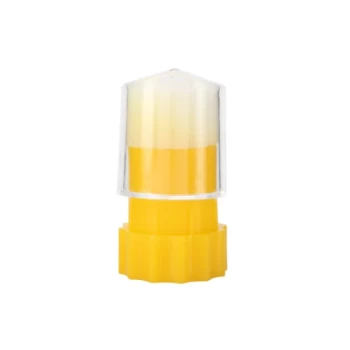
A high-quality queen bee marking pen is defined by two non-negotiable specifications: a water-based, non-toxic ink formulation and a pressure-sensitive valve tip. To ensure the safety of the queen, the ink must not emit strong chemical odors that could trigger aggression from the colony. Additionally, the pen requires a specific tip size, typically the 5M size (approximately 5mm diameter), to allow for sufficient coverage on the thorax without the need to apply crushing pressure.
Core Insight: The primary function of a marking pen is not just visibility, but biological neutrality. If the ink carries a harsh solvent smell or requires force to apply, the risk of the colony rejecting or killing the queen outweighs the benefit of identification.
The Critical Chemistry: Safety First
Non-Toxic Formulations
The most vital specification for a marking pen is that the ink must be non-toxic.
A queen bee is the central figure of the hive, and her acceptance depends heavily on her pheromones. Toxic substances can harm the queen physically or alter her scent profile disastrously.
Water-Based Solvents
You must select a pen that is explicitly water-based.
Solvent-based or enamel paints often contain strong chemical agents. These harsh odors can mask the queen's natural pheromones, causing the worker bees to perceive her as an intruder and reject her.
Mechanical Specifications for Application
The 5M Tip Standard
For optimal application, the industry standard is the 5M tip size, which is approximately 5mm in diameter.
This specific width is designed to deposit a visible dot on the queen's thorax efficiently. A tip of this size holds enough paint to mark the target in a single gentle touch, eliminating the need for repetitive dabbing.
Pressure-Free Ink Flow
The pen mechanism should facilitate ink flow with minimal pressure.
The goal is to transfer the paint solely through surface tension. If the pen requires you to press down hard to release ink during the actual marking, you risk crushing the queen or damaging her internal organs.
Valve-Action Priming
A professional marking pen utilizes a valve-action mechanism, often indicated by the sound of mixing balls inside when shaken.
This design allows the user to prime the nib on a separate surface (like cardboard) by pressing it down repeatedly until saturated. This ensures that when the tip touches the bee, the flow is smooth and consistent immediately.
Understanding the Trade-offs
Application Precision vs. Coverage
While the 5M tip provides excellent coverage, it introduces a risk of over-application if handled poorly.
Because the tip is substantial, the user must be extremely precise to hit only the center of the thorax. Touching the antennae, eyes, or wings with a tip of this size can permanently impair the queen or lead to her removal by the hive.
Drying Time and Handling
Water-based inks are safer, but they require a disciplined drying protocol.
Unlike volatile solvents that flash-dry, water-based markers require you to hold the queen gently for 30 to 60 seconds after marking. Releasing her too early can result in smeared paint or transfer to other bees, which defeats the purpose of the mark.
Making the Right Choice for Your Goal
To select the correct tool and method, evaluate your experience level and priorities:
- If your primary focus is Colony Safety: Prioritize water-based, non-toxic inks above all else to ensure the queen's scent remains unmasked and she is not rejected.
- If your primary focus is Ease of Application: Ensure the pen is a 5M model that has been freshly primed on paper, ensuring instant flow with zero pressure on the insect.
- If your primary focus is Skill Development: Practice the marking mechanics on drones first to master the tip size and ink flow before handling a queen.
The best marking pen is one that acts as a gentle extension of your hand, leaving a clear signal without leaving a chemical trace.
Summary Table:
| Specification | Requirement | Benefit |
|---|---|---|
| Ink Base | Water-based | Eliminates harsh odors; prevents colony rejection |
| Toxicity | Non-toxic formulation | Protects the queen's health and pheromone profile |
| Tip Size | 5M (approx. 5mm) | Ideal coverage on thorax with a single touch |
| Mechanism | Valve-action | Ensures consistent flow without crushing pressure |
| Drying Time | 30-60 Seconds | Prevents smearing and transfer to worker bees |
Elevate Your Apiary Management with HONESTBEE
High-quality tools are the foundation of a thriving beekeeping business. At HONESTBEE, we specialize in supporting commercial apiaries and distributors with a comprehensive wholesale portfolio. From precise queen bee marking pens and specialized beekeeping hardware to advanced honey-filling machines and hive-making equipment, we provide the full spectrum of tools and consumables you need to scale your operations.
Partner with a supplier who understands the science of beekeeping.
Contact us today to explore our wholesale offerings and industrial solutions
Related Products
- Queen Bee Marking Pen POSCA Queen Marking Pens for Beekeeping Bee Markers
- Queen Bee Marking Pen UNI Medium Point for Queen and Bee Marking
- Plastic Long Marker Device for Catching and Marking Bees Queen Bee Marking Tube and Cage
- One Hand Yellow Queen Marking Catcher Tube Cage Beekeeper Tool Accessory for Queen Bee
- Queen Bee Marking Tube Cage Bottle Catcher Holder with Clear Plastic Plunger Marker
People Also Ask
- What role do specialized marking pens and color-coding systems play in honeybee tracking? Enhance Research Precision
- Why are specialized marking pens used for stingless bee queens? Essential Tools for Large-Scale Breeding Success
- How should a new paint pen be primed before marking a queen bee? Essential Tips for Safe & Clear Markings
- How should a queen bee marking pen tip be properly primed? Master the Art of Safe Queen Marking
- What is the purpose of using a queen marking pen? Enhance Hive Management and Age Tracking