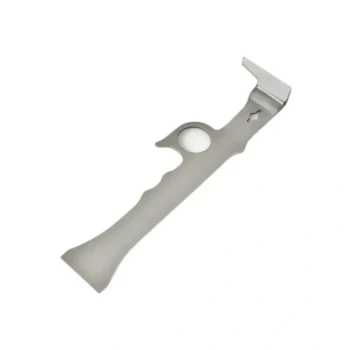
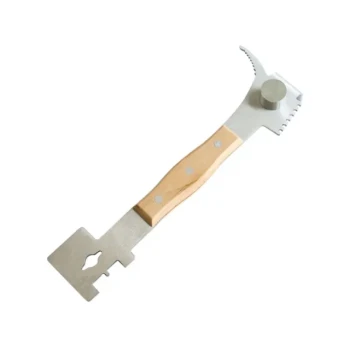
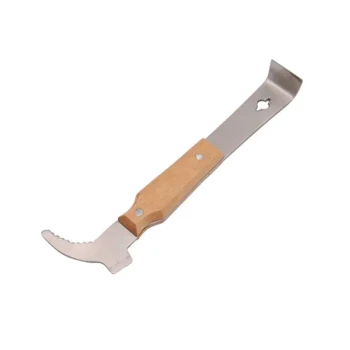
Professional beekeeping relies on a triad of essential hardware designed to balance operator safety with colony health. Specifically, the smoker uses cool smoke to mask alarm pheromones and sedate bees, the veil provides critical facial protection to prevent injury, and the hive tool acts as a lever to pry apart components glued by propolis and scrape away excess wax.
The coordinated use of these tools ensures operational efficiency by minimizing biological disturbance. By masking defensive signals and providing mechanical leverage, they allow beekeepers to inspect colonies and harvest honey without triggering stress-induced mortality in the hive.
The Mechanics of Colony Control
To manage a colony effectively, a beekeeper must overcome biological defenses and physical barriers. Each tool addresses a specific operational challenge found in professional apiaries.
The Smoker: Managing Chemical Communication
The primary function of the bee smoker is sedation through chemical masking.
When a hive is disturbed, guard bees release alarm pheromones to signal a defensive attack. The smoker produces cool smoke that masks these chemical signals, effectively interrupting the colony's defensive response.
By keeping the bees calm, the smoker reduces the difficulty of hive inspections and prevents the loss of bees due to stress-induced stinging.
The Hive Tool: Mechanical Leverage and Cleaning
Bees naturally seal gaps in their hive with propolis, a resinous substance that acts like a strong glue.
The hive tool is a specialized metal bar designed to provide the leverage necessary to pry apart hive boxes and separate frames that are bound together by this propolis. Without this mechanical advantage, accessing the brood chamber or honey super without damaging the equipment is nearly impossible.
Additionally, the hive tool serves a cleaning function. It is used to scrape off burr comb (excess wax) and propolis buildup, maintaining the internal order of the hive and facilitating future inspections.
The Veil: Essential Operator Protection
The bee veil serves as the primary physical barrier between the operator and the colony.
Its specific function is facial protection, guarding the most vulnerable areas of the beekeeper against stings.
Beyond preventing injury, the veil allows the operator to maintain focus and precision. By removing the immediate fear of facial stings, the beekeeper can perform delicate tasks—such as health assessments and queen location—with steady hands and minimal disruption.
Understanding the Trade-offs
While these tools are indispensable, their improper use can lead to operational inefficiencies or colony damage.
Temperature Control in Smokers
The smoke used must be cool, not hot.
If the fuel in the smoker burns too hot, it can singe the bees' wings or bodies, causing permanent damage to the colony workforce. The goal is masking pheromones, not physical suppression via heat.
Leverage vs. Force
The hive tool provides significant torque, but excessive force can damage wooden frames or crush bees located between components.
Operators must use the tool to gently break the propolis seal rather than aggressively prying, which minimizes bee mortality during the opening of the hive.
Making the Right Choice for Your Goal
How you utilize these tools depends on the specific outcome you are trying to achieve during an inspection.
- If your primary focus is Colony Health: Use the smoker sparingly to mask pheromones early; this minimizes stress and prevents a defensive chain reaction that leads to bee loss.
- If your primary focus is Efficiency: Keep your hive tool sharp and clean to quickly pry apart propolis-bound frames and scrape away burr comb that slows down inspections.
- If your primary focus is Safety: Ensure your veil is properly sealed and utilize cool smoke before opening the hive to create a low-stress operating environment.
Mastering the interaction between these three tools transforms beekeeping from a struggle against nature into a precise, sustainable management practice.
Summary Table:
| Tool Name | Primary Function | Core Benefit | Best Practice |
|---|---|---|---|
| Bee Smoker | Masks alarm pheromones | Sedates bees & reduces stress | Use cool smoke only to avoid singeing |
| Hive Tool | Prying and scraping | Breaks propolis seals & cleans wax | Use steady leverage to protect equipment |
| Bee Veil | Facial protection | Enables focused, precise inspections | Ensure a complete seal around the neck |
Scale Your Apiary Operations with HONESTBEE
As a professional beekeeper or distributor, you need hardware that balances durability with precision. HONESTBEE specializes in catering to commercial apiaries and wholesale distributors, providing a comprehensive spectrum of professional beekeeping tools, heavy-duty machinery, and essential consumables.
From our high-leverage hive tools to specialized honey-filling machines and hive-making equipment, our portfolio is designed to enhance your operational efficiency and long-term sustainability.
Ready to elevate your inventory or apiary productivity? Contact us today to explore our wholesale offerings and discover the value of a partnership with HONESTBEE.
References
- V Jagadeesh, V Pavithra. Adoption of seasonal management practices of apiary colonies by beekeepers. DOI: 10.33545/26180723.2024.v7.i3c.459
This article is also based on technical information from HonestBee Knowledge Base .
Related Products
- Stainless Steel J Hook Hive Tool for Beekeeping
- HONESTBEE Classic Pry Bar Hive Tool with High Visibility Finish for Beekeeping
- HONESTBEE Advanced Ergonomic Stainless Steel Hive Tool for Beekeeping
- Stainless Steel Honey Bee Smoker Hive and Honeycomb Smoker for Beekeeping
- Multi-Function Hive Tool with Integrated Hammer for Beekeeping
People Also Ask
- What specific challenges do beekeeping hive tools address during hive maintenance? Essential Solutions for Apiaries
- What is a J-hook hive tool and why is it favored by some beekeepers? Master Gentle Frame Handling
- What are the features of a J-hook hive tool? Effortlessly Lift Frames with Superior Leverage
- What is the purpose of the J-hook hive tool? Effortlessly Lift Frames with Superior Leverage
- How is a J-hook hive tool designed and what is its primary use? Master Effortless Hive Inspections