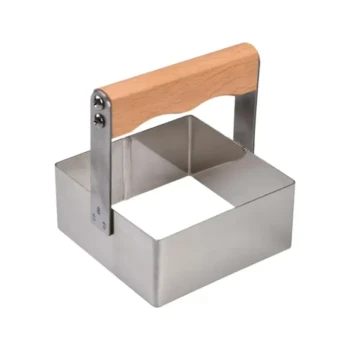
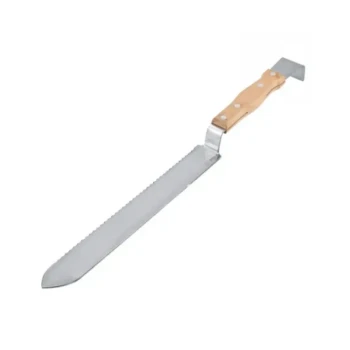
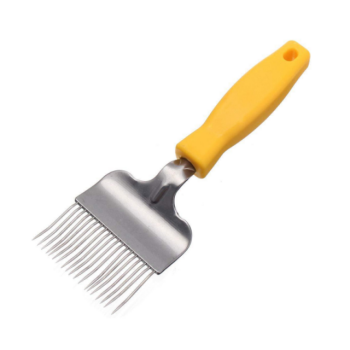
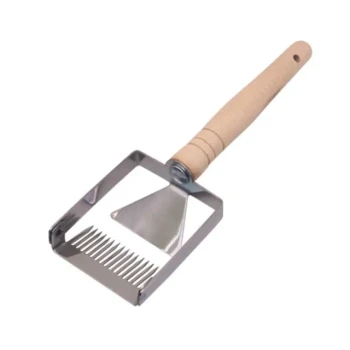
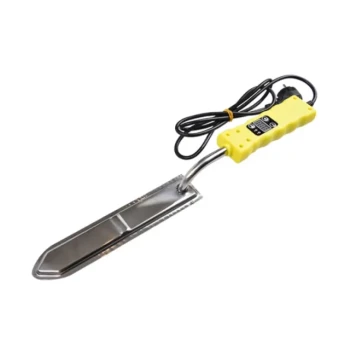
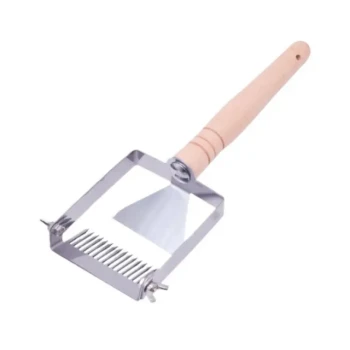
Modern honeycomb cutting relies on selective separation techniques that fundamentally differ from traditional extraction. Instead of removing the entire nest, specialized tools are used to surgically slice away only the upper honey-storage section of the comb, leaving the lower brood area attached to the nesting site.
Core Takeaway: Traditional whole-nest harvesting is a destructive event that terminates the colony, whereas modern cutting techniques function as a sustainable management practice. By preserving the brood (eggs, larvae, and pupae), this method ensures the colony’s survival, allowing for rapid recovery and consistent, long-term economic yields.
The Mechanics of Selective Harvesting
Targeted Separation
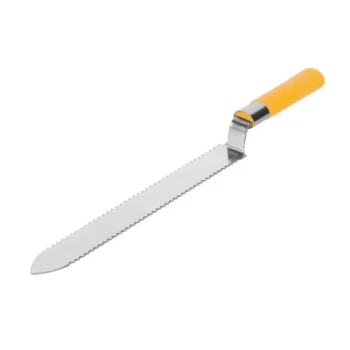
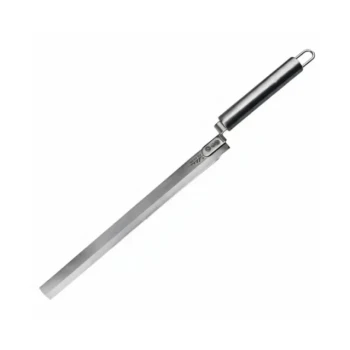
Modern techniques utilize specialized cutting tools designed to sever the honeycomb with precision.
This allows the harvester to remove only the portion of the comb containing honey stores.
Brood Preservation
The critical technical advantage is the preservation of the brood area.
This lower section of the comb contains the colony's future workforce—eggs, larvae, and pupae.
By leaving this section intact, the biological cycle of the colony continues interruption-free.
Ecological and Economic Impact
Rapid Colony Recovery
Because the queen and the brood are left undisturbed, the colony does not need to start from scratch.
The bees can immediately focus energy on rebuilding the honey stores rather than reconstructing an entire habitat.
Sustainable Yield Models
Traditional whole-nest harvesting destroys the "factory" to get the product, leading to a single, terminal harvest.
Modern cutting transforms honey hunting into a renewable resource model, allowing for repeated harvests from the same site over time.
Safety and Standardization Equipment
Harvester Protection
Modern protocols introduce protective bee suits and professional climbing equipment.
This technological support mitigates the high risks associated with harvesting from aggressive Apis dorsata colonies.
Handling High-Volume Output
A single Apis dorsata comb can yield up to 15 kg (33 lbs) of honey.
Because this volume is harvested in short seasonal windows, modern methods necessitate industrial-grade filtration and automated filling machines to ensure hygiene and standardization for the commercial market.
Understanding the Trade-offs
Equipment Dependency
Unlike traditional methods which rely on minimal tools, modern harvesting requires an investment in specialized gear.
This includes non-destructive tools, safety suits, and climbing apparatus, raising the barrier to entry for harvesters.
Processing Requirements
The shift to sustainable, high-volume harvesting creates a downstream bottleneck.
To maintain quality, raw honey cannot simply be collected; it requires precision processing to manage the massive influx of raw material without spoilage or contamination.
Making the Right Choice for Your Goal
Adopting modern techniques requires a shift from immediate extraction to long-term management.
- If your primary focus is Ecological Conservation: Prioritize the use of precise cutting tools to ensure the lower brood comb and nesting site remain 100% intact during harvest.
- If your primary focus is Commercial Viability: Invest in industrial-grade filtration and automated filling systems to handle the high-volume surges characteristic of seasonal Apis dorsata harvests.
By respecting the biological architecture of the hive, you secure not just the current harvest, but the future of the resource itself.
Summary Table:
| Feature | Traditional Harvesting | Modern Cutting Techniques |
|---|---|---|
| Harvest Method | Destructive (Whole-nest removal) | Selective (Upper honey-section only) |
| Colony Impact | Colony termination/displacement | Brood preservation & survival |
| Yield Potential | Single, terminal harvest | Multiple, renewable harvests |
| Tools Used | Minimal/Primitive tools | Specialized cutters & safety gear |
| Sustainability | Low (Habitat destruction) | High (Ecological conservation) |
| Commercial Focus | Immediate raw extraction | High-volume industrial processing |
Scale Your Honey Production with HONESTBEE
Transitioning to sustainable modern harvesting requires more than just technique—it demands the right industrial infrastructure. HONESTBEE empowers commercial apiaries and distributors with the high-performance tools and machinery needed to turn ecological harvesting into a profitable reality.
From precision honeycomb cutting tools and protective suits for hazardous environments to industrial-grade filtration and automated honey-filling machines, we provide the full spectrum of equipment to handle high-volume Apis dorsata yields.
Ready to modernize your operations? Contact us today to discover how our wholesale beekeeping solutions and specialized machinery can maximize your efficiency and preserve your most valuable resource.
References
- Cameron Jack, Jamie Ellis. Giant Honey Bee (suggested common name) Apis dorsata Fabricius (Insecta: Hymenoptera: Apidae). DOI: 10.32473/edis-in1119-2016
This article is also based on technical information from HonestBee Knowledge Base .
Related Products
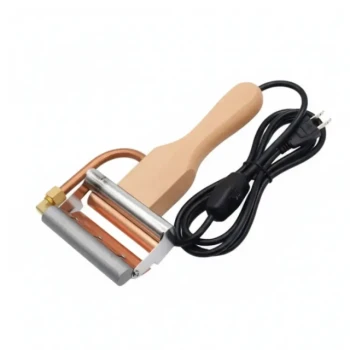
- Heavy Duty Stainless Steel Honeycomb Cutter
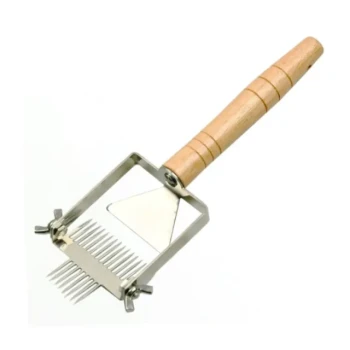
- Professional Honey Uncapping Fork Tool with Customizable Tine Options
- Professional Z-Shaped Multi-Function Uncapping Knife for Beekeeping
- Professional Bent Tine Honey Uncapping Fork with Ergonomic Grip
- Professional Stainless Steel Uncapping Fork with Wooden Handle
People Also Ask
- How is a comb cutter used to produce cut comb honey? Master the Art of Precision Harvesting
- Why is the comb-cutting technique preferred for Apis cerana queen rearing? Boost Success with Natural Bee Biology
- What is the cut comb honey method? A Guide to Pure, Artisanal Honey Production
- How is the cut comb method used to harvest honey? Master the Art of Premium Unprocessed Honey Production
- What is cut comb honey, and how is it prepared? Experience Honey in Its Purest Form