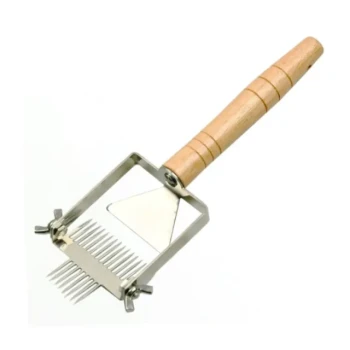
Portable honey extraction equipment for stingless bees utilizes vacuum negative pressure to harvest honey directly from storage pots without physical destruction. Unlike traditional pressing methods that crush hive structures and mix resinous impurities into the final product, this technology ensures distinct separation, yielding honey with superior clarity and hygiene standards while preserving the colony's health.
By replacing destructive manual crushing with precision suction, you simultaneously elevate product quality through reduced contamination and boost production sustainability by leaving the hive architecture intact.
Elevating Product Purity and Hygiene
Eliminating Resin Contamination
Traditional pressing involves crushing honey pots, which invariably mixes the honey with cerumen (a mixture of wax and plant resin) and other hive debris.
Vacuum negative pressure extracts only the liquid contents of the pot. This prevents resin impurities from leaching into the honey, resulting in a product with significantly higher optical clarity and a purer flavor profile.
Closed-Loop Protection
Portable extraction units often feature a fully enclosed collection system.
This design isolates the honey from external environmental contaminants during the harvest. By minimizing exposure to open air, the system reduces the risk of oxidation and ensures the honey maintains its natural floral aromas and physical properties.
Preserving Hive Infrastructure and Health
Non-Destructive Harvesting
Stingless bees store honey in delicate, irregular pots rather than the uniform hexagonal combs found in Apis hives.
Traditional pressing destroys these pots, forcing the bees to rebuild from scratch. Vacuum extraction removes the honey while leaving the pot structure largely intact, saving the colony the immense energy required for reconstruction.
Protecting the Brood and Future Yields
Manual squeezing or crushing carries a high risk of damaging brood cells and harming larvae.
The precision of a suction tube allows for targeted extraction from honey pots only, minimizing interference with the colony's reproductive cycle. This non-contact approach drastically shortens the recovery time between harvests, increasing the overall seasonal yield.
Understanding the Trade-offs
Equipment Maintenance and Complexity
While portable vacuum extractors offer superior results, they introduce mechanical complexity not present in manual pressing.
Operators must diligently clean suction tubes and vacuum chambers to prevent cross-contamination between hives. Failure to maintain the equipment can negate the hygiene benefits and potentially spread hive pathogens.
Power Dependency
Unlike manual pressing, which can be performed anywhere, portable extraction equipment requires a power source.
Reliance on batteries or external electricity can limit operations in extremely remote locations. Beekeepers must plan for power logistics to ensure continuous operation in the field.
Making the Right Choice for Your Goal
- If your primary focus is High-Value Retail Sales: Prioritize portable vacuum extraction to ensure the high clarity, low impurity, and superior hygiene required for premium market positioning.
- If your primary focus is Colony Multiplication: Use vacuum extraction to minimize stress on the hive and protect the brood, ensuring the population remains strong enough for division.
- If your primary focus is Low-Cost Subsistence: Traditional pressing may remain viable if capital investment in machinery is impossible, provided you accept lower purity and longer hive recovery times.
Transitioning to vacuum extraction is not just an upgrade in machinery; it is a shift toward an ecologically balanced production process that values the longevity of the bee colony as much as the harvest itself.
Summary Table:
| Feature | Traditional Pressing | Portable Vacuum Extraction |
|---|---|---|
| Honey Purity | High impurities (resin/wax) | Superior clarity (pure liquid) |
| Hive Structure | Destroyed/Crushed | Intact & reusable |
| Colony Stress | High (requires reconstruction) | Low (rapid recovery) |
| Hygiene | Open-air exposure risk | Closed-loop protection |
| Yield Frequency | Slower (long recovery) | Faster (short intervals) |
Scale Your Honey Production with HONESTBEE Precision
Transitioning to advanced extraction is essential for commercial success in the stingless bee market. HONESTBEE empowers commercial apiaries and global distributors with professional-grade beekeeping tools, specialized honey-filling machinery, and essential consumables designed for efficiency and sustainability.
Whether you are upgrading your extraction technology or sourcing high-quality hive-making hardware, we provide the full spectrum of equipment to maximize your yield and product value. Contact us today to explore our wholesale solutions and see how our expertise can drive your business growth.
References
- Simel Sowmen, Riesi Sriagtula. PKM Introduksi Vegetasi Tanaman Pakan Lebah dan Potensi Budidaya Lebah Tanpa Sengat (Galo-Galo) di Jorong Rimbo Janduang, Nagari Lingkuang Aua, Kecamatan Pasaman, Kabupaten Pasaman Barat. DOI: 10.25077/jwa.29.3.239-244.2022
This article is also based on technical information from HonestBee Knowledge Base .
Related Products
- 6 Frame Manual Stainless Steel Honey Extractor Beekeeping Equipment
- HONESTBEE 2 Frame Manual Acrylic Honey Extractor Beekeeping Equipment
- Stainless Steel Manual 8 Frame Radial Honey Extractor Machine for Beehives
- Stainless Steel 3 Frame Manual Honey Extractor Spinner for Bee Honey Extraction
- HONESTBEE 3-Frame Manual Acrylic Honey Extractor
People Also Ask
- How do you manually extract honey? Choose the Best Method for Your Hive
- What is a manual honey extractor? The Essential Guide to Cost-Effective Beekeeping for Beginners
- Why are manual extractors popular among beginner beekeepers? A Guide to Starting Simple & Saving Money
- What are the disadvantages of a manual honey extractor? Overcome Efficiency Bottlenecks in Your Apiary
- Which type of honey extractor is generally more durable? Focus on Material & Build Quality for Longevity