The primary limitations of the Apimaye hive stem from its significant upfront financial investment and specific functional quirks regarding component compatibility and maintenance. While designed as a comprehensive, durable system, it presents economic challenges for scaling and mechanical nuances that differ from traditional wooden setups.
While the Apimaye hive offers superior durability and insulation, its high price point limits its viability for large-scale operations. Furthermore, users must navigate specific design idiosyncrasies, such as potential ventilation blockages when using standard frames and messy feeder maintenance.
The Economic Barrier
High Initial Investment
The most immediate drawback of the Apimaye system is the high cost of entry. The price per unit is significantly higher than that of a standard wooden Langstroth hive.
Scalability Challenges
Due to this high price tag, the Apimaye is generally not considered cost-effective for large-scale commercial beekeeping operations. The capital required to expand an apiary using exclusively Apimaye equipment is often prohibitive compared to traditional wooden ware.
Value Context
It is important to note that the high cost is partially offset by the "all-in-one" nature of the kit. The package typically includes components that would be extra purchases for a standard hive, such as a queen excluder, bottom board, and feeder.
Operational and Functional Limitations
The Top Feeder "Mess"
A specific operational weakness noted is the design of the top feeder. Removing this component can be problematic if it still contains liquid feed, such as sugar water.
The removal process is reported to be messy, potentially leading to spills that attract pests or robber bees.
Ventilation Interference
While the hive boasts an advanced ventilation system, it has a notable compatibility flaw. Using standard frames from traditional Langstroth hives can inadvertently block the front vents of the Apimaye boxes.
This necessitates careful placement of frames to ensure the airflow system functions as intended, reducing the "plug-and-play" convenience for beekeepers with existing equipment.
Understanding the Trade-offs
Standardization vs. Customization
The Apimaye is a "Langstroth-style" hive, meaning it adheres to standard dimensions, but it is an evolved, engineered ecosystem.
The trade-off for its high-tech insulation and latching systems is a loss of seamless integration. As noted with the vent-blocking issue, mixing traditional wooden components into this plastic system requires extra vigilance that a pure wooden setup does not.
Durability vs. Repairability
The hive is constructed from food-grade, UV-resistant plastic (HDPE), making it rot-proof and sterilization-friendly. However, unlike wood which can be easily nailed or replaced cheaply, damaging a specialized molded component of an Apimaye hive may require ordering specific replacement parts from the manufacturer.
Making the Right Choice for Your Goal
The decision to invest in Apimaye gear depends largely on your budget and the scale of your apiary.
- If your primary focus is keeping a small number of hives in extreme climates: The superior insulation and durability justify the high cost, provided you are careful with frame placement and feeder maintenance.
- If your primary focus is rapid expansion or commercial production: The high cost per unit makes this system economically inefficient compared to traditional wooden hives.
Ultimately, the Apimaye is a premium, durable tool best suited for beekeepers who prioritize longevity and thermal performance over low overhead costs.
Summary Table:
| Limitation Category | Key Issue | Impact on Beekeeper |
|---|---|---|
| Economics | High Initial Cost | Larger capital required for startup compared to wood. |
| Scalability | Cost Prohibitive | Difficult to justify for large-scale commercial expansion. |
| Maintenance | Top Feeder Design | Potential for messy spills and attracting pests during removal. |
| Compatibility | Ventilation Blockage | Standard Langstroth frames can obstruct airflow vents. |
| Repairability | Molded Components | Harder to repair than wood; requires specific replacement parts. |
Maximize Your Apiary's Efficiency with HONESTBEE
While niche systems like Apimaye offer unique benefits, commercial success in beekeeping requires a balance of durability, scalability, and cost-effectiveness. At HONESTBEE, we specialize in supporting commercial apiaries and distributors with a comprehensive range of high-quality, professional-grade beekeeping tools and machinery.
Whether you need robust hive-making equipment, precision honey-filling machines, or essential industry consumables, our wholesale solutions are designed to help you scale your operations efficiently. Don't let high overheads or equipment limitations hold you back.
Ready to upgrade your commercial setup? Contact HONESTBEE today and let us provide the high-performance tools your business deserves.
Related Products
- HONESTBEE Premium Italian Style Hive Tool with Hardwood Handle
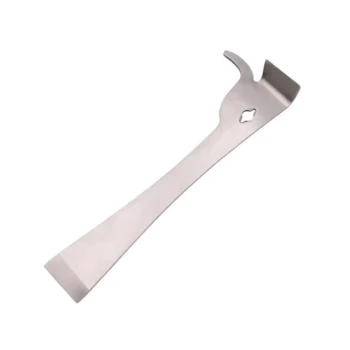
- Professional Stainless Steel Pry-Bar Hive Tool
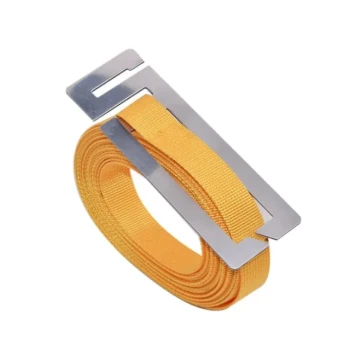
- Heavy-Duty Nylon Beehive Hive Strap with Stainless Steel Cinch Buckle
- Premium Traditional Copper Bee Smoker with Bellows
- Professional Multi-Function Stainless Steel Hive Tool
People Also Ask
- What distinguishes an Italian hive tool? Master High-Leverage Beekeeping with This Extra-Long Design
- Which intervention materials and management tools are used in commercial apiaries? Protect Your Bees from Pesticides
- Why are professional hive tools & observation equipment necessary for queen rearing evaluation? Master Your Quality
- What are the common construction features of hive tools? Key Insights for Superior Beekeeping Efficiency
- What are the different types of hive tools available? Choose the Right Tool for Your Apiary