Before operating a honey refractometer, it is helpful to grasp the scientific concept of the refractive index and how it correlates to the sugar density of honey. Additionally, familiarity with your specific device's instruction manual is a non-negotiable prerequisite for safe and accurate operation.
Core Takeaway While a honey refractometer is a mechanical tool, using it effectively requires understanding that you are measuring how light bends through sugar to determine moisture content. Accuracy relies less on the tool itself and more on sample preparation, temperature stability, and regular calibration.
The Scientific Foundation
To use the tool effectively, you must understand what it is actually measuring.
Refractive Index
The core principle of the device is the refractive index. This refers to the angle at which light bends as it passes through a substance.
Denser liquids bend light more than thinner liquids. Because honey is a dense, supersaturated sugar solution, it has a distinct refractive index that changes based on its composition.
The Sugar-Moisture Relationship
There is a direct inverse relationship between sugar content and moisture.
The refractometer measures the sugar concentration (Brix). However, for beekeepers, the scale is often calibrated to display the percentage of water. Understanding that higher sugar density equates to lower water content helps you interpret the readings correctly.
Operational Prerequisites
Beyond the science, there are practical environmental factors you must know before taking your first reading.
Temperature Equilibrium is Critical
Temperature significantly impacts the density of liquids. For an accurate reading, the refractometer and the honey must be at the same ambient temperature.
If you bring cold honey into a warm room, you must allow it to warm up before testing. Fluctuating temperatures or testing in a drafty environment can skew results.
Sample Homogeneity
Honey is rarely uniform in a large container. Moisture content can vary from the top of the bucket to the bottom.
Before extracting a sample, understand that the honey must be thoroughly stirred or mixed. Relying on a sample from the very top of a jar may not represent the true moisture content of the batch.
The Importance of the Manual
Every device is manufactured differently. You must read the specific instruction manual provided with your tool.
This document dictates the precise calibration method (using distilled water or a reference solution) and the specific maintenance requirements for that model.
Common Pitfalls to Avoid
Even with the right knowledge, certain habits can compromise your data.
Ignoring Residue
The prism is highly sensitive. You must understand that microscopic residue from a previous test will contaminate the current sample. Thorough cleaning with a damp, soft cloth is required immediately after every use.
Trusting a Single Reading
Human error and sample variability are real factors. It is dangerous to rely on a single data point.
The best practice is to take multiple readings and average them. This accounts for slight variations in how the cover plate was closed or how the sample was applied.
Making the Right Choice for Your Goal
Once you understand the basics, apply them based on your specific objective.
- If your primary focus is harvesting uncapped honey: Prioritize mixing and multiple samples, as uncapped frames vary wildly in moisture content.
- If your primary focus is long-term storage or sales: Prioritize temperature stability and calibration, as precision is required to prevent fermentation during storage.
Mastering the variable of moisture ensures your honey remains shelf-stable and high quality.
Summary Table:
| Key Knowledge Area | Core Concept | Why It Matters |
|---|---|---|
| Refractive Index | Light bending through sugar | Determines the precise moisture content of honey. |
| Inverse Relationship | Sugar vs. Moisture | Higher sugar concentration means lower water content. |
| Temperature Stability | Thermal equilibrium | Prevents reading errors caused by liquid density shifts. |
| Sample Preparation | Homogeneity | Ensures the test sample represents the entire batch. |
| Calibration | Manual standards | Guarantees the device remains accurate over time. |
Elevate Your Beekeeping Standards with HONESTBEE
At HONESTBEE, we understand that precision is the difference between premium shelf-stable honey and the risk of fermentation. As a dedicated partner to commercial apiaries and distributors, we provide a comprehensive wholesale solution for all your beekeeping needs.
From high-precision testing tools like honey refractometers to industrial-grade honey-filling machines and hive-making equipment, we supply the full spectrum of hardware and consumables required to scale your operation. Whether you are looking to outfit a commercial facility or source high-quality cultural merchandise, our expertise ensures you get the best value and performance.
Ready to optimize your production and secure your honey quality? Contact our wholesale experts today to explore our full range of professional equipment!
Related Products
- Digital Honey Refractometer for Precision Measurement of Optimal Honey Quality
- Precision Honey Refractometer Instrument for Quality Assessment
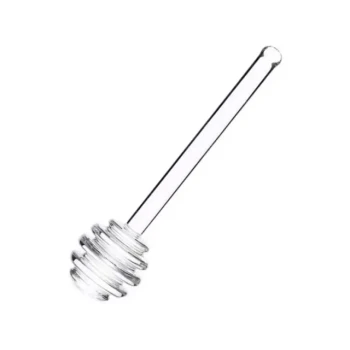
- Premium Heat-Resistant Glass Honey Dipper
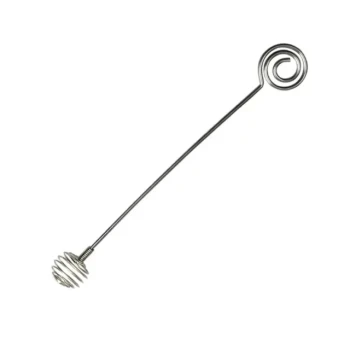
- Modern Stainless Steel Honey Dipper Stirrer
- Heavy Duty 304 Stainless Steel Honey Dipper
People Also Ask
- What role do high-precision refractometers play in determining the maturity and quality of honey? Ensure Honey Purity.
- Do the color and viscosity of honey affect its refractometer reading? Mastering Moisture Measurement Accuracy
- Why is a honey refractometer considered essential for commercial beekeepers? Ensure Honey Quality and Profitability
- What is a honey refractometer? The Essential Tool for Perfect Honey Quality
- How do refractometers ensure technical precision when measuring honey moisture? Secure Quality and Prevent Fermentation