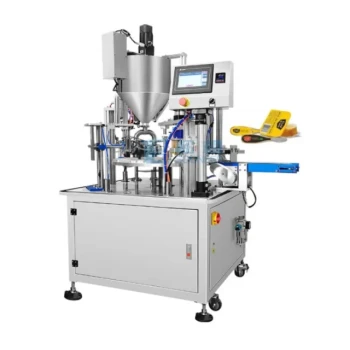
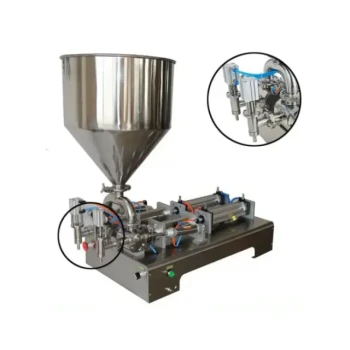
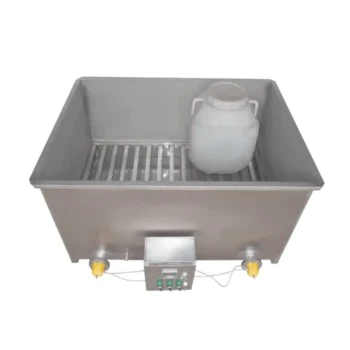
Standardized filling and processing machinery directly address the three most critical bottlenecks in traditional honey production: high labor intensity, low operational efficiency, and inconsistent hygiene standards. By automating complex tasks such as extraction, suction, filtration, and bottling, producers can transition from manual harvesting to professional, industrial-grade workflows that significantly boost output per unit of labor.
The Core Insight Traditional manual processing creates a ceiling on production volume and introduces contamination risks that disqualify products from premium markets. The primary value of mechanization is not just speed; it is the guarantee of standardized quality, transforming honey from a raw agricultural output into a consistent, commercially competitive product.
Solving Labor and Efficiency Constraints
The primary driver for adopting industrial machinery is the physical limitation of manual labor.
Professional Division of Labor
In traditional settings, the same workforce handles hive management, extraction, and packaging. Standardized machinery allows for professional labor division.
By automating the heavy lifting of extraction and filtration, skilled labor can be redirected toward colony management and quality control. This integration creates a streamlined production flow that maximizes human capital.
Increasing Output per Labor Unit
Manual processing cannot scale linearly with hive growth. Mechanization significantly improves the honey output per unit of labor.
This is particularly critical during high-volume periods, such as the pollination of Creeping Clover, where honey volume surges. Machines ensure that the biological output of millions of flower visits is captured efficiently, converting a massive influx of raw material into economic value without overwhelming the workforce.
Elevating Hygiene and Product Quality
While efficiency drives volume, machinery is the only way to ensure the biological and chemical stability required for high-end distribution.
Eliminating Secondary Contamination
Manual handling inherently exposes honey to the environment. Industrial-grade machinery minimizes the risk of secondary contamination.
Automated systems utilize closed loops for filtering and filling. This creates a barrier against environmental impurities and human contact, ensuring the final product meets the strict hygiene standards necessary for international trade and premium market certification.
Preserving Nutritional and Medicinal Properties
Honey and royal jelly are heat-sensitive and viscous. Precise metering and sealing technologies prevent oxidative degradation.
Advanced filling machines operate in sterile environments, protecting the product from oxidation which can destroy nutritional value. By maintaining consistent viscosity and temperature control, these machines extend shelf life and preserve the medicinal properties that command higher market prices.
Enhancing Market Competitiveness
The shift to standardized machinery is ultimately a strategic business move to secure revenue stability.
Meeting Standardization Requirements
Global markets demand consistency. Automated packaging ensures every unit meets precise weight and sealing standards.
This uniformity is impossible to achieve manually but is a baseline requirement for large-scale distribution networks. It allows producers to move beyond local sales and enter high-value distribution channels that require standardized packaging and certified purity.
Economic Risk Mitigation
Agriculture is volatile. Processing machinery allows for the creation of high-value-added products.
By enabling the production of refined honey, beeswax, and propolis, operations can diversify their revenue streams. This "value-added" production provides a financial buffer, mitigating the economic risks associated with crop failures or irregular rainfall that might affect raw honey yields.
Understanding the Trade-offs
While the benefits are clear, moving to standardized machinery introduces new complexities that must be managed.
High Capital and Energy Intensity
Transitioning to industrial processing requires significant upfront capital investment. Unlike manual labor, which is a variable cost, machinery represents a fixed asset that requires consistent energy input to operate, shifting the financial structure of the apiary.
Maintenance and Technical Skill
Mechanization replaces physical labor with technical requirements. The operation requires maintenance of complex systems—including filtration units and metering sensors—demanding a workforce with technical proficiency rather than just agricultural knowledge.
Making the Right Choice for Your Goal
The level of mechanization you choose should align with your specific business objectives.
- If your primary focus is Volume and Efficiency: Prioritize high-throughput extraction and suction machinery to handle production surges without increasing headcount.
- If your primary focus is Premium Market Access: Invest heavily in sterile filling and filtration systems that guarantee the hygiene and consistency required for high-end certifications.
- If your primary focus is Risk Mitigation: Select versatile processing equipment capable of handling byproducts like propolis and beeswax to diversify your revenue sources.
Standardization is the bridge between a raw agricultural commodity and a high-value, globally competitive consumer product.
Summary Table:
| Challenge Category | Manual Bottleneck | Machine Solution | Business Impact |
|---|---|---|---|
| Labor & Efficiency | High physical intensity; capped output | Automated extraction & suction | Higher output per labor unit; scalable growth |
| Hygiene & Quality | Secondary contamination risk | Closed-loop sterile filling | International standard compliance; premium pricing |
| Market Readiness | Inconsistent weight & sealing | Standardized metering & packaging | Access to large-scale distribution & retail |
| Revenue Risk | Dependence on raw honey yields | Diverse byproduct processing | Added value through beeswax & propolis production |
Transform Your Apiary into a High-Output Commercial Powerhouse
At HONESTBEE, we understand the unique pressures of large-scale honey production. Whether you are a commercial apiary aiming to eliminate labor bottlenecks or a distributor seeking consistent, retail-ready quality, we provide the industrial-grade solutions you need.
Our comprehensive wholesale portfolio includes:
- High-Throughput Machinery: From automated honey-filling machines to specialized hive-making equipment.
- Professional Tools: A full spectrum of beekeeping hardware and essential consumables.
- Value-Added Support: Equipment designed to process honey-themed cultural merchandise and diverse hive byproducts.
Ready to scale your production and secure premium market access?
Contact HONESTBEE Today to Discuss Your Wholesale Needs
References
- Olga Yu. Antsiferova, S.V. Kolupayev. Increase of the Competitiveness of Agricultural Production in Global Market (Example of Beekeeping Industry). DOI: 10.2991/aebmr.k.200729.002
This article is also based on technical information from HonestBee Knowledge Base .
Related Products
- Fully Automatic Honey Filling Packaging Machine for Processing Line
- Precision Durable Efficient HONESTBEE Rotary Honey Filling Machine
- Automatic Honey Filling and Filtering Machine for Beekeeping Bottle Filling
- Economy Small Honey Filling Machine Honey Bottle Filler Packaging Machine
- Small Honey Filling Machine Sachet Packing Equipment Single Nozzle
People Also Ask
- Why are fully automatic honey filling and packaging lines essential? Boost Your Honey's Market Value and Quality
- What is a fully-automatic honey filler? Streamline Your Production with High-Precision Automation
- How do automated honey filling and packaging machines affect profitability? Boost Margins with HONESTBEE Technology
- How do automated honey filling and packaging machines contribute to the market value of honey products? Maximize Your ROI
- How do industrial-grade automated honey filling and packaging machines mitigate the risk of physical contamination?