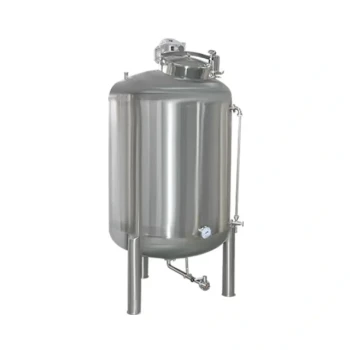
A precision constant temperature water bath system acts as the primary safeguard for honey’s biological integrity during processing. By maintaining a strictly controlled thermal environment, typically at 45°C, it ensures uniform heating that reduces microbial activity and moisture content without degrading the heat-sensitive nutrients that give honey its value.
The central value of this system is its ability to decouple viscosity reduction from thermal degradation. It allows processors to liquefy and sterilize honey for packaging while maintaining the enzymatic profile of a raw product.
Preserving Biological Integrity
The greatest challenge in honey processing is applying enough heat to process the material without "cooking" it.
Protection of Heat-Sensitive Nutrients
Honey contains volatile chemical compounds and biological agents that are easily destroyed by high heat.
A precision water bath maintains the temperature at a specific set point (often 45°C). This maximizes the retention of nutritional components and biological activities that would be lost in less controlled environments.
Prevention of Localized Overheating
Direct heating methods often create "hot spots" where honey contacts the heat source.
This localized overheating causes the darkening of honey color and creates burnt flavors. By using water as an intermediary buffer, this system ensures indirect, even heat distribution, preserving the honey's original color and quality standards.
Optimizing Operational Efficiency
Beyond quality preservation, precise temperature control solves significant logistical challenges in the production line.
Viscosity Reduction and Fluidity
Raw honey is often too viscous to package efficiently or may have crystallized in storage.
Controlled heating lowers the viscosity of bulk honey, improving its fluidity. This streamlining effect is essential for efficient straining, filtration, and final packaging (filling) processes.
Facilitating Contaminant Removal
Proper heating is a prerequisite for effective purification.
Raising the honey to 45–50°C facilitates the straining process, allowing the honey to pass through cloth filters (often four layers). This removes particulate matter and allows scum to rise to the top for removal after a settling period.
Ensuring Product Stability
Stability refers to the honey's shelf life and resistance to spoilage after packaging.
Microbial Control and Sterilization
Unprocessed honey carries a risk of fermentation due to natural yeasts.
The water bath system applies sufficient thermal energy to destroy these yeasts and reduce general microbial activity. This prevents the honey from fermenting in the jar, significantly extending shelf life.
Moisture Management
Excess water content is the enemy of honey stability.
The uniform heating provided by the system assists in dehydration. By lowering moisture content, the system further inhibits microbial growth and ensures the product remains stable over time.
Understanding the Trade-offs
While superior to direct heating, water bath systems introduce specific operational requirements.
The Necessity of Agitation
Heat transfer in honey is slow due to its thickness.
Simply placing honey in a warm bath is insufficient; the honey must be stirred or agitated to ensure the heat is distributed evenly throughout the vessel. Without this, the center of the batch may remain cool while the edges reach temperature.
Processing Time vs. Speed
This method is often associated with batch processing rather than continuous high-speed flow.
It requires patience. After heating and straining, the honey often requires a settling period (up to three days) to allow air bubbles and scum to surface. This is a slower process compared to industrial flash-pasteurization but yields a higher quality product.
Making the Right Choice for Your Goal
To maximize the value of a precision water bath system, align your settings with your specific processing objective.
- If your primary focus is Biological Preservation: Maintain the temperature strictly at 45°C to maximize the retention of enzymes and prevent color darkening.
- If your primary focus is Shelf Stability: Ensure the temperature reaches the 45-50°C range to effectively destroy yeast and prevent fermentation.
- If your primary focus is Packaging Efficiency: Utilize the system to lower viscosity just enough to facilitate straining and bottling, preventing bottlenecks in your workflow.
Precision is not just about heat; it is about balance. By controlling the temperature, you control the quality.
Summary Table:
| Core Value | Key Benefit | Operational Impact |
|---|---|---|
| Biological Integrity | Preserves enzymes and natural color | Maintains high-value raw honey profile |
| Operational Efficiency | Lowers viscosity for better flow | Streamlines straining and packaging |
| Product Stability | Eliminates fermentation yeasts | Ensures long shelf life and stability |
| Uniform Heating | Prevents localized hot spots | Avoids burnt flavors and darkening |
Elevate Your Honey Production with HONESTBEE
Maximize your output quality with HONESTBEE, your premier partner for professional beekeeping solutions. We cater to commercial apiaries and distributors with a comprehensive wholesale offering of beekeeping tools, machinery, and essential industry consumables.
Our specialized portfolio includes:
- Advanced Machinery: High-precision honey-filling and hive-making machines.
- Full Equipment Range: Everything from hardware to specialized processing tools.
- Industry Consumables: High-quality supplies for daily operations.
- Cultural Merchandise: Unique honey-themed retail products.
Contact HONESTBEE today to discover how our high-performance equipment can streamline your operations and protect your honey's biological integrity!
References
- Lee Chuen Ng, Fauziah Tufail Ahmad. Low Heating Effects on The Total Microbial Activity and Physico-Chemical Properties of Stingless Bee (Heterotrigona itama) Honey. DOI: 10.55230/mabjournal.v52i1.2442
This article is also based on technical information from HonestBee Knowledge Base .
Related Products
- Professional Stainless Steel Honey Filtering Machine with Water Bath Heating for Beekeeping
- Professional Thermostatic Conical Honey Melter
- Professional Honey Storage Tank with Agitation System
- Precision Honey Refractometer Instrument for Quality Assessment
- Heavy Duty Stainless Steel Honey Processing Machine Decrystallizing Tank
People Also Ask
- What is the best way to filter honey? A Guide to Quality, Clarity, and Raw Preservation
- Why do people filter honey? For Clarity, Stability, and Consumer Appeal
- Is it necessary to filter honey after extraction? A Guide to Straining vs. Raw Honey
- Why is filtering honey an important step in honey processing? Ensure Purity, Clarity & Marketability
- What are the benefits of using honey filters? Achieve Purity, Efficiency, and Market Appeal