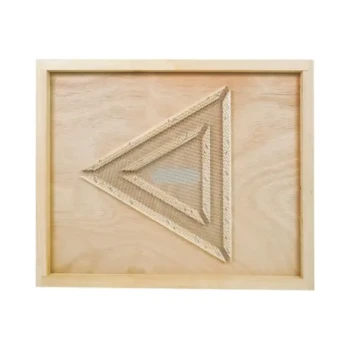
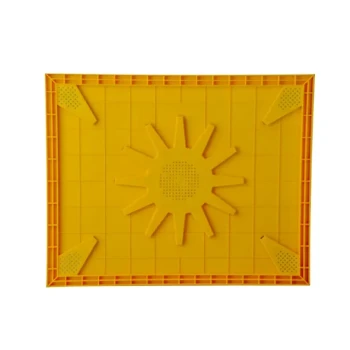
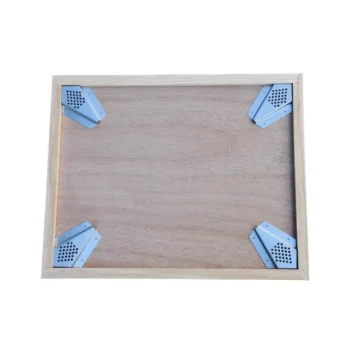
Bottom-board design and disciplined maintenance are central to hive hygiene and moisture control. Screened stainless-steel floors improve airflow and allow debris to fall through, while solid floors require a slight forward tilt so moisture can drain through the entrance. Regardless of design, regular scraping, inspection, and replacement prevent debris from becoming a reservoir for disease and pests.
The best bottom board is not simply durable—it must support drainage, ventilation, easy inspection, and efficient cleaning. Match the floor design to the apiary’s climate and operating practices, then maintain it as routinely as the frames and roof.
Choose a Bottom-Board Design That Supports Hive Health
Use screened floors for ventilation and debris management
Stainless-steel mesh bottom boards provide continuous ventilation and allow wax particles, dead bees, and other debris to drop below the colony. This reduces material accumulation inside the hive and can make routine sanitation more efficient.
Screened floors are particularly useful during warmer periods because they improve thermal ventilation. They can also assist with monitoring Varroa mite populations when used as part of an appropriate monitoring system.
Use solid floors with deliberate drainage
Solid bottom boards offer a closed floor surface but are more dependent on correct installation and maintenance. The hive should be tilted slightly forward so rainwater and internal moisture can move toward and out of the entrance rather than collect inside.
A bottom board’s front opening also functions as the colony’s entrance and the bees’ takeoff and landing platform. Reversible commercial boards may provide different entrance openings, such as 7/8-inch or 3/8-inch, allowing operators to select the configuration appropriate to the hive setup.
Select durable, rot-resistant materials
Because the bottom board is close to soil, splashback, and persistent moisture, construction quality directly affects service life. Rot-resistant timber, such as cypress, is a suitable choice for wooden floors and supporting hive stands.
Stainless-steel mesh is valuable where long-term durability and sanitation are priorities. For commercial apiaries, standardized, robust components can also simplify replacement, inventory management, and order fulfillment.
Control Moisture Beyond the Bottom Board
Elevate the hive above the ground
A dedicated hive stand improves airflow beneath the hive and reduces contact with damp ground. Elevation also helps prevent grass and weeds from blocking the entrance.
Keeping the hive off the ground can reduce moisture exposure and make inspections, cleaning, and equipment handling more convenient for beekeepers and service teams.
Maintain the surrounding apiary area
Grass and weeds should be kept short around each hive. Overgrown vegetation can obstruct the entrance, restrict airflow, interfere with inspections, and create conditions that encourage pests such as ants.
A weed barrier or thick layer of mulch beneath the stand can reduce recurring vegetation growth and make mowing or trimming more efficient.
Keep the roof watertight
A clean bottom board cannot compensate for water entering through a damaged roof. Wooden roofs should be checked regularly for rot and leaks, including probing for soft spots in the timber.
Metal roof covers, louvered vents, and thick natural insulation such as hemp can improve moisture protection and thermal regulation in commercial hive installations.
Establish a Practical Cleaning Routine
Remove debris during inspections
During routine hive inspections, check the floor for wax, dead bees, mold, pests, and other debris. Use a hive tool to scrape away buildup before it becomes a sanitation or airflow problem.
If the floor cannot be cleaned effectively in place, replace it with a clean floor. This is especially practical when an operation maintains spare bottom boards for rapid equipment rotation.
Clean replacement floors before reuse
Floors should be inspected for cracks, rot, corrosion, loose components, or deformation before being returned to service. Damaged surfaces can retain moisture and debris or compromise the fit between the bottom board and the hive body.
A durable hive tool and appropriately specified replacement floors help reduce downtime and keep maintenance consistent across multiple colonies.
Inspect for moisture-related problems
Look for standing water, persistent dampness, mold, softened wood, and blocked entrances. These signs may indicate that the hive is not sufficiently elevated, the forward tilt is inadequate, vegetation is restricting airflow, or water is entering through the roof.
Moisture management should therefore be treated as a system rather than a single product feature.
Integrate Bottom-Board Care With Hive Maintenance
Check frames for related hygiene issues
Frames can introduce mold, pests, wax buildup, and debris into an otherwise clean hive. Inspect them regularly for damage, mold, and pest activity.
After honey harvests, clean frames with a hive tool and wire brush, periodically apply wax where appropriate to encourage comb building, and store unused frames in a dry, well-ventilated area.
Standardize equipment across the apiary
Using consistent floor dimensions and interchangeable components simplifies inspections and replacement. It also allows distributors, wholesalers, and commercial beekeepers to maintain practical stocks of mesh floors, solid floors, stands, and hive tools.
A standardized product range supports faster response times and more efficient fulfillment when seasonal maintenance demands increase.
Match the design to operating conditions
Screened floors are a strong choice where ventilation, debris management, and mite monitoring are priorities. Solid floors may be appropriate where a closed floor is preferred, provided that drainage, inspection, and cleaning are handled carefully.
The correct choice depends on climate, hive configuration, maintenance capacity, and the beekeeper’s management objectives—not on floor type alone.
Understanding the Trade-offs
Screened floors are not maintenance-free
Mesh floors reduce internal debris accumulation, but the area beneath the screen can still collect material. That space must remain accessible for inspection and cleaning, particularly where monitoring devices or trays are used.
Mesh also requires inspection for corrosion, damage, or blocked openings that could reduce ventilation.
Solid floors require closer moisture control
Solid boards retain debris until it is manually removed. They therefore demand more frequent scraping and closer attention to the hive’s forward tilt and entrance drainage.
If water repeatedly accumulates on or beneath a solid floor, replacing the board without correcting the underlying site or installation issue will provide only a temporary solution.
Ventilation must be balanced with protection
Improved airflow helps manage heat and moisture, but the bottom board should still be protected from direct rain exposure and ground dampness. A stand, correct orientation, sound roof, and clear surrounding area are all necessary parts of the solution.
Durability affects total operating cost
Lower-cost floors may require more frequent replacement if they rot, warp, or corrode. For commercial users, a durable floor with predictable dimensions can reduce labor, simplify stocking, and improve the reliability of hive maintenance programs.
How to Apply This to Your Apiary or Product Range
Select equipment according to the colony environment, maintenance schedule, and scale of operation.
- If your primary focus is maximum ventilation and easier debris management: Choose durable stainless-steel screened bottom boards and maintain access beneath the screen for inspection and cleaning.
- If your primary focus is simple closed-floor construction: Use solid bottom boards with a slight forward hive tilt, clear drainage, and frequent scraping.
- If your primary focus is long service life: Prioritize rot-resistant timber, corrosion-resistant mesh, sound hive stands, and routine checks for structural damage.
- If your primary focus is commercial maintenance efficiency: Standardize compatible floors, stands, and hive tools while keeping clean replacement boards available for rapid changeovers.
- If your primary focus is moisture prevention: Elevate hives, keep vegetation short, maintain a watertight roof, and inspect regularly for standing water or mold.
With the right floor design and a consistent maintenance system, beekeepers can protect hive hygiene, manage moisture, and keep apiary operations efficient and dependable.
Summary Table:
| Factor | Screened Floor | Solid Floor | Maintenance Consideration |
|---|---|---|---|
| Ventilation | Excellent airflow | Limited, relies on tilt | Ensure openings are clear |
| Debris Management | Debris falls through | Debris accumulates | Scrape regularly |
| Moisture Control | Good, with stand | Requires forward tilt | Check drainage and tilt |
| Material | Stainless steel mesh | Rot-resistant wood | Inspect for damage |
| Mite Monitoring | Suitable | Not suitable | Use trays if needed |
| Cleaning | Access below screen | Manual scraping | Replace if damaged |
| Durability | High | Moderate | Replace as needed |
Key Insight: Match floor type to your climate and management style, and prioritize regular inspection and cleaning.
Optimize your hive hygiene with HONESTBEE's premium beekeeping equipment. Our wholesale range includes durable bottom boards, hive stands, and essential tools, engineered for commercial apiaries and distributors. Benefit from our full-spectrum product portfolio, rapid response, and ultra-fast delivery. We support your business with OEM/ODM options, certifications, and dedicated service, ensuring your operations run smoothly. Contact us today for a quote and elevate your apiary efficiency! Get in touch now.
Related Products
- Langstroth Solid Bottom Board for Beekeeping
- Solid Bottom Board Australian Pine Wood Langstroth Bottom Board for Wholesale
- Langstroth Screen Bottom Board for Beekeeping Wholesale
- HONESTBEE Top Bar & Bottom Bar Forming Machine | Bee Frame Machine
- Australian Pine Wood Langstroth Screen Bottom Board for Wholesale
People Also Ask
- What are the functions of solid bottom boards for a beehive? Essential Thermal Protection and Winter Survival Tips
- What is the purpose of a solid bottom board for bee hives? Enhance Hive Health and Winter Survival
- How does climate influence the choice between a solid and screened bottom board? Optimize Your Hive for Local Weather
- What is the primary function of a bottom board in a modern modified beehive system? Essential Foundation Guide
- What are the characteristics of a solid bottom board for a beehive? Boost Colony Health and Thermal Insulation