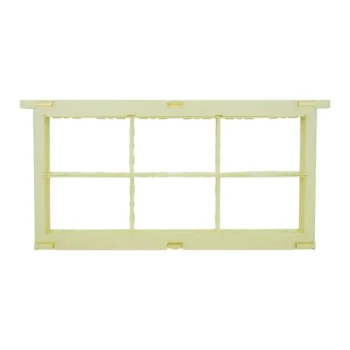
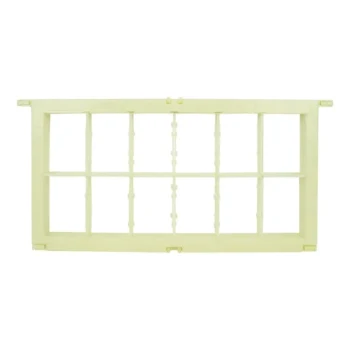
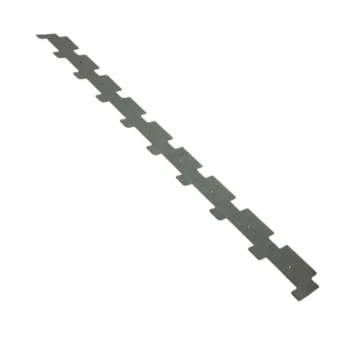
The critical requirements are specialized section inserts, ultra-thin unwired wax foundation, and the correct colony conditions. Use round plastic or square wooden inserts mounted in purpose-built section supers, then fit each insert with foundation trimmed precisely to its dimensions. The inserts should be placed on highly populous colonies during an active honey flow, with adequate ventilation, and removed promptly after capping to preserve color and appearance.
Section comb quality depends on matching the insert, foundation, hive equipment, and harvest timing. The foundation must be thin enough to remain tender and consumer-friendly, while the colony must be strong and supplied with a sustained nectar flow so bees fully draw, fill, and cap each individual section.
Choose Equipment That Produces Retail-Ready Sections
Use Dedicated Section Supers
Section comb production requires specialized supers or section racks designed to hold modular inserts. Standard honey supers alone do not provide the structure needed to form separate, package-sized comb sections.
The rack must hold the inserts securely and maintain consistent spacing so bees can build comb evenly within each unit.
Select the Appropriate Insert Shape
The two primary insert options are round plastic sections and square wooden sections. Both can produce marketable comb honey when properly fitted and managed.
Round plastic inserts are often operationally efficient because bees can fill them more uniformly without the difficult corners found in square compartments. Square wooden inserts may be preferable where the target market expects a traditional appearance or where existing equipment is already configured for them.
Include Covers and Packaging Components
Modular systems may include snap-in rings, protective covers, or other components that allow each completed section to be removed and sold as an individual unit. These parts should be compatible with the insert material and intended retail packaging.
For distributors and resellers, the most useful equipment package includes section racks, inserts, foundation sheets, retaining components, and protective packaging from compatible specifications. Compatibility reduces assembly problems and simplifies replenishment for commercial apiaries.
Match the Foundation to the Insert
Use Ultra-Thin, Unwired Wax Foundation
Each section must be fitted with ultra-thin beeswax foundation without wire reinforcement. Thin foundation keeps the finished comb tender and suitable for direct consumption.
Heavy or wired foundation is inappropriate for section comb intended to be eaten with the wax. Plastic foundation also does not provide the same edible, natural comb structure required for this product format.
Trim Foundation at Room Temperature
Foundation should be trimmed to fit the insert at room temperature. Wax becomes brittle when cold, so cutting or forcing chilled foundation into place can create cracks that weaken the sheet and disrupt comb construction.
The foundation should fit neatly without excessive gaps, bending, or pressure. A poor fit can lead to incomplete attachment, irregular comb, or sections that are difficult to remove cleanly.
Keep the Foundation Consistent Across Orders
Commercial buyers should specify the required insert dimensions, material, shape, and foundation format when sourcing supplies. Consistent components help maintain a uniform finished product and prevent production interruptions caused by mismatched racks, inserts, or wax sheets.
A supplier offering a full range of compatible components can also reduce procurement complexity and improve order fulfillment when seasonal demand increases.
Create the Colony Conditions Needed for Complete Sections
Use Highly Populous Colonies
Section supers should be placed on strong, highly populous colonies. Large worker populations are better positioned to draw foundation quickly, fill the sections, and apply complete cappings.
Weak colonies may leave sections partially built or unevenly filled, reducing both saleable yield and visual quality.
Install During an Active Honey Flow
An active nectar flow is essential for efficient section comb production. Bees need a reliable supply of nectar to construct wax, fill the cells, and finish the sections.
Installing section equipment outside a productive flow can result in slow construction, incomplete sections, or increased management effort without a corresponding marketable harvest.
Maintain Good Hive Ventilation
Adequate ventilation supports normal hive activity and helps manage moisture while bees process nectar. Poor ventilation can contribute to slow curing and may affect the appearance and quality of the finished comb.
Ventilation should be considered when positioning the section super and managing the colony throughout the honey flow.
Harvest at the Correct Stage
Remove Sections Promptly After Capping
Sections should be harvested once the honey is fully capped or suitably capped for the intended product standard. Prompt removal protects the bright, clean appearance expected of premium comb honey.
Leaving finished sections in the hive for too long can allow continued bee activity to discolor or otherwise reduce their visual quality.
Preserve the Section as an Individual Unit
The main advantage of modular inserts is that the completed comb can be removed as a self-contained package. Unlike cut-comb production, the beekeeper does not need to slice a large comb into retail portions.
This reduces labor, limits honey leakage from cutting, improves handling hygiene, and preserves a consistent presentation for direct retail sale.
Understanding the Trade-offs
Round Plastic Versus Square Wooden Inserts
Round plastic sections generally make filling easier and can provide consistent results, particularly where uniform retail units are important. Square wooden sections offer a conventional appearance but may require more attention to corner filling and fit.
The best choice depends on customer expectations, existing rack compatibility, packaging requirements, and the price position of the final product.
Specialized Equipment Requires Component Compatibility
Section comb systems are more specialized than standard honey-super equipment. Inserts, racks, rings, foundation, and covers must work together, so substituting components without checking dimensions can create avoidable production failures.
For wholesalers and resellers, maintaining a compatible product portfolio is therefore more valuable than supplying isolated parts at the lowest unit price.
Production Depends on Seasonal Conditions
Even correctly assembled equipment cannot compensate for inadequate colony strength or nectar availability. Section comb production is more sensitive to timing and colony condition than ordinary honey storage intended for extraction.
Commercial planning should account for seasonal honey-flow windows, inventory availability, and rapid delivery of replacement components.
Making the Right Choice for Your Goal
The equipment decision should follow the desired product format, customer expectations, and production capacity.
- If your primary focus is premium retail presentation: Choose compatible modular section racks, round or square inserts, ultra-thin unwired foundation, and protective covers that allow direct sale as complete units.
- If your primary focus is efficient apiary production: Use round plastic sections with properly trimmed foundation and install them on strong colonies during a reliable nectar flow.
- If your primary focus is wholesale or distribution: Source a complete compatible portfolio of racks, inserts, foundation, retaining components, and packaging to simplify customer purchasing and improve fulfillment speed.
- If your primary focus is consistent product quality: Standardize insert dimensions, trim foundation at room temperature, provide adequate ventilation, and harvest promptly after capping.
The right combination of modular equipment, tender foundation, strong colonies, and disciplined timing turns section comb honey into a consistent, retail-ready product.
Summary Table:
| Parameter | Critical Requirement |
|---|---|
| Insert Type | Round plastic or square wooden modular inserts |
| Foundation | Ultra-thin, unwired beeswax, trimmed at room temperature |
| Supers | Dedicated section supers or racks |
| Colony Strength | Highly populous, strong colonies |
| Timing | Active honey flow, harvest promptly after capping |
| Ventilation | Adequate to manage moisture |
Ready to streamline your section comb honey production? HONESTBEE offers a comprehensive range of compatible section racks, inserts, ultra-thin foundation, and packaging solutions. Our one-stop sourcing, fast delivery, and expert support ensure you get the right equipment when you need it. For distributors and commercial apiaries, we provide OEM/ODM options, consistent quality, and reliable supply. Contact us today to discuss your requirements and boost your honey yield!
Related Products
- Professional 500g Sectional Comb Honey Frame System for Beekeeping
- Professional Sectional Comb Honey Frame with 250g Cassette System for Beekeeping
- Plastic Honey Comb Frames Cassette Box for Honey
- Heart-Shaped Comb Honey Frame and Honeycomb Cassette
- Heavy Duty Castellated Iron Frame Spacer for Honey Supers
People Also Ask
- How are honeybee combs utilized for non-destructive colony monitoring? Master Population Density Tracking
- What frame to use for honeycomb? Choose the Right System for Pure, Edible Comb
- What is a honeycomb frame? The Key to Modern, Sustainable Beekeeping
- What is the technical purpose of exchanging honeycomb frames? Master Apiary Equalization for Growth
- What is the significance of sampling honeycomb frames and hive bottoms? A Guide to Scientific Sanitation Monitoring