To produce specific honey varietals or migratory organic honey, beekeepers rely on a combination of strategic hive mobility and specialized segregation equipment. The core method involves transporting colonies to distinct geographic locations where target plants are blooming or organic farming is practiced, then adding specific honey boxes (supers) to capture that specific nectar flow. These boxes are harvested immediately after the bloom ceases to prevent contamination from other nectar sources, ensuring the honey maintains at least 51% purity from the single plant source.
Core Takeaway Production of premium varietal and organic honey is less about processing and more about isolation and timing. By strictly segregating nectar sources in the field and using sterile, non-toxic processing equipment, producers ensure the final product retains its unique floral profile and organic certification.
The Field Method: Capturing the Varietal
Producing a "monofloral" honey—such as Tupelo or Fireweed—requires strict control over what the bees forage. Since you cannot leash a bee, you must move the hive to the resource.
Strategic Migration
Beekeepers practice migratory beekeeping, physically moving colonies to organic farms or wild sites exactly when a specific species begins to bloom. This ensures the bees' primary food source is the target plant.
The Role of the "Super"
Once on site, beekeepers add honey boxes, known as supers, to the hive structure. These boxes are dedicated solely to the current nectar flow.
Precision Harvesting
Timing is the most critical factor in this method. Beekeepers must harvest the supers immediately when the target nectar flow stops.
Leaving the boxes on too long risks dilution with nectar from other plants, which would disqualify the batch from being labeled as a specific varietal (which generally requires 51% purity).
Processing Equipment: Preserving Quality
Once harvested, the honey must be processed for bottling. The equipment used here is designed to maintain the honey's natural chemical structure and antioxidant activity.
Gentle Heating Systems
Honey often thickens or crystallizes, particularly in cold months, requiring heat to facilitate bottling. However, aggressive heat destroys nutrients.
Water bath heaters are used to warm the honey gently using indirect heat, protecting the honey's quality. Alternatively, electric heat blankets can be wrapped around containers to maintain a consistent, regulated temperature without scorching the product.
Bottling Machinery
The choice of filling equipment depends on the scale of the operation.
Gravity bottlers use natural pressure to create a smooth, consistent flow. These are ideal for small-to-medium operations prioritizing simplicity.
Automatic filling machines are essential for commercial beekeepers. They fill multiple bottles simultaneously with precise dosage control, ensuring efficiency for large-scale distribution.
The Rigor of Organic Hygiene
Producing organic honey involves strict trade-offs regarding the chemicals and materials used in maintenance. Standard cleaning agents are often prohibited.
Material Restrictions
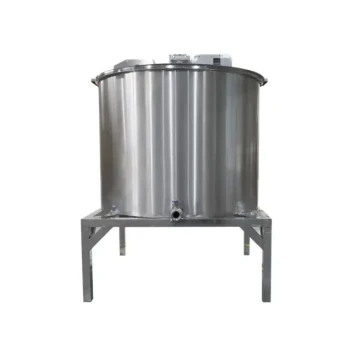
To prevent environmental contaminants, organic production requires that all equipment touching the honey—such as storage tanks and filling lines—be made of high-grade materials like stainless steel.
Sterile Maintenance
Equipment must be cleaned and disinfected using specialized non-toxic, residue-free consumables.
This strict management prevents cross-contamination from conventional chemical agents. It is the only way to ensure the honey passes the rigorous purity tests required for organic certification and premium market pricing.
Making the Right Choice for Your Goal
- If your primary focus is Purity (Varietal/Organic): Prioritize the timing of your harvest and the use of dedicated stainless steel equipment cleaned with non-toxic agents to avoid cross-contamination.
- If your primary focus is Scale (Commercial Production): Invest in automatic filling machines and electric heat blankets to maintain consistent throughput during high-volume seasons.
Success in premium honey production lies in the discipline of separating nectar sources in the field and contaminants in the facility.
Summary Table:
| Category | Key Method/Equipment | Primary Purpose |
|---|---|---|
| Field Method | Strategic Migration | Relocating hives to specific nectar sources or organic zones. |
| Harvesting | Specialized Honey Supers | Isolating specific nectar flows to ensure >51% purity. |
| Processing | Water Bath/Heat Blankets | Gentle warming to facilitate bottling without destroying nutrients. |
| Bottling | Automatic Filling Machines | Efficient, high-volume production with precise dosage control. |
| Hygiene | Stainless Steel & Non-toxic Agents | Preventing chemical contamination for organic certification. |
Elevate Your Honey Production with HONESTBEE
To capture the premium market for varietal and organic honey, you need equipment that guarantees purity and efficiency. HONESTBEE specializes in serving commercial apiaries and distributors with a complete range of professional solutions.
From high-grade stainless steel hive-making and honey-filling machines to essential non-toxic industry consumables, we provide the tools you need to maintain organic integrity and scale your operations. Whether you are expanding a migratory fleet or outfitting a distribution center, our expertise ensures your honey maintains its unique floral profile from hive to bottle.
Ready to scale your commercial apiary?
Contact our specialists today to discover how our wholesale machinery and tools can optimize your production.
Related Products
- Stainless Steel Pivoting Honey Uncapping Fork with Plastic Handle
- All-Stainless Steel Pivoting Honey Uncapping Fork for Beekeeping
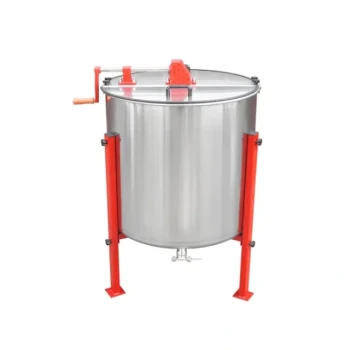
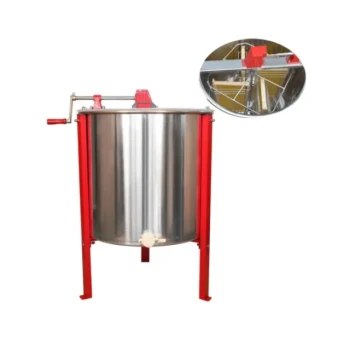
- 6 Frame Manual Stainless Steel Honey Extractor Beekeeping Equipment
- Professional Stainless Steel Honey Filtering Machine with Water Bath Heating for Beekeeping
- Stainless Steel Beekeeping Honey Extractor Lid
People Also Ask
- What is the design purpose of honey uncapping forks and honey uncapping tanks? Maximize Your Harvest Efficiency
- How does a honey uncapping fork supplement the use of an uncapping knife? Boost Your Honey Yield and Extraction Efficiency
- What are the essential tools for uncapping honey frames? Choose the Right Tool for Your Apiary
- What other tools are available for honey uncapping besides knives? Find the Right Tool for Your Apiary's Scale
- What tools are used for honey uncapping? Choose the Right Knife for Your Harvest