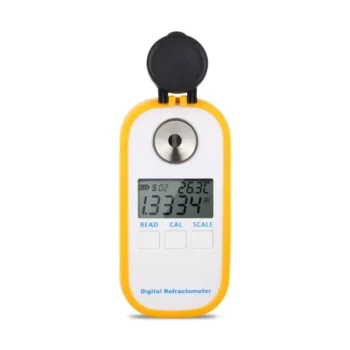
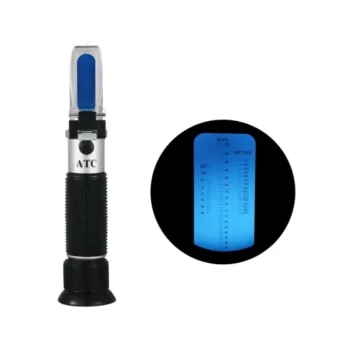
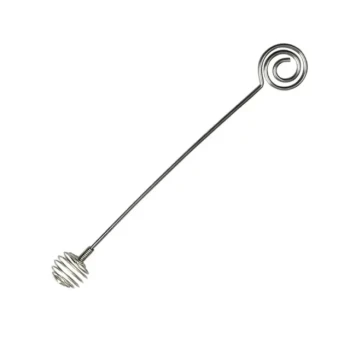
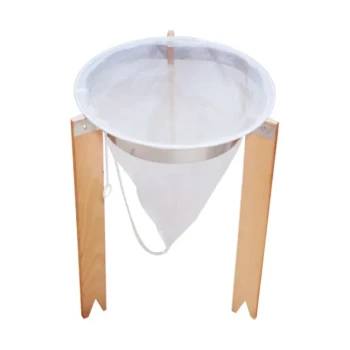
A calibrated honey refractometer is the essential instrument for measuring moisture during harvest. It determines honey’s water content indirectly through its refractive index, providing a rapid, non-destructive reading before extraction, bottling, or distribution. Supporting equipment—such as a clean sampling tool, calibration solution or distilled water, and temperature-compensation guidance—helps ensure that the reading is reliable.
Moisture testing is a release-control step, not merely a field measurement. A calibrated honey refractometer allows beekeepers, processors, and distributors to identify honey at fermentation risk before it reaches storage or the market.
Why Honey Moisture Measurement Matters
High Moisture Creates Fermentation Risk
Honey naturally contains yeasts that can remain inactive when moisture is sufficiently low. Excess water allows these yeasts to multiply, producing fermentation, off-flavors, acidity, and gas.
Honey above approximately 20% moisture is generally considered at serious risk of fermentation, although exact limits depend on the applicable standard, product specification, and buyer requirements. Some references identify moisture below 17.1% as highly resistant to fermentation, but this should not replace compliance with the relevant market standard.
Moisture Determines Shelf Stability
Water content directly affects honey’s storage stability, viscosity, and resistance to spoilage. A batch that appears acceptable at harvest may deteriorate during transport or warehouse storage if its moisture level is too high.
For commercial operations, testing provides documented evidence that honey is mature enough for storage and sale.
Testing Protects Commercial Quality
Moisture results support consistent purchasing, blending, bottling, and export decisions. They also help distributors and wholesalers verify that incoming lots meet agreed specifications before committing them to customers.
Essential Equipment for Harvest Testing
Honey Refractometer
The honey refractometer is the primary equipment required. It measures the refractive index of a honey sample and converts that optical result into an estimated moisture percentage using honey-specific calibration relationships or tables.
Both handheld optical refractometers and benchtop Abbe refractometers can be used. Handheld models are practical for apiaries and receiving inspections, while benchtop instruments are better suited to laboratories and processors requiring controlled, repeatable measurements.
Calibration Materials
A refractometer must be checked and calibrated according to the manufacturer’s instructions. Distilled water or an approved calibration standard is commonly used, depending on the instrument design.
Calibration is especially important when measurements are used for commercial acceptance, dispute resolution, or regulatory documentation.
Clean Sampling Tools
A clean spatula, pipette, glass rod, or sample container is needed to transfer honey onto the prism without introducing water, debris, wax, or other contaminants. The sample should represent the batch rather than only the surface of a container.
After testing, the prism should be cleaned with the method recommended by the manufacturer. Abrasive materials or excessive force can damage the optical surface.
Temperature-Compensation Reference
Honey viscosity and refractive index vary with temperature. The instrument may provide automatic temperature compensation, or the operator may need to use the manufacturer’s correction guidance or an applicable honey moisture table, such as the Chataway relationship.
A thermometer can therefore be useful when the refractometer does not compensate automatically. The key requirement is consistent procedure and correct interpretation of the reading.
How the Measurement Works
Refractive Index Indicates Water Content
When light passes through honey, it bends according to the sample’s refractive index. Because dissolved sugars and water affect that index, the instrument can correlate the optical reading with moisture content.
This makes refractometry fast and non-destructive compared with methods that require extensive laboratory preparation.
Sampling Must Be Representative
Honey can vary within a tank, frame, or harvested lot. Samples should be mixed or collected according to a defined procedure so the result reflects the material being released for extraction, storage, or sale.
For B2B operations, recording the lot number, sampling point, date, instrument identification, and result improves traceability.
The Result Supports a Release Decision
The refractometer reading should be compared with the applicable legal requirement, customer specification, or internal quality limit. A result near the limit deserves particular attention because temperature, calibration, sampling, and instrument condition can influence the measurement.
Where Testing Fits in the Harvest Process
At the Apiary or Receiving Point
Testing frames or incoming honey before full processing can identify lots that require additional review. This prevents unsuitable material from being mixed with honey that already meets specification.
For distributors and wholesalers, receiving inspection is a practical control point for checking supplier consistency.
Before Bottling
Moisture should be confirmed before bottling and final labeling. Once honey has been packaged and distributed, fermentation-related complaints are more costly to investigate and resolve.
During Storage and Blending
Moisture records help processors decide whether lots can be stored separately, blended, or released. Blending should not be used to conceal a quality problem; each operation still needs to meet its applicable specification.
Understanding the Trade-offs
A Refractometer Is Fast but Procedure-Dependent
Refractometers provide rapid results, but accuracy depends on calibration, clean optics, representative sampling, and appropriate temperature compensation. A poor sampling method can produce a precise-looking result that does not represent the batch.
Handheld and Benchtop Models Serve Different Needs
A handheld unit offers portability and quick field checks. A benchtop Abbe refractometer generally provides a more controlled laboratory workflow, but it requires greater investment, bench space, and operator discipline.
The best choice depends on testing volume, required documentation, mobility, and the consequences of releasing nonconforming honey.
Moisture Is Important but Not the Only Quality Measure
A compliant moisture result does not by itself confirm every aspect of honey quality. Appearance, cleanliness, storage conditions, traceability, and other customer or regulatory requirements may also need to be assessed.
Thresholds Must Not Be Applied Blindly
Moisture limits vary by standard, market, and product specification. The commonly cited below-20% target is widely used as a commercial reference, but the responsible approach is to verify the exact requirement governing the shipment.
How to Apply This to Your Operation
Select equipment and procedures according to your testing environment and commercial risk.
- If your primary focus is field harvesting: Choose a portable honey refractometer, maintain calibration materials on site, and test representative samples before accepting or extracting a lot.
- If your primary focus is processing or laboratory control: Use a calibrated benchtop or high-precision refractometer with documented temperature control and repeatable sampling procedures.
- If your primary focus is wholesale or distribution quality assurance: Require moisture results or perform receiving checks against the applicable customer and regulatory specification before storage or resale.
- If your primary focus is rapid order fulfillment: Maintain a standardized testing workflow and readily available replacement or supporting equipment so quality checks do not delay release decisions.
With the right refractometer, disciplined sampling, and verified moisture limits, honey businesses can protect shelf life, reduce fermentation claims, and release product with confidence.
Summary Table:
| Equipment | Purpose | Key Considerations |
|---|---|---|
| Honey Refractometer | Measures moisture via refractive index | Choose handheld vs. benchtop based on needs |
| Calibration Materials | Ensures accurate readings | Use distilled water or standards; check regularly |
| Clean Sampling Tools | Transfer honey without contamination | Use spatulas, pipettes, etc.; clean properly |
| Temperature-Compensation Reference | Correct for temperature effects | Use auto-compensation or manual correction |
Ensure your honey meets quality standards with HONESTBEE's premium refractometers and testing supplies. As your one-stop partner for beekeeping equipment, we offer fast delivery, expert support, and wholesale pricing. Contact us today to discuss your needs and secure reliable supply for your operation. Get in touch!
Related Products
- Digital Honey Refractometer for Precision Measurement of Optimal Honey Quality
- Precision Honey Refractometer Instrument for Quality Assessment
- 0.5T Capacity Honey Dehumidifier Dryer with Vacuum Heating and Thickening Filtering Machine
- High Quality Honey Dehumidifier Dryer Thickening Machine for Beekeeping
- Honey Concentrating and Filtering Dehumidifier Machine 2T Capacity for Honey
People Also Ask
- What role do high-precision refractometers play in determining the maturity and quality of honey? Ensure Honey Purity.
- Do the color and viscosity of honey affect its refractometer reading? Mastering Moisture Measurement Accuracy
- How do refractometers ensure technical precision when measuring honey moisture? Secure Quality and Prevent Fermentation
- Why is a honey refractometer considered essential for commercial beekeepers? Ensure Honey Quality and Profitability
- What is a honey refractometer? The Essential Tool for Perfect Honey Quality