The selection of hive frame size is primarily determined by the scale of your beekeeping operation, your physical lifting capacity, budget constraints, and the preferred configuration of the hive. While the length of the frame is generally fixed at 17 5/8 inches, the height varies significantly, directly impacting the weight of the boxes you must manage.
Selecting the right frame size is a balancing act between operational efficiency and physical sustainability. Larger frames reduce the total number of components to buy and inspect, but can result in boxes weighing over 100 pounds, posing significant ergonomic challenges.
Operational Ergonomics and Weight
The Reality of Heavy Lifting
Your physical strength is perhaps the most critical constraint when choosing frame size.
The primary reference notes that a single box filled with deep frames and honey can weigh over 100 pounds. You must assess whether you can safely lift this weight repeatedly during hive inspections and harvest.
Standard Length, Variable Depth
While the length of hive frames is standardized at 17 5/8 inches, the depth is the variable that changes the weight equation.
According to technical specifications, frame heights come in four standard sizes: 9 1/8, 7 1/4, 6 1/4, or 5 3/8 inches. Deeper frames hold more comb and honey, leading to the heavy weights mentioned above, while shallower frames limit the weight per box.
Impact on Apiary Management
Scale of Operation
For larger commercial operations, efficiency is often the driving factor.
Using larger frames reduces the total number of boxes required per hive. This streamlines the operation by reducing the sheer volume of equipment that must be handled, stored, and assembled.
Cost Implications
Budgetary constraints also influence the decision.
Because larger frames allow for fewer boxes to achieve the same volume, they often represent a lower initial capital investment. Opting for smaller frames requires purchasing more boxes and frames to provide the bees with equivalent space.
Understanding the Trade-offs
Weight vs. Complexity
The core trade-off is between lift weight and component quantity.
Deep frames (9 1/8 inches) minimize the number of parts you need to buy and assemble, but maximize the strain on your back. Shallow frames (5 3/8 inches) make lifting manageable for almost anyone, but they significantly increase the time spent building frames and inspecting individual units.
Equipment Standardization
Mixing frame sizes within an operation can create logistical friction.
You must decide if you want a uniform size for all boxes (allowing complete interchangeability) or if you will use deep frames for the brood nest and shallower frames for honey collection. The latter is common but requires managing two distinct inventories of equipment.
Making the Right Choice for Your Goal
To select the appropriate frame size, align the equipment with your specific operational priorities:
- If your primary focus is physical sustainability: Prioritize smaller frame heights (6 1/4 or 5 3/8 inches) to ensure box weights remain manageable, even if it increases equipment count.
- If your primary focus is commercial efficiency: Utilize deep frames (9 1/8 inches) to minimize the cost of goods sold and reduce the total number of boxes handled per hive.
- If your primary focus is cost minimization: Choose the largest frame size you can physically lift to reduce the total investment in woodenware.
Ultimately, the best frame size is the one that allows you to manage your colonies effectively without compromising your physical health.
Summary Table:
| Frame Type | Height (Inches) | Best Use Case | Key Advantage | Key Disadvantage |
|---|---|---|---|---|
| Deep | 9 1/8" | Brood chambers & Commercial | Lower equipment cost per hive | Extremely heavy (100+ lbs full) |
| Medium/Western | 7 1/4" - 6 1/4" | Honey supers & Versatility | Balanced weight/capacity ratio | More frames needed for brood |
| Shallow | 5 3/8" | Honey supers & Home use | Easiest to lift and manage | Higher cost/time for assembly |
| Standard Length | 17 5/8" | Universal fit | Industry standardized width | N/A (Fixed dimension) |
Scale Your Beekeeping Operation with HONESTBEE
Choosing the right frame size is critical for the long-term success of your apiary. Whether you are a commercial apiary looking for maximum efficiency or a distributor seeking high-quality stock, HONESTBEE provides the full spectrum of professional-grade tools and machinery to help you grow.
How we add value to your business:
- Comprehensive Wholesale Range: From standard frames to specialized hive-making and honey-filling machines.
- Commercial Efficiency: Heavy-duty equipment designed to handle high-volume honey production and processing.
- One-Stop Supply Chain: We provide everything from essential hardware to honey-themed cultural merchandise to diversify your retail offerings.
Ready to upgrade your equipment or stock your warehouse? Contact HONESTBEE today to discuss our wholesale solutions and bulk pricing.
Related Products
- Wooden Bee Hive Frames for Beekeeping and Wholesale
- Plastic Bee Frame Beekeeping Hive Frames for Wholesale
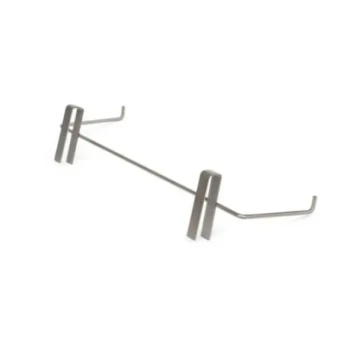
- Heavy-Duty Stainless Steel Clip-On Frame Perch
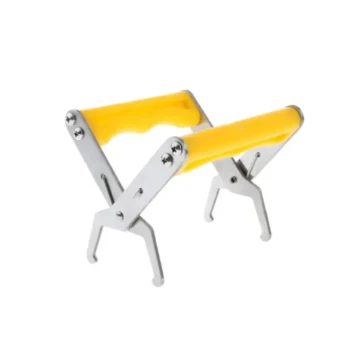
- Ergonomic High Visibility Plastic Frame Grip Handles
- Precision Stainless Steel Frame Cleaner for Hive Grooves and Corners
People Also Ask
- How do wooden and plastic hive frames compare in terms of durability? Wood vs. Plastic Longevity & Repairability
- How does balancing the number of frames impact hive productivity? Optimize Your Apiary's Biological Output
- What are the main considerations when choosing between wooden and plastic bee hive frames? Optimize Your Apiary's Efficiency
- How should beehive frames be maintained to prolong their lifespan? 5 Pro Tips for Durable Beekeeping Equipment
- Can I reuse old beehive frames? Save Money and Boost Hive Productivity