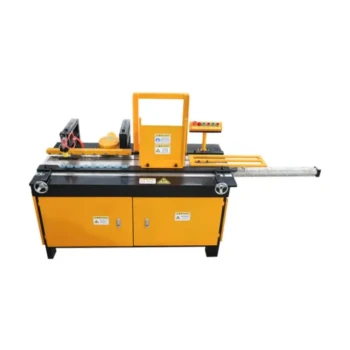
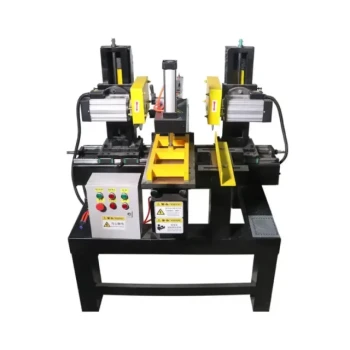
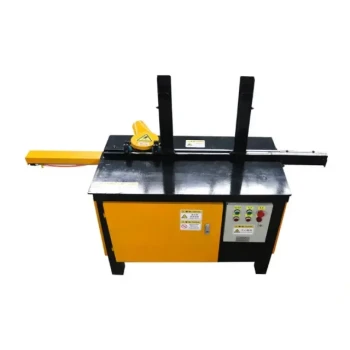
Hive-making machinery must prioritize high-precision fabrication to accommodate the natural spatial patterns of honeybees. To optimize designs based on spatial density models, manufacturers must focus on creating structures that align with forager diffusion modes and adjusting entrance parameters to minimize congestion.
The core objective is bridging the gap between biological statistical models and mechanical output. By tailoring hive geometry to match Gaussian distribution patterns, machinery can produce environments that significantly reduce homing failures and enhance colony survival.
Aligning Mechanical Precision with Biological Behavior
To create effective hives, machinery cannot simply produce standardized boxes. It must be capable of interpreting and fabricating based on complex biological data.
Simulating Natural Distribution
Honeybee populations do not fill space randomly. Models using Gaussian probability density functions indicate that foragers typically diffuse outward from the hive center.
The Requirement for High-Precision Tooling
Machinery must possess the fidelity to replicate these theoretical models in physical materials. The manufacturing process needs to support variable structural densities that mirror the natural outward diffusion of the colony.
Critical Geometric Adjustments
The primary reference highlights two specific areas where machinery must allow for granular design adjustments: internal pathways and entrance architecture.
Optimizing Forager Pathways
The internal structure of the hive must facilitate movement, not hinder it. Machinery should be configured to carve or mold pathways that correspond to forager diffusion modes.
By aligning physical paths with the bees' natural statistical movement, you reduce the energy cost of movement within the hive.
Re-engineering the Hive Entrance
The entrance is the most critical interface between the colony and the environment. Machinery must be able to adjust geometric parameters here with extreme accuracy.
Improperly designed entrances lead to congestion. Optimizing these dimensions based on density models reduces homing failures and ensures foragers can exit and enter efficiently.
Understanding Manufacturing Trade-offs
While optimizing for biological models is ideal, it introduces complexity into the manufacturing process.
Precision vs. Production Speed
Implementing "high-precision hive structures" often requires slower, more intricate machining or molding processes. Manufacturers must balance the need for biologically optimized geometry with the economic reality of production throughput.
Model Dependency
Designing machinery around a specific Gaussian model assumes that model applies universally. If the spatial distribution model is inaccurate for a specific bee subspecies or environment, the "optimized" hive could unintentionally create new bottlenecks.
Making the Right Choice for Your Production Line
When configuring machinery for next-generation hive production, consider your specific operational goals.
- If your primary focus is Colony Survival: Prioritize machinery that offers the highest flexibility in entrance geometry to drastically reduce homing failures.
- If your primary focus is Forager Efficiency: Ensure your manufacturing process can create complex internal structures that mirror outward diffusion paths without structural weakness.
The most effective hive manufacturing does not just build a container; it builds a statistically optimized habitat that works in unison with the colony's natural instincts.
Summary Table:
| Optimization Factor | Impact on Colony | Machinery Requirement |
|---|---|---|
| Gaussian Distribution | Matches natural bee diffusion | High-precision CNC & variable structural molding |
| Entrance Geometry | Reduces homing failures & congestion | Fine-tuned dimensional accuracy for entrance ports |
| Internal Pathways | Lowers energy cost of movement | Complex carving capabilities for non-linear paths |
| Fabrication Fidelity | Ensures model-to-physical accuracy | Tolerance control for biological statistical alignment |
Elevate Your Beekeeping Production with HONESTBEE
At HONESTBEE, we specialize in bridging the gap between biological insights and industrial-grade manufacturing. Whether you are a commercial apiary seeking to improve colony survival or a distributor looking for the latest in honey-themed innovations, our comprehensive wholesale portfolio has you covered.
We provide specialized hive-making machinery and honey-filling equipment designed to execute the high-precision geometries required for modern, statistically optimized hive designs. From durable hardware to essential industry consumables and cultural merchandise, HONESTBEE delivers the tools you need to maximize efficiency and forager success.
Ready to optimize your production line? Contact us today to explore our full spectrum of beekeeping solutions!
References
- Atanas Z. Atanasov, Lubin G. Vulkov. Inverse Problem Numerical Analysis of Forager Bee Losses in Spatial Environment without Contamination. DOI: 10.3390/sym15122099
This article is also based on technical information from HonestBee Knowledge Base .
Related Products
- High-Efficiency Pneumatic Bee Hive Making Machine for Rapid Box Assembly
- Beehive Handle and Frame Rest Cutting Machine: Your Specialized Hive Machine
- Mini Desktop Bee Hive Frame Forming Making Machine
- Automatic High-Speed Bee Hive Box Stapling Machine
- Beehive Machine Double End Saw for Precision Hive Component Manufacturing
People Also Ask
- How does the introduction of professional beehive-making machinery benefit sustainable beekeeping? Scale Your Apiary
- Why is specialized beehive-making machinery critical for low-defense breeding? Enhance Selection with Precision Tools
- How does the introduction of specialized beehive making machinery contribute to increasing the scale of regional beekeeping industries?
- What is the importance of specialized beehive making machinery in a circular bio-economy? Build Local Sustainability
- Why is specialized beehive-making machinery essential? Scale Your Apiary with Precision Industrial Standards