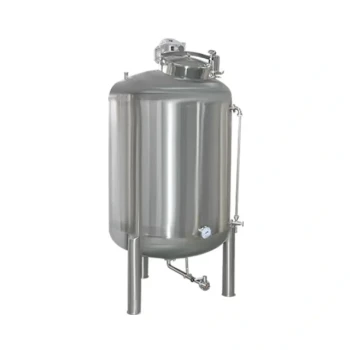
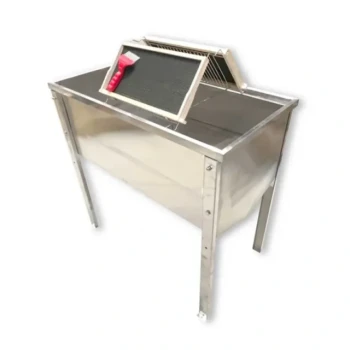
The hygienic integrity of a honey heating tank relies heavily on two specific features: its construction from stainless steel and a design architecture that facilitates straightforward cleaning. These elements work in tandem to prevent contamination, ensuring the honey remains pure and the equipment meets rigorous food safety standards.
The core sanitation value of a honey heating tank is not just in how it processes honey, but in how it resists accumulation. By combining non-reactive materials with accessible geometry, these tanks eliminate the environments where contaminants typically thrive.
Material Selection: The First Line of Defense
The Imperative of Stainless Steel
The primary feature contributing to hygiene is the use of stainless steel. This material is the industry standard because it provides a non-porous surface that prevents honey residues from seeping into the tank walls.
Eliminating Contaminants
Stainless steel ensures the tank remains free from contaminants. Unlike other metals or plastics that may degrade or react with acidic foods like honey, stainless steel maintains its structural integrity, ensuring no foreign particles leach into the product.
Design Architecture for Sanitation
Engineered for Cleanability
A sanitary tank is defined by a design that allows for straightforward and regular cleaning. The physical layout of the tank is intentionally simplified to ensure operators can access internal surfaces without difficulty.
Upholding Food Safety Standards
The design directly supports high standards of food safety by reducing maintenance friction. When a tank is easy to clean, operators are more likely to perform regular maintenance, preventing the buildup of old honey or bacteria.
Common Pitfalls to Avoid
The Risk of Complex Geometries
While advanced features are attractive, overly complex tank designs can be detrimental to hygiene. If a design includes hard-to-reach crevices or intricate parts, it compromises the straightforward cleaning process required for safety.
Material Misconceptions
Not all metal tanks offer the same protection. Relying on materials other than stainless steel can lead to corrosion or contamination over time, undermining the sanitation goals regardless of how well the tank is cleaned.
Making the Right Choice for Your Operation
To select a tank that ensures the highest level of product purity, consider these specific goals:
- If your primary focus is Food Safety Compliance: Prioritize tanks constructed exclusively from high-grade stainless steel to ensure a contaminant-free environment.
- If your primary focus is Operational Efficiency: distinct Look for a design that emphasizes straightforward cleaning, allowing for rapid turnover between batches without compromising hygiene.
By prioritizing material quality and accessible design, you safeguard both your product and your reputation.
Summary Table:
| Feature | Hygienic Benefit | Impact on Food Safety |
|---|---|---|
| Stainless Steel (304/316) | Non-porous, corrosion-resistant, and non-reactive. | Prevents leaching and bacterial growth. |
| Simplified Geometry | Eliminates hard-to-reach crevices and dead zones. | Facilitates thorough cleaning and sterilization. |
| Polished Surface Finish | Minimizes honey adhesion and residue buildup. | Reduces cleaning time and cross-contamination risks. |
| Accessible Components | Allows for easy disassembly of valves and seals. | Ensures every part meets rigorous sanitation standards. |
Elevate Your Honey Processing with HONESTBEE
At HONESTBEE, we understand that for commercial apiaries and distributors, hygiene is the cornerstone of brand reputation. We provide high-performance honey heating tanks and honey-filling machines engineered specifically for food safety and operational longevity. From professional-grade beekeeping tools to comprehensive wholesale machinery, our portfolio is designed to help you scale your business with confidence.
Ready to upgrade your facility with industry-leading sanitation standards? Contact our expert team today to discuss how our stainless steel equipment can streamline your production and protect your product purity.
Related Products
- Stainless Steel Heated Honey Tank Warming Heating Tank
- Honey Tank Heater Drum Heating Blanket for Honey Barrel
- Heavy Duty Stainless Steel Honey Processing Machine Decrystallizing Tank
- Stainless Steel Honey Storage Tank with Lid for Honey
- Professional Honey Storage Tank with Agitation System
People Also Ask
- What are the benefits of precise temperature control in honey heating tanks? Preserve Quality and Efficiency
- How do honey heating tanks offer scalability for growing beekeeping operations? Strategic Equipment Growth Solutions
- What is the primary role of a honey heating tank? Enhance Your Honey Processing Flow and Quality
- What is the purpose of using heating tanks or constant temperature water baths in honey dehydration? Optimize Purity & Flow
- What are the overall benefits of using a honey heating tank in honey processing? Ensure Quality & Boost Efficiency