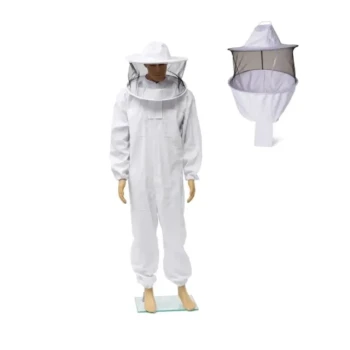
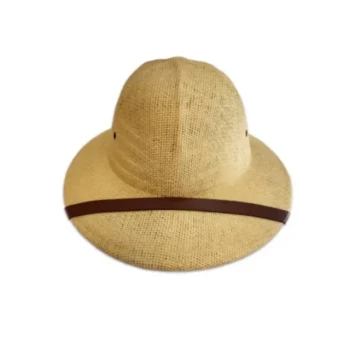
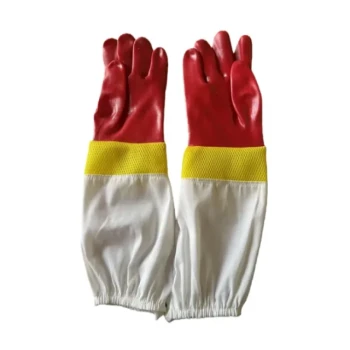
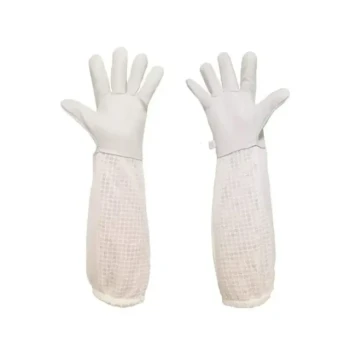
Professional bee veils and head nets serve as the critical last line of defense for emergency responders facing Africanized Honey Bees. Their primary function is to create a physical barrier that shields the face, neck, and respiratory tract from intensive stinging while maintaining the visibility necessary to operate safely or retreat from volatile environments.
Core Insight Africanized Honey Bees instinctively target the head and face in massive numbers during a defensive response. Consequently, the function of a veil extends beyond simple injury prevention; it is essential for preventing suffocation and panic, ensuring the responder remains capable of decision-making during an attack.
The Mechanics of Protection
Blocking Physical Access
The primary mechanism of a professional veil or lightweight head net is a fine mesh structure. This mesh is woven tightly enough to physically block the bee's stinger from reaching the skin.
Securing the Respiratory Tract
Unlike standard defensive equipment, bee veils serve a life-saving function by protecting the airways. Because Africanized Honey Bees swarm the face, there is a distinct risk of bees entering the nose or mouth, which can lead to swelling and suffocation.
The veil ensures that the wearer can breathe freely without the risk of inhaling insects or suffering stings to the throat and lungs.
Maintaining Operational Visibility
While protection is paramount, responders must see clearly to execute tasks or navigate escape routes.
Professional gear is designed to balance density with transparency, allowing field workers to maintain situational awareness even when the mesh is covered by swarming bees.
Why This Gear is Critical for Africanized Bees
Combatting Intense Defensive Reactions
Africanized Honey Bees differ significantly from European breeds regarding their "defense range." They perceive threats from greater distances and pursue targets much further.
This behavior means responders are often attacked before they realize they are near a hive. The veil provides immediate security the moment the wearer enters this expanded defensive perimeter.
Enabling Focus Under Duress
During live bee removal or emergency evacuation, the psychological impact of a swarm is intense.
By providing a reliable barrier, the veil effectively isolates the operator from the immediate pain of stings. This allows technicians and responders to focus on removal tasks or rescue operations without being distracted by defensive reflexes.
Understanding the Trade-offs
The Visibility Compromise
While modern mesh is designed for clarity, it inevitably reduces light transmission. In low-light conditions or smoke-filled environments, a veil can obscure vision, requiring responders to rely more on tactile checks or auxiliary lighting.
The Integrity of the Seal
A veil is only as effective as its connection to the rest of the clothing.
If the veil is not properly sealed against the neck or suit, it can become a hazard. A breach in the seal allows bees to enter the "safe zone" inside the mesh, turning the protective gear into a trap that panics the wearer.
Ensuring Safety in the Field
If your primary focus is rapid evacuation or hiking:
- Prioritize lightweight, portable head nets that can be deployed instantly to cover the head and neck during an unexpected encounter.
If your primary focus is active removal or containment:
- Utilize a professional bee veil integrated with a full suit, ensuring a sting-proof seal that allows you to work stationary for extended periods.
properly fitted veil transforms a potentially lethal swarm into a manageable environmental hazard.
Summary Table:
| Feature | Function in Emergency Response | Benefit for Responders |
|---|---|---|
| Fine Mesh Structure | Physical barrier against stingers | Prevents facial and neck injuries |
| Airway Shielding | Blocks bees from nose/mouth | Prevents suffocation and internal stings |
| High-Clarity Mesh | Maintains situational awareness | Allows for safe navigation and task focus |
| Integrated Seal | Eliminates entry points | Prevents bees from entering the 'safe zone' |
Secure Your Apiary with Professional-Grade Protection
At HONESTBEE, we understand that for commercial apiaries and distributors, safety and efficiency are non-negotiable. Whether you are managing large-scale bee removals or equipping field technicians, our comprehensive wholesale offering provides the durability and reliability you need.
Why partner with HONESTBEE?
- Full Spectrum Supply: From specialized bee veils and protective suits to honey-filling machines and hive-making equipment.
- Built for Scale: We cater specifically to the needs of distributors and commercial operations with high-quality industry consumables.
- Expertise & Value: Our portfolio bridges the gap between traditional beekeeping tools and advanced machinery, including honey-themed cultural merchandise.
Don't compromise on safety. Contact us today to explore our wholesale solutions and see how HONESTBEE can empower your business.
References
- Malcolm T. Sanford, H. Glenn Hall. African Honey Bee: What You Need to Know. DOI: 10.32473/edis-mg113-2005
This article is also based on technical information from HonestBee Knowledge Base .
Related Products
- Beekeeper Cowboy Hat and Veil for Beekeeping
- White Cotton Beekeeping Jacket and Veil for Bee Keepers
- Beekeeping Jacket with Hood and Veil for Beekeepers
- Premium Cowboy Beekeeper Hat with Visibility Veil Outdoor Professional Beekeeping Protective Gear
- Square Folding Beekeeping Hat with Integrated Veil
People Also Ask
- What is the correct way to wash a beekeeping hat and veil? Safe Hand-Washing Guide to Protect Your Gear
- What are the components and importance of a beekeeper's hat and veil? Essential Safety Gear for Apiary Success
- What are the differences between a separated and an attached beekeeping hat and veil? Security vs. Versatility
- What are the design specifications for an effective beekeeping hat and veil? Professional Standards for Protection
- What is the function of a beekeeping hat and veil? Essential Protection for Safe Hive Management