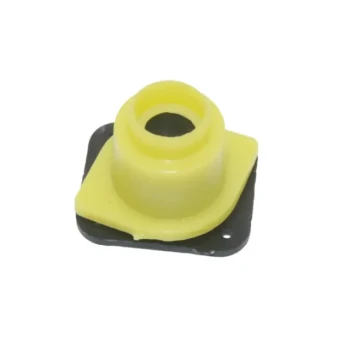
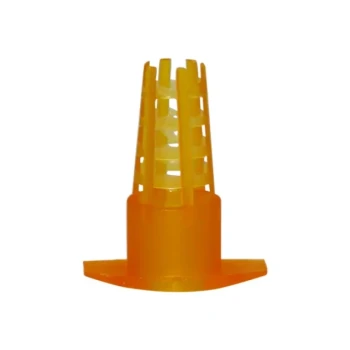
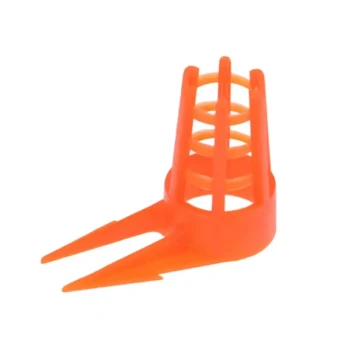
Cell bars and blocks function as a modular scaffolding system designed to convert a standard hive frame into a high-density queen production unit.
Cell bars provide the horizontal support structure to hold rows of queen cell cups, while the blocks act as mounting brackets to secure these bars within the frame. This assembly ensures precise alignment and uniform spacing, which is critical for standardized large-scale rearing.
Core Takeaway By organizing cell cups into fixed, evenly spaced rows, cell bars and blocks transform chaotic natural queen rearing into a controlled industrial process. This structure maximizes the efficiency of nurse bees feeding royal jelly and allows beekeepers to manage dozens of queen cells simultaneously without sacrificing accessibility or stability.
The Structural Role in Rearing
The primary function of this assembly is to impose order on the biological process of queen development.
Precise Alignment and Spacing
The blocks align the cell bars, and the bars hold the cell cups in specific positions. This prevents the random placement of queen cells often found in nature.
Uniform spacing is the critical output of this design. It ensures that every queen cell is accessible to nurse bees, preventing overcrowding that could restrict care or feeding.
Structural Stability and Protection
Wooden or plastic bars provide a rigid backbone for the delicate wax cups.
This physical strength prevents cups from shifting, falling, or becoming damaged during the grafting process or while the frame is being moved in and out of the hive.
Optimization for Royal Jelly Production
The layout dictated by the bars and blocks is specifically engineered to facilitate the secretion of royal jelly.
By maintaining standard gaps between cells, nurse bees have sufficient physical room to maneuver around each cup, build necessary wax reinforcements, and deposit optimal amounts of nutrition.
Operational Efficiency for the Beekeeper
Beyond biological support, these components significantly reduce the labor required for colony management.
Modular Inspection
The block-and-bar system allows for modularity. Beekeepers can remove a single bar to inspect or harvest a specific batch of cells without disturbing the rest of the frame or the colony.
This capability is essential for managing cells at different developmental stages within the same hive.
Streamlined Harvesting
In commercial settings, this design supports batch processing.
Instead of cutting individual cells from a comb, a technician can remove a bar containing multiple cups—sometimes up to 15 per bar—simplifying the isolation and transfer of mature queens.
Understanding the Trade-offs
While this system maximizes efficiency, it requires careful management to avoid diminishing returns.
The Risk of Density
The primary risk of using high-capacity cell bars is the temptation to overload the colony.
While the bars can physically hold dozens of cups, the colony's biological resources (nurse bees and royal jelly) are finite. Overstocking a frame can lead to undernourished, lower-quality queens.
Complexity of Assembly
Compared to natural methods, this system introduces more hardware.
The components require assembly, cleaning, and maintenance. Improperly secured blocks or warped bars can lead to frame failure or difficulty in removing the bars later.
Making the Right Choice for Your Goal
To maximize the utility of your queen rearing frames, align your configuration with your production targets.
- If your primary focus is Commercial Volume: Utilize frames with three full bars (approx. 45 cups) to maximize the batch size for royal jelly harvesting or large-scale grafting.
- If your primary focus is Genetic Quality: Reduce the number of cups per bar or use fewer bars to ensure maximum nurse bee attention and nutrition for each individual larva.
Success in queen rearing relies on balancing the physical capacity of your equipment with the biological capacity of your bees.
Summary Table:
| Component | Primary Function | Impact on Efficiency |
|---|---|---|
| Cell Bar | Horizontal support for cell cups | Enables high-density batch processing and modular inspection. |
| Cell Blocks | Mounting brackets for bar alignment | Ensures uniform spacing for optimal nurse bee access and airflow. |
| The Assembly | Structural stability and protection | Prevents cup damage during grafting and facilitates easy harvesting. |
Elevate Your Queen Rearing Operation with HONESTBEE
To achieve professional results in queen production, you need equipment designed for precision and durability. HONESTBEE specializes in supporting commercial apiaries and distributors with a comprehensive wholesale offering of premium beekeeping tools and machinery.
Whether you require high-density queen rearing frames, specialized hive-making machinery, or essential industry consumables, our portfolio is engineered to maximize your yield and operational efficiency. Let us provide the hardware that transforms your biological potential into industrial success.
Ready to scale your production? Contact our experts today to discuss our wholesale solutions and how we can add value to your beekeeping business.
References
- Haitham Ramadan. Queen Rearing Activity and Virgin Queen’s Weight for Enhancing the Beekeeping Performance among the Carniolan, Buckfast, Italian and Cordovan Bees. DOI: 10.21608/asejaiqjsae.2023.314232
This article is also based on technical information from HonestBee Knowledge Base .
Related Products
- Premium Nicot Style Cell Bar Holder and Queen Cell Cup Holder System
- JZBZ Langstroth Queen Rearing Frame for Beekeeping
- JZBZ Type Wide Base Plastic Queen Cell Cups for Base Mounting and Queen Rearing
- JZBZ Style Shipping Cell Protector for Queen Rearing Kit
- JZBZ Style Push-In Cell Protector for Professional Queen Rearing Kits
People Also Ask
- What roles do specialized queen cell cups play in royal jelly production? Optimize Your Hive's Secretion and Yield
- What role do specialized queen rearing tools play in developing mite-resistant honeybee stock? Master Genetic Selection
- What materials are used to make artificial queen cell cups for grafting? Beeswax vs. Plastic Guide
- Why is a diluted royal jelly solution applied to queen cell cups? Boost Acceptance in Artificial Grafting
- How does the standardized depth of queen cell cups affect larval acceptance? Boost Success with 6mm Precision