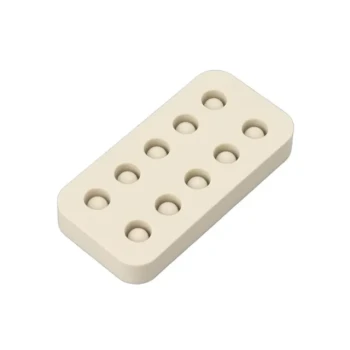
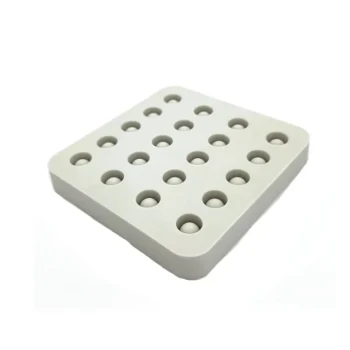
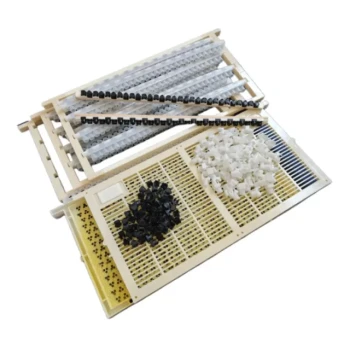
Artificial queen cell cups and grafting needles act as the fundamental hardware for converting standard worker larvae into reproductive queens during artificial rearing. The cell cups serve as specialized housing that mimics natural queen cells, providing the necessary volume for development, while grafting needles are precision instruments designed to transfer 12 to 24-hour-old larvae from the comb to these cups without causing physical trauma. Together, these tools allow beekeepers to bypass natural swarm triggers and systematically select for specific genetic traits.
Core Takeaway While natural queen rearing is unpredictable, using these tools allows for the precise "re-housing" of specific larvae to trigger the royal jelly diet. This intervention transforms the biological destiny of the bee, enabling the mass production of queens with controlled genetics, such as higher productivity and disease resistance.
The Role of Artificial Queen Cell Cups
Mimicking Natural Geometry
Artificial cups are designed to simulate the exact shape and orientation of natural queen cells.
Typically made of plastic in modern setups, they provide the vertical orientation and volume necessary for the larvae to grow larger than worker bees.
Inducing Royal Treatment
The primary function of the cup is to trick the nurse bees into accepting the transferred larva as a future queen.
By placing the larva in this specialized vessel, the colony is induced to feed it exclusively on royal jelly, the nutrient-rich substance required for queen development.
Standardization for Scale
Unlike natural wax cells built randomly on the comb, artificial cups fit into standardized bars or frames.
This modularity allows beekeepers to manage dozens of developing queens simultaneously within a single production cycle.
The Function of Grafting Needles
Precision Larval Transfer
Grafting needles are engineered to handle larvae that are essentially microscopic and incredibly fragile, ideally between 12 to 24 hours old.
The tool allows the beekeeper to scoop the larva—often along with a bed of jelly—and deposit it into the artificial cup.
Preventing Physical Trauma
The delicate bodies of young larvae are easily damaged by clumsy handling, which results in rejection by the nurse bees.
High-precision needles are designed to facilitate migration without crushing or desiccating the larva, ensuring high survival rates during the "transplantation" process.
Enabling Genetic Selection
The needle is the instrument of choice.
It allows the beekeeper to physically select larvae from specific "breeder queens" known for docility or honey production, rather than leaving the choice to the bees.
Understanding the Trade-offs
Material Acceptance Rates
While plastic cups are durable and reusable, they are not always immediately accepted by the bees.
Research indicates that cups made from natural beeswax or old comb have a higher "bio-affinity," leading to higher acceptance and emergence rates than plastic alternatives.
The Human Element
The grafting needle is a manual tool that relies entirely on the dexterity of the operator.
Even with high-quality needles, success is dependent on the user's ability to gauge the larva's age correctly and execute the transfer without hesitation.
Making the Right Choice for Your Goal
To maximize your success in queen rearing, align your tool usage with your specific objectives:
- If your primary focus is Scalability and Efficiency: Utilize plastic cell cups and standardized grafting frames to maximize the number of queens produced per cycle.
- If your primary focus is Acceptance Rate: Opt for wax-based cups or coat your plastic cups in beeswax to leverage their higher bio-affinity and ensure the nurse bees tend to the larvae.
Mastering these tools shifts beekeeping from simple management to active genetic improvement, resulting in a stronger, more resilient apiary.
Summary Table:
| Tool | Primary Function | Key Benefit for Apiaries |
|---|---|---|
| Artificial Cell Cups | Simulates the geometry of natural queen cells | Triggers royal jelly feeding and allows for modular scaling. |
| Grafting Needles | High-precision transfer of 12-24 hour larvae | Minimizes physical trauma and enables specific genetic selection. |
| Standardized Bars | Houses multiple cell cups within a frame | Streamlines management of dozens of queens in one production cycle. |
| Beeswax Coating | Enhances the bio-affinity of plastic tools | Increases larval acceptance rates by mimicking natural hive materials. |
Scale Your Queen Rearing Operations with HONESTBEE
At HONESTBEE, we empower commercial apiaries and distributors with the professional-grade hardware needed for high-volume success. From high-precision grafting needles and cell cups to advanced honey-filling machines and specialized hive-making equipment, we provide the full spectrum of wholesale beekeeping tools and industry consumables.
Boost your apiary's productivity and secure superior genetics with our reliable equipment solutions. Contact our experts today to explore our comprehensive wholesale catalog!
References
- Md. Abul Hasnat. Reproductive Potential Difference of Artificially Inseminated and Naturally Mated Honey Bee Queens (Apis mellifera L.). DOI: 10.13140/rg.2.2.16729.77926
This article is also based on technical information from HonestBee Knowledge Base .
Related Products
- Clear Black Plain Polystyrene Queen Bee Grafting Cell Cups No Lug for Bee Queen Cup
- 10-Cell Silicone Beeswax Bee Queen Cups Forming Mold
- JZBZ Type Wide Base Plastic Queen Cell Cups for Base Mounting and Queen Rearing
- Premium Nicot Style Cell Bar Holder and Queen Cell Cup Holder System
- Brown Nicot Queen Cell Cups for Breeding Queen Bees Beekeeping
People Also Ask
- What materials are used to make artificial queen cell cups for grafting? Beeswax vs. Plastic Guide
- What role do specialized queen rearing tools play in developing mite-resistant honeybee stock? Master Genetic Selection
- What roles do specialized queen cell cups play in royal jelly production? Optimize Your Hive's Secretion and Yield
- What types of cell cups are commonly used in grafting? Plastic vs. Wax for Queen Rearing Success
- Why is a diluted royal jelly solution applied to queen cell cups? Boost Acceptance in Artificial Grafting