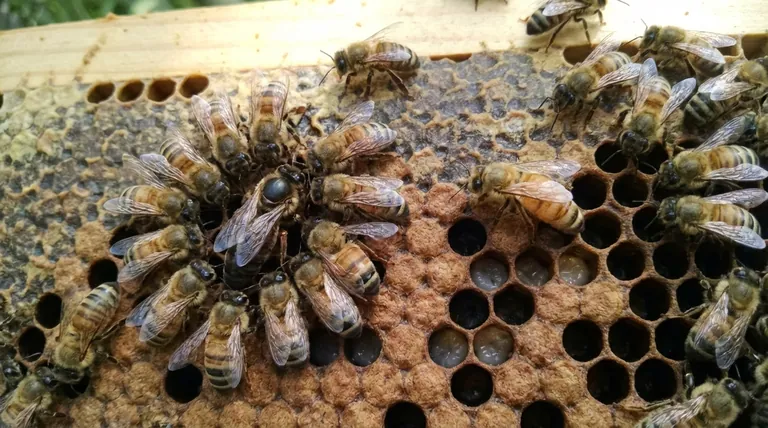
In a true supersedure event, the old queen does not leave the hive with a swarm. Instead, she is replaced from within. She will coexist with the new virgin queen for a short time before being killed by her successor or the workers, or simply fading away as her pheromone output ceases.
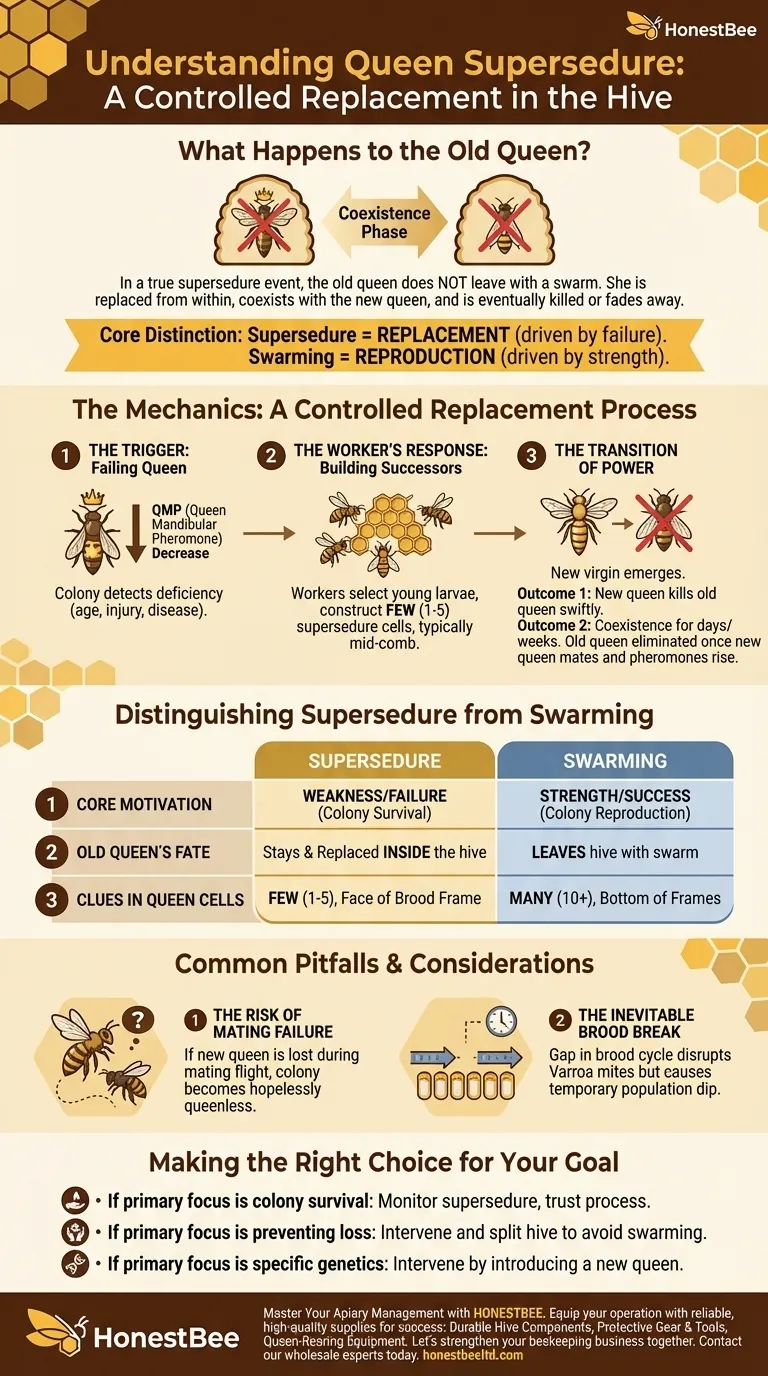
The core distinction to understand is that supersedure is an act of replacement driven by queen failure, ensuring the colony's survival. In contrast, swarming is an act of reproduction driven by colony strength, where the old queen leaves to create a new colony.
The Mechanics of Supersedure: A Controlled Replacement
Supersedure is the bee's natural, internal process for replacing a failing monarch without splitting the colony. It is a deliberate and controlled solution to a critical problem.
The Trigger: A Failing Queen
The entire process begins when the colony detects a deficiency in the old queen.
This is most often signaled by a decrease in her Queen Mandibular Pheromone (QMP). This chemical signal is vital for maintaining colony cohesion and suppressing worker ovary development. A drop in QMP tells the workers their queen is aging, poorly mated, injured, or diseased.
The Worker's Response: Building Successors
Once the workers decide the queen is failing, they select a few very young female larvae to raise as replacements.
They construct a small number of supersedure cells, which are easily distinguished from swarm cells. These cells are typically found on the face of the brood comb, not hanging from the bottom edge.
The Transition of Power
This is the most critical phase where the fate of the old queen is sealed. There are two common outcomes.
First, the new virgin queen may emerge, hunt down her mother, and kill her. This ensures a swift and decisive transfer of power.
Alternatively, and quite often, the old queen and her newly emerged daughter will coexist in the hive for a period of days or even weeks. During this time, the new queen leaves on her mating flights. The colony tolerates the old queen until the new, mated queen's pheromone levels rise, at which point the old queen is quietly eliminated by the workers.
Distinguishing Supersedure from Swarming
The confusion between these two events is common, but their purpose and signs are fundamentally different. Understanding this is key to effective hive management.
The Core Motivation
Supersedure is a response to weakness or failure. The colony is trying to fix an internal problem to ensure its survival.
Swarming is a sign of strength and success. The colony has become so populous and healthy that it has the resources to reproduce by splitting itself in two.
The Fate of the Old Queen
In supersedure, the old queen stays and is ultimately replaced within the hive.
In swarming, the old queen leaves the hive with approximately half of the worker bees to establish a new home, leaving a new virgin queen to inherit the original hive.
Clues in the Queen Cells
The bees tell you their intentions through the queen cells they build.
A small number (1-5) of queen cells located on the face of a brood frame is a classic sign of supersedure.
A large number (10+) of queen cells, often of varying ages and hanging from the bottom of frames, is a clear indicator of swarming.
Common Pitfalls and Considerations
While supersedure is a natural process, it is not without risk. It represents a moment of vulnerability for the colony.
The Risk of a Mating Failure
The entire plan hinges on the new virgin queen successfully mating and returning to the hive.
If she is lost on her mating flight to a predator or bad weather, the colony becomes hopelessly queenless, as it will no longer have young enough larvae to raise another replacement.
The Inevitable Brood Break
From the time the old queen's laying rate falters to the point where the new queen is mated and laying, there is a gap in the brood cycle.
This break can be beneficial, as it disrupts the reproductive cycle of Varroa mites. However, it also causes a temporary dip in the colony's population, which can leave it vulnerable if it occurs at a critical time of year.
Making the Right Choice for Your Goal
By correctly interpreting the signs, you can work with your bees' natural instincts instead of against them.
- If your primary focus is colony survival: Recognize that a few mid-comb cells signal a necessary supersedure; trust the process but monitor closely to ensure the new queen returns and begins laying.
- If your primary focus is preventing colony loss: Understand that numerous cells on the bottom of frames mean an imminent swarm; you must intervene by splitting the hive or creating more space to avoid losing half your bees.
- If your primary focus is maintaining a specific genetic line: Supersedure means the bees are replacing your chosen queen; you can either let it happen or intervene by removing the cells and introducing a new queen of your choice.
Recognizing the subtle difference between replacement and reproduction is fundamental to understanding the internal logic of the honey bee colony.
Summary Table:
| Aspect | Supersedure | Swarming |
|---|---|---|
| Trigger | Queen failure (age, injury, disease) | Colony strength and overcrowding |
| Queen Cells | Few (1-5), on the face of the comb | Many (10+), hanging from bottom edges |
| Old Queen's Fate | Replaced and killed inside the hive | Leaves the hive with a swarm |
| Colony Goal | Survival through replacement | Reproduction by splitting |
Master Your Apiary Management with HONESTBEE
Understanding the subtle signs of colony behavior, like supersedure, is key to a thriving apiary. Equip your operation with the reliable, high-quality supplies needed to support your bees through every stage of their lifecycle.
HONESTBEE supplies commercial apiaries and beekeeping equipment distributors with the essential tools for success:
- Durable Hive Components to provide a stable home for your colonies.
- Protective Gear & Tools to ensure safe and efficient hive inspections.
- Queen-Rearing Equipment to help you manage genetics and colony health proactively.
Let's strengthen your beekeeping business together.
Contact our wholesale experts today to discuss your equipment needs and how we can support the health and productivity of your colonies.
Visual Guide
Related Products
- Premium Wood Framed Metal Wire Queen Bee Excluder
- Durable Galvanized Steel Spring Queen Bee Cage
- High-Efficiency Diamond Maze Bee Escape for Clearing Supers
- Wooden Queen Bee Excluder for Beekeeping
- Portable Queen Bee Incubator with 12V Car Adapter for Safe Transport
People Also Ask
- What types of queen excluders are available for beekeepers? Choose the Right Tool for Your Hive
- Why are standardized hive frames and queen excluders essential for maintaining honey purity and quality? Scale Your Purity
- How does a queen-bee excluder function as a defense against Small Hive Beetles? Protect Your Honey with Resource Denial
- What is the purpose of an entrance queen excluder? Prevent Absconding and Stabilize Your New Honeybee Colony
- What is the function of a queen excluder? Maximize Honey Yield and Ensure Data Integrity for Your Apiary