A traditional bee board is a harvesting tool designed to evacuate bees from honey supers using a chemical repellent. Structurally resembling a standard window screen, it is coated with a foul-smelling substance and placed atop an open hive to drive the colony away from the honey frames.
By leveraging a strong scent to force bees deeper into the hive, the traditional bee board simplifies the harvesting process, though it often requires manual cleanup to be fully effective.
Anatomy and Operation
Visual Structure
The device is relatively simple in construction. It primarily looks like a window screen framed to fit the dimensions of a standard beehive box.
The mesh design is critical. It holds the chemical agent while allowing the fumes to permeate downwards into the hive body.
The Application Process
To use the board, the beekeeper applies a specific "foul-smelling substance" directly onto the screen material.
Just before harvesting the honey, the beekeeper removes the hive cover and places the treated board on top of the open supers.
The Mechanism of Action
The efficacy of the bee board relies entirely on the bees' aversion to the applied scent.
As the fumes sink through the screen, the odor drives the majority of the bees out of the upper honey supers and deeper into the brood nest below.
Operational Limitations and Trade-offs
Reliance on Chemical Repellents
The primary downside of this method is the requirement for a foul-smelling substance.
You must introduce a strong, unpleasant odor to the hive environment to make the board effective.
Incomplete Evacuation
While the board moves the majority of the colony, it rarely clears 100% of the bees.
The primary reference notes that the smell drives "many" of the bees down, not all of them.
Manual Follow-up Required
Because the evacuation is rarely total, this method is not hands-off.
After removing the board, the beekeeper must manually remove the remaining bees using a bee brush, adding a step of physical labor to the harvest.
Making the Right Choice for Your Goal
When deciding if a traditional bee board fits your management style, consider your tolerance for chemical aids and manual labor.
- If your primary focus is rapid bulk clearing: This method effectively moves large numbers of bees quickly using the repellent property of the applied substance.
- If your primary focus is a hands-off harvest: Be aware that this tool is an assist, not a complete solution, and you will still need to brush remaining bees off the frames.
The traditional bee board offers a balance between chemical efficiency and physical intervention for honey harvesting.
Summary Table:
| Feature | Description |
|---|---|
| Core Function | Uses chemical repellents to evacuate bees from honey supers |
| Structure | Mesh screen framed to fit standard hive dimensions |
| Key Benefit | Rapidly moves large numbers of bees for faster bulk harvesting |
| Requirement | Foul-smelling repellent substance and a bee brush for manual cleanup |
| Best For | Commercial operations needing quick, chemical-assisted clearing |
Scale Your Apiary Operations with HONESTBEE
Are you looking to optimize your honey harvest? HONESTBEE specializes in supporting commercial apiaries and distributors with high-performance beekeeping tools and machinery. From traditional harvesting aids to advanced honey-filling machines and hive-making equipment, we provide the full spectrum of essential supplies and consumables to keep your business growing.
Ready to elevate your production? Contact us today to discover how our comprehensive wholesale offerings and industry expertise can bring superior efficiency to your commercial beekeeping enterprise.
Related Products
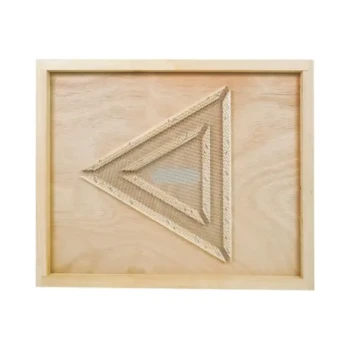
- HONESTBEE Wooden Bee Escape Board with Triangle Mesh Design for Beekeeping
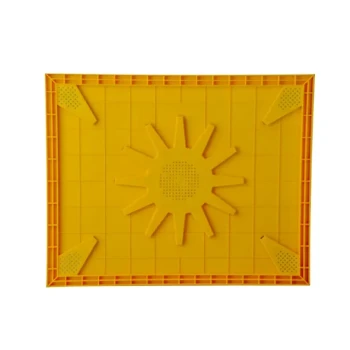
- HONESTBEE Multi Exit Plastic Bee Escape Board for Efficient Honey Harvesting
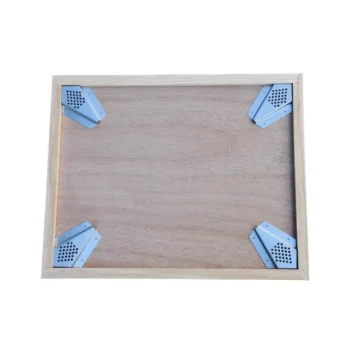
- HONESTBEE 4-Way Metal Corner Wooden Bee Escape Board
- HONESTBEE Durable Frame Wiring Board with Integrated Tensioner
- Langstroth Solid Bottom Board for Beekeeping
People Also Ask
- How is a bee escape board used to clear a hive body for honey harvesting? Optimize Your Chemical-Free Harvest
- What is a bee escape board and what problem does it solve? Simplify Your Honey Harvest with Passive Clearing
- How is a bee escape board used and how does it function? Master This Gentle Honey Harvesting Tool
- What are the proper steps for using a bee escape board for honey harvesting? Master the Passive Clearing Technique
- What tools and methods are used to clear honey bees from honey supers? Efficient Harvesting for Commercial Beekeepers