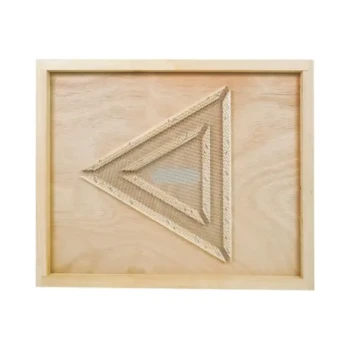
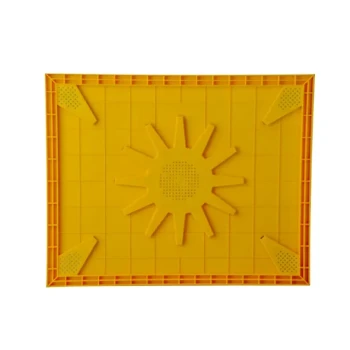
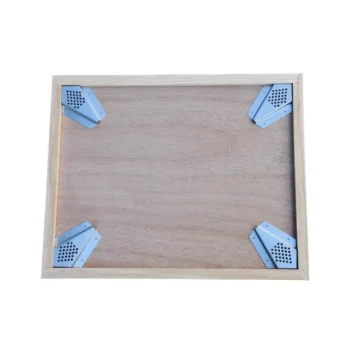
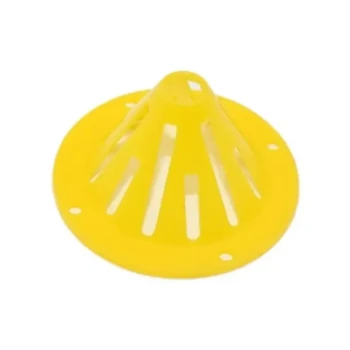
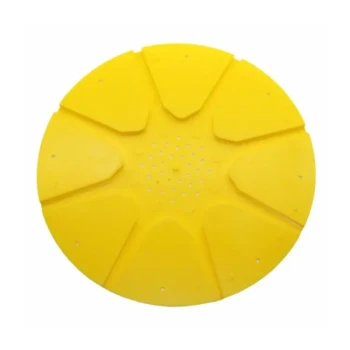
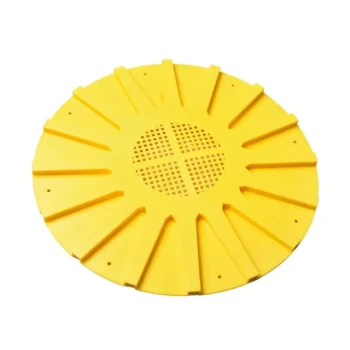
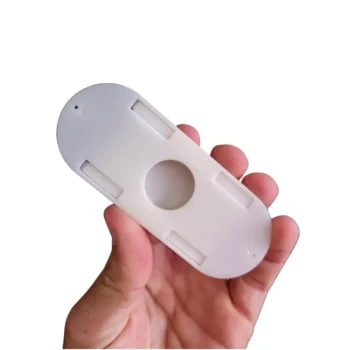
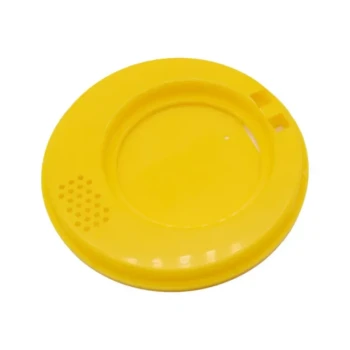
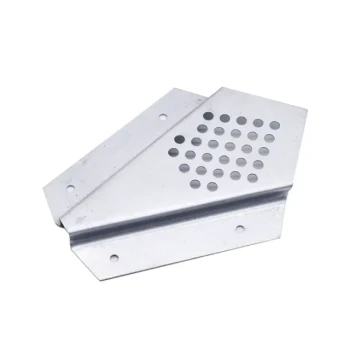
The alternative method requires removing the honey supers from the hive stack entirely and placing them on a separate table nearby. Instead of positioning the escape board beneath the boxes, you place it on top of the supers, effectively using it as a permeable ceiling.
This technique shifts the clearing process from internal vertical migration to external separation. By allowing light and an upward exit path, the bees naturally vacate the isolated supers to fly back to their original colony.
The Mechanics of External Clearing
Relocating the Supers
Standard escape boards rely on bees moving downward into the brood box. When this fails, you must physically separate the honey supers from the main hive.
Place the supers full of bees on a table or stand located near the original hive. This proximity is crucial for the bees to orient themselves once they exit.
Inverting the Board Placement
In this configuration, the escape board functions as a ceiling rather than a floor.
Place the escape board directly on top of the stacked supers on the table. Ensure the board is oriented so the escape mechanism permits traffic out (upwards) but restricts reentry.
The Return Flight
Once the board is in place, the bees inside the isolated supers will seek an exit.
Finding the path through the top of the escape board, they will exit the box. Driven by their homing instinct, they will fly from the table back to the main hive entrance, leaving the honey supers empty.
Understanding the Trade-offs
Exposure to Robbing
This method involves leaving boxes of honey outside the protective environment of the hive.
Because the supers are sitting on a table, they are highly susceptible to robbing behaviors from other colonies or wild pests. This method requires vigilance to ensure the honey is not compromised while the bees actuate the evacuation.
Environmental Vulnerability
Unlike an internal stack, these supers are exposed to the elements.
Ensure the weather is stable, as rain or excessive heat can damage the exposed frames or the escape board itself while it sits on the table.
Making the Right Choice for Your Goal
This external method is a tactical adjustment for when standard internal geometry fails to clear the supers.
- If your primary focus is clearing stubborn supers: Use this table method to break the internal hive routine and force the bees to fly home.
- If your primary focus is protecting the harvest: Monitor the external table closely to prevent robbing behavior from neighboring hives.
This approach leverages the bees' natural homing instinct to solve mechanical clearing failures.
Summary Table:
| Feature | Standard Internal Method | External Alternative Method |
|---|---|---|
| Board Position | Beneath the honey supers | On top of the isolated supers |
| Bee Movement | Vertical migration downward | Upward exit and return flight |
| Hive Location | Stays within the hive stack | Relocated to a separate table |
| Key Risk | Slow clearing / Mechanical failure | Exposure to robbing behaviors |
Optimize Your Commercial Apiary with HONESTBEE
Efficient honey harvesting starts with the right tools and techniques. HONESTBEE specializes in supporting commercial apiaries and distributors with a comprehensive wholesale portfolio. From specialized hive-making and honey-filling machinery to high-quality beekeeping tools and essential consumables, we deliver the durability and precision required for large-scale operations.
Ready to scale your production and streamline your harvest? Contact us today to discuss your wholesale needs and see how our industry-leading equipment and honey-themed cultural merchandise can provide a competitive edge for your business.
Related Products
- HONESTBEE Wooden Bee Escape Board with Triangle Mesh Design for Beekeeping
- HONESTBEE Multi Exit Plastic Bee Escape Board for Efficient Honey Harvesting
- HONESTBEE 4-Way Metal Corner Wooden Bee Escape Board
- Slatted Porter Style Bee Escape for Rapid Hive Clearing
- Professional Cone Style Bee Escape for Efficient Honey Harvesting
People Also Ask
- How is a bee escape board used to clear a hive body for honey harvesting? Optimize Your Chemical-Free Harvest
- What is a bee escape board and what problem does it solve? Simplify Your Honey Harvest with Passive Clearing
- How is a bee escape board used and how does it function? Master This Gentle Honey Harvesting Tool
- What are the proper steps for using a bee escape board for honey harvesting? Master the Passive Clearing Technique
- What tools and methods are used to clear honey bees from honey supers? Efficient Harvesting for Commercial Beekeepers