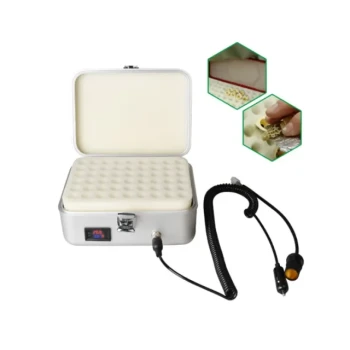
Grafting is the manual transfer of a very young honey bee larva from its natural brood cell into a manufactured queen cell cup. This precise technique is the fundamental method used by beekeepers to transition from passive management to active, large-scale queen production.
By relocating larvae into artificial cups, beekeepers transform a biological necessity into a controlled process. This affords total command over the quantity of queens produced and the specific genetic traits introduced into the apiary.
The Mechanics of Grafting
The Transfer Process
At its core, grafting involves physically lifting a larva—usually less than 24 hours old—out of a worker cell on a brood comb.
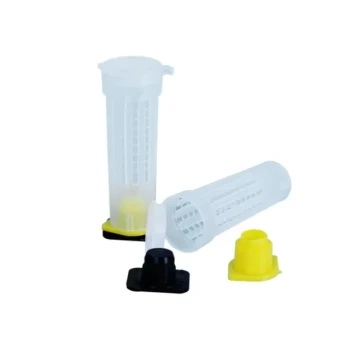
The larva is then gently placed into a manufactured cell cup, which mimics the shape of a natural queen cell base.
The Role of Artificial Cups
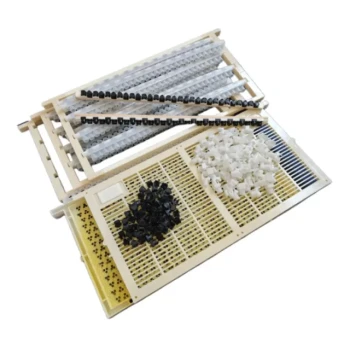
These manufactured cups serve as physical templates and guides for the bees.
Once the larva is placed inside, the worker bees in a "starter" or "finisher" colony accept the cup and begin building a wax queen cell around it, feeding the larva the royal jelly required to develop into a queen.
Why Beekeepers Graft
Scaling Production
Natural colonies only produce a small number of queens under specific conditions, such as swarming or supersedure.
Grafting allows a beekeeper to trigger the creation of any number of queen cells simultaneously, far exceeding what a hive would produce naturally.
Logistics and Mobility
One of the primary benefits highlighted in production contexts is the ease of handling.
Because the queens are raised in removable manufactured cups, the resulting cells are durable, standardized, and easy to transport to mating nucs or other hives without damaging the developing pupa.
Strategic Genetic Control
Selecting Superior Lineages
Grafting is not just about quantity; it is a tool for quality control.
Beekeepers can select larvae from specific "breeder queens" known for superior traits, such as gentleness, honey production, or disease resistance.
Directional Selection
By consistently grafting from these selected lineages, beekeepers facilitate directional selection.
This allows for the systematic improvement of local honey bee varieties, utilizing the nursing capacity of strong colonies to rear queens that are genetically distinct from the nurse bees raising them.
Understanding the Constraints
The Resource Requirement
Grafting is not a magic solution; it relies heavily on the biological resources of the hive.
Success depends entirely on the nursing capacity of strong colonies. If the cell building colony lacks sufficient population or nutrition, the grafted larvae will be rejected or malformed.
The Skill Factor
While the concept is simple, the physical action requires dexterity and good vision.
You are manipulating a microscopic organism; damaging the larva during the transfer will result in immediate failure of that specific graft.
Making the Right Choice for Your Goal
Whether you are a hobbyist or a commercial breeder, grafting serves specific objectives.
- If your primary focus is volume: Grafting is essential for producing more than a handful of queens per season to sustain or expand a large operation.
- If your primary focus is genetics: Grafting is the only way to ensure new queens possess specific, superior traits by isolating larvae from your best performing colonies.
Mastering grafting gives you the power to dictate the future genetics and sustainability of your apiary.
Summary Table:
| Feature | Grafting Method | Natural Production |
|---|---|---|
| Production Scale | High/Mass Production | Low/Limited |
| Genetic Control | Selective (Breeder Queens) | Random/Uncontrolled |
| Logistics | Standardized & Transportable | Fragile & Fixed |
| Skill Level | Technical/High Dexterity | Passive/Biological |
| Best For | Commercial & Genetic Improvement | Hobbyist/Natural Growth |
Scale Your Queen Rearing Success with HONESTBEE
Transitioning from passive management to active, large-scale queen production requires more than just skill—it requires the right infrastructure. HONESTBEE empowers commercial apiaries and distributors with a comprehensive wholesale offering of professional-grade beekeeping tools.
From high-precision grafting tools and durable manufactured cell cups to advanced hive-making and honey-filling machinery, we provide the full spectrum of equipment needed to optimize your breeding program. Whether you are looking to improve directional selection or streamline your honey production with our themed cultural merchandise, our portfolio is designed to add value to your business.
Ready to elevate your apiary's productivity? Contact us today to discuss our bulk equipment solutions and how we can support your growth!
Related Products
- Stainless Steel Beekeeping Queen Grafting Tool for Honey Bee Rearing
- Stainless Steel Queen Grafting Tool for Beekeeping and Bee Queen Grafting
- Black 2 Pack Beekeeper Queen Grafting Tool for Bee Queen Larva Transferring Needle
- Plastic Chinese Queen Grafting Tool for Bee Queen Rearing
- Retractable Chinese Queen Rearing Grafting Tools Equipment
People Also Ask
- What is the process of grafting in honey bee queen rearing? A Master Guide for Commercial Success
- Why is it necessary for migratory beekeeping enterprises to utilize professional queen bee rearing tools? Boost Resilience
- What is the step-by-step process for using a queen grafting tool? Master Larva Transfer for Better Queen Rearing
- What is the primary function of a queen grafting tool? Master Precise Larval Transfer for High Queen Acceptance
- What specialized tools and frame configurations are needed for larval grafting during queen rearing, and how are queen cells properly spaced? Master the essentials for efficient queen production