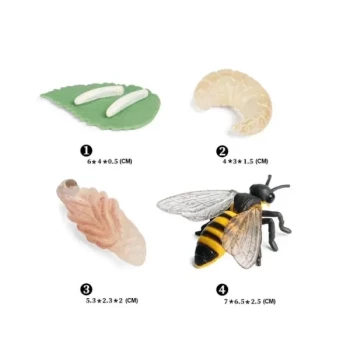
The optimal age for grafting larvae is strictly between 4 and 20 hours old. Visually, these larvae are incredibly small and have barely begun to curve into a 'C' shape. You should look for a smooth appearance where the characteristic segmentation rings are either completely invisible or just barely beginning to form.
To produce a queen of superior quality, timing is absolute; grafting larvae within this narrow 16-hour window ensures they receive the full nutritional benefit of a queen's diet from the earliest possible moment.
Visual Identification of the Perfect Larva
Identifying larvae in the 4 to 20-hour range requires a keen eye. You are looking for specific developmental markers that indicate youth.
Assessing the Curve
The most obvious indicator is the posture of the larva. At the ideal age, the larva has barely begun to form a 'C' shape.
If the larva is curled into a tight, distinct 'C' or a full circle, it is likely too old. The ideal candidate is still relatively straight or only showing a slight curvature.
Checking for Segmentation
The texture of the larva's body provides the second critical clue.
Ideally, the characteristic rings (segments) should not yet be visible.
If you can clearly count the rings on the larva's body, it has passed the optimal window. The best candidates appear smooth or are just beginning to show the faintest hint of segmentation.
Understanding the Trade-offs
While grafting the youngest possible larvae produces the best queens, this approach presents specific challenges that the beekeeper must manage.
Extreme Fragility
Larvae between 4 and 20 hours old are incredibly delicate.
Because they are so small and soft, they are easily damaged by the grafting tool. A damaged larva will invariably be rejected by the nurse bees.
Visibility Issues
Locating larvae of this specific age can be physically difficult.
They are often submerged in a very small amount of jelly and are translucent. distinguishing them from the background requires excellent lighting and, frequently, magnification.
Making the Right Choice for Your Goal
Selecting the right larva is the single most controllable variable in queen rearing. Here is how to apply this to your selection process:
- If your primary focus is distinct queen quality: Strict adherence to the 4–20 hour rule is mandatory; discard any larvae where segmentation rings are clearly visible.
- If your primary focus is grafting success rate: You may be tempted to choose slightly larger larvae that are easier to see and handle, but understand that you are sacrificing the queen's potential reproductive quality.
Mastering the selection of these barely visible, smooth larvae is the hallmark of a skilled queen breeder.
Summary Table:
| Feature | Ideal Larvae (4-20 Hours) | Over-Aged Larvae (>24 Hours) |
|---|---|---|
| Shape | Slight curve, nearly straight | Distinct 'C' shape or full circle |
| Texture | Smooth; segments are invisible | Clearly visible segmentation rings |
| Visibility | Translucent and very small | Opaque and easily spotted |
| Queen Quality | Maximum reproductive potential | Reduced fertility and longevity |
| Handling | Extremely fragile; requires care | Easier to manipulate with tools |
Elevate Your Queen Rearing with HONESTBEE
Success in queen rearing starts with precision, but it is sustained by high-quality equipment. At HONESTBEE, we specialize in supporting commercial apiaries and distributors with a comprehensive range of professional beekeeping tools and machinery.
Whether you need precision grafting tools, specialized hive-making equipment, or large-scale honey-filling machines, our portfolio is designed to enhance your operational efficiency and output quality. We provide the essential consumables and hardware required to scale your beekeeping business and serve your customers effectively.
Ready to upgrade your apiary’s performance? Contact us today to explore our wholesale offerings and discover how our expertise can benefit your business.
Related Products
- Plastic Beekeeping Honey Bee Larvae Grafting Tools for Queen Rearing and Chinese Grafting
- Stainless Steel Beekeeping Queen Grafting Tool for Honey Bee Rearing
- HONESTBEE Anatomy Bee Model Detailed Anatomical Display for Education and Study
- Langstroth Honey Bee Box Hive Boxes for Different Depths
- Honey Bee Lifecycle Model: A Detailed Honeycomb Display of Bee Development
People Also Ask
- How do larvae grafting tools and royal jelly production kits contribute to a diversified bee product strategy?
- What happens if a larva is grafted too late? Avoid Scrub Queens and Failed Rearing
- What is the primary function of a Professional Bee Larvae Grafting Tool in queen rearing? Enhance Breeding Efficiency
- What is the grafting method of queen rearing? Master Controlled Queen Production for Your Apiary
- What is the primary function and technical requirement of a larvae grafting tool? Master Precision Queen Rearing