Decanting is the definitive finishing step in the honey processing cycle. It is a passive purification phase where filtered honey is allowed to rest in specialized containers for approximately two weeks. This extended period allows air bubbles and microscopic impurities, often introduced during the extraction and spinning phases, to naturally rise to the surface for removal.
Decanting transforms filtered honey into a shelf-ready product. By allowing the honey to settle undisturbed, producers ensure that surface foam and debris are separated and removed, guaranteeing a clear and pure final texture.
The Mechanics of Decanting
The Two-Week Rest
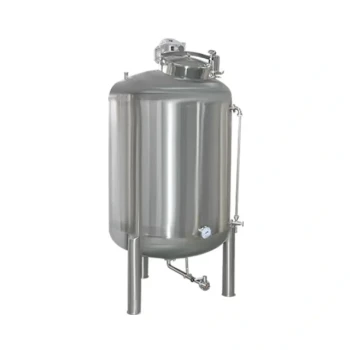
Once honey has passed through initial filtration, it is not immediately bottled. Instead, it is transferred to settling tanks where it sits undisturbed.
The primary reference indicates that this resting period lasts for about two weeks. This duration is critical to allow gravity to do its work without mechanical intervention.
Natural Separation
During the earlier "spinning" (extraction) phase, air is whipped into the honey, and small impurities may bypass initial filters.
During decanting, these lighter elements—specifically surface bubbles and small impurities—slowly migrate upward. Because honey is viscous, this separation cannot be rushed; the particles need time to travel through the dense liquid to the top.
The Foaming Process
The final step of decanting is the physical removal of the waste.
Once the impurities and bubbles collect at the top, they form a layer of foam. This layer is skimmed off in a process called foaming, leaving behind the pristine, dense honey at the bottom which is now ready for the consumer.
Understanding the Trade-offs
Time vs. Throughput
The primary cost of decanting is time. Requiring a two-week holding period creates a significant production bottleneck.
Producers cannot bottle immediately after extraction. They must account for the storage space and the delay in time-to-market required to let the honey clear naturally.
Yield Reduction
The "foaming" process involves skimming off the top layer of the tank.
While necessary for quality, this results in a small loss of total volume. The foam layer contains honey that cannot be sold as a premium retail product, representing a trade-off between purity and total yield.
Making the Right Choice for Your Goal
Whether you are a producer planning a workflow or a consumer evaluating a product, understanding decanting clarifies quality expectations.
- If your primary focus is Production Quality: Prioritize the full two-week resting period to ensure all air bubbles from the spinning phase have cleared, preventing cloudy aesthetic defects.
- If your primary focus is Purchasing: Look for honey that appears dense and free of frothy layers, as this indicates the product was properly decanted and finished.
Proper decanting ensures that the honey in the jar is as clear, pure, and smooth as the bees intended.
Summary Table:
| Feature | Honey Decanting Process Details |
|---|---|
| Primary Goal | Passive purification and removal of air bubbles/impurities |
| Resting Duration | Approximately 14 days (2 weeks) |
| Key Mechanism | Natural separation via gravity and density differentials |
| Final Step | Foaming (skimming off the top layer of waste) |
| Impact on Quality | Eliminates cloudiness and results in a clear, dense texture |
| Trade-offs | Production bottlenecks and slight reduction in total yield |
Elevate Your Honey Production with HONESTBEE
At HONESTBEE, we understand that professional beekeeping requires precision equipment to handle critical stages like decanting and filtration. We provide commercial apiaries and distributors with high-performance honey-filling machines, extraction hardware, and essential industry consumables designed to minimize yield loss and maximize purity.
Ready to scale your operation with premium beekeeping machinery and tools? Contact us today to discover how our wholesale solutions and specialized honey-processing equipment can streamline your workflow and deliver a superior product to your customers.
Related Products
- Heavy Duty Stainless Steel Honey Processing Machine Decrystallizing Tank
- 0.5T Capacity Honey Dehumidifier Dryer with Vacuum Heating and Thickening Filtering Machine
- High Quality Honey Dehumidifier Dryer Thickening Machine for Beekeeping
- Honey Concentrating and Filtering Dehumidifier Machine 2T Capacity for Honey
- Professional Thermostatic Conical Honey Melter
People Also Ask
- What are the features of the processing tanks offered? Engineered for Purity and Efficiency
- What types of stainless steel processing tanks are used for honey? Essential Equipment for Quality Honey Production
- What design options are available for honey processing tanks? Optimize Efficiency with Custom Geometries
- What types of stainless steel are used for honey processing? Ensure Food Safety with 304 & 316 Grade Equipment
- Why is industrial-grade stainless steel processing equipment required for honey harvesting? Ensure Purity & Compliance