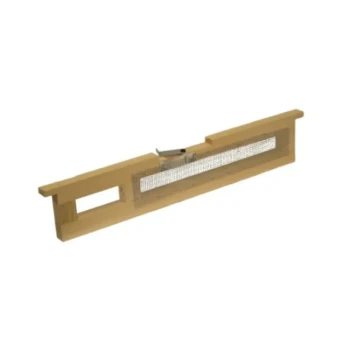
The design intent of modern wooden beehives is to transform beekeeping from a simplified gathering activity into a scalable, controllable industrial process. By prioritizing physical protection and structural standardization, these hives facilitate easier management and higher harvesting efficiency. Unlike traditional bark hives, modern designs enable non-destructive interventions, which are critical for maintaining continuous colony productivity and commercial viability.
Core Takeaway While modern wooden hives do not change the fundamental physicochemical properties of the honey, they are the essential infrastructure for industrial-scale production. They replace the passive nature of traditional methods with a system that maximizes yield, ensures consistent quality control, and protects the colony for long-term use.
Engineering for Control and Scalability
The Role of Standardization
Modern beekeeping relies on interchangeable components. The design intent is to create a predictable environment where equipment—such as frames and supers—can be moved between hives or replaced without disrupting the colony.
This standardization serves as a biological asset management tool. It allows beekeepers to split hives to increase colony numbers and maintain scale, a process that is difficult or impossible with irregular traditional structures.
Enabling Non-Destructive Inspection
The integration of movable frames is the defining technical leap of modern hive design. In traditional fixed-comb bark hives, inspection often requires damaging the structure or the comb.
Modern framed hives allow for precise, internal monitoring. Beekeepers can inspect queen egg-laying, larval development, and honey storage levels without harming the bees or destroying the honeycomb.
Advanced Pest and Disease Management
The enclosed wooden structure provides a controlled growth environment that is far superior to bark hives. Traditional hives are often vulnerable to ants, pests, and adverse weather, leading to high colony mortality.
Modern designs allow for targeted disease control and hygiene management. By reducing stress and interference, the hive structure prevents the common issue of bee migration (absconding) associated with unstable traditional habitats.
Optimizing Production Efficiency
Significantly Increased Yields
The structural efficiency of modern hives directly correlates to output. By utilizing specialized structures that separate brood rearing from honey storage, these hives can achieve three to four times the honey yield of traditional bark hives.
Cleaner Harvesting Processes
Traditional harvesting often involves crushing the comb, which can contaminate honey with larvae or debris. Modern hives are designed for clean extraction.
Beekeepers can remove honey frames solely for extraction while leaving the brood nest intact. This ensures higher purity and enables the reuse of the comb, saving the bees the energy required to rebuild wax and focusing their energy on honey production.
Understanding the Trade-offs
Process vs. Product Chemistry
It is critical to understand that the hive material itself—wood versus bark—does not significantly alter the physicochemical properties of the honey produced.
The "quality" improvement in modern hives comes from process control (purity, lack of debris, ripeness check) rather than a fundamental change in the nectar's chemical composition. Do not expect the wood to impart a different flavor profile than bark; the value lies in consistency.
Sustainability Implications
Traditional bark hives often contribute to forest degradation due to the stripping of trees required to build them.
Modern wooden hives offer a sustainable alternative. By providing a durable, reusable home for the bees, the industry moves away from destructive resource gathering toward a stable agricultural model.
Making the Right Choice for Your Goal
To determine the best approach for your apiary, align your equipment choice with your production targets:
- If your primary focus is Commercial Scalability: Adopt modern wooden hives immediately, as their standardized frames are the only viable way to manage assets, split colonies, and achieve the necessary 3-4x yield increase.
- If your primary focus is Honey Purity: Utilize modern framed hives to ensure clean separation between brood and honey, preventing contamination during the extraction process.
The shift to modern wooden hives is not merely a change in material; it is the adoption of a technology platform that enables professional, scientific management of biological resources.
Summary Table:
| Feature | Traditional Bark Hives | Modern Wooden Hives |
|---|---|---|
| Design Intent | Simple gathering/subsistence | Scalable industrial production |
| Comb Type | Fixed-comb (destructive) | Movable frames (non-destructive) |
| Yield Potential | Baseline production | 3x to 4x higher honey yield |
| Management | Passive/High interference | Active/Standardized management |
| Sustainability | Risk of forest degradation | Durable and reusable infrastructure |
Scale Your Beekeeping Business with HONESTBEE
Transitioning to modern wooden beehives is the first step toward a professional, high-yield apiary. At HONESTBEE, we empower commercial apiaries and distributors by providing a comprehensive wholesale range of professional-grade beekeeping tools and machinery.
Why choose HONESTBEE?
- Full Spectrum Supply: From standardized wooden hives and frames to advanced honey-filling machines.
- Industrial Quality: Equipment designed for durability and high-efficiency honey production.
- Bespoke Solutions: We cater to distributors with everything from hardware to honey-themed cultural merchandise.
Ready to maximize your colony productivity and ensure consistent honey purity? Contact us today to explore our wholesale catalog!
References
- Vincent Nyau, HB Moonga. Physico-chemical qualities of honey harvested from different beehive types in Zambia. DOI: 10.18697/ajfand.57.10730
This article is also based on technical information from HonestBee Knowledge Base .
Related Products
- Wooden Bee Hive Frames for Beekeeping and Wholesale
- Wholesales Dadant Size Wooden Bee Hives for Beekeeping
- Assembled Wooden Bee Frames with Plastic Foundation for Durability and Convenience by HONESTBEE
- HONESTBEE Wired and Assembled Wooden Bee Frames Foundation for a Thriving Hive
- Professional Wooden Requeening Frame for Beekeeping
People Also Ask
- How does balancing the number of frames impact hive productivity? Optimize Your Apiary's Biological Output
- How do wooden and plastic hive frames compare in terms of durability? Wood vs. Plastic Longevity & Repairability
- What are the main considerations when choosing between wooden and plastic bee hive frames? Optimize Your Apiary's Efficiency
- How should beehive frames be maintained to prolong their lifespan? 5 Pro Tips for Durable Beekeeping Equipment
- What are frames and combs used for in beekeeping? The Foundation of Modern Hive Management