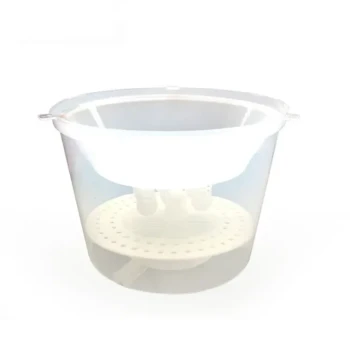
A commercial Pollen Trap functions as a standardized, non-invasive mechanical filter essential for collecting biological samples at the colony level. Installed at the hive entrance, the device forces foraging bees to pass through a specific grid, mechanically detaching pollen pellets from their hind legs for analysis. In an epidemiological context, this hardware allows researchers to gather large volumes of environmental material to screen for infectious agents, such as Nosema spores, without harming the bee population.
Core Takeaway: The Pollen Trap transforms disease monitoring from a destructive, individual-bee dissection process into a scalable, environmental surveillance system. It enables the detection of external pathogens entering the hive while simultaneously providing a setting to study how physical congestion affects viral transmission.
The Mechanics of Sample Collection
Precision Grid Architecture
The core mechanism of the trap is a grid with specifically sized apertures or screens. As returning foragers navigate these openings, the physical barrier strips the pollen pellets held in the "pollen baskets" on their hind legs.
Non-Invasive Acquisition
Unlike traditional histological methods that require sacrificing bees, pollen traps are non-destructive. They allow the colony to remain active and viable while researchers obtain the raw biological material needed for study.
Large-Scale Sampling
Because the device operates continuously at the hive entrance, it automates the collection process. This yields significant quantities of pollen, providing a statistically robust sample size for detecting pathogens that might be missed in smaller, manual samples.
The Role in Pathogen Detection
Screening for Environmental Contaminants
The primary epidemiological use of the trap is to intercept pathogens before they are fully integrated into the hive's food system. The collected pellets are analyzed to detect infectious agents, specifically Nosema spores, which can be transmitted via contaminated floral resources.
Studying Contact-Based Transmission
Beyond collecting pollen, the trap itself serves as a variable in studying disease dynamics. Researchers use these devices to evaluate how physical interventions and high-density contact points influence colony health.
Assessing Viral Spread
Specific studies utilize pollen traps to monitor the transmission of viruses like Chronic Bee Paralysis Virus (CBPV). The trap creates a bottleneck that forces high-frequency contact between bees, allowing epidemiologists to observe how forced interaction correlates with viral spread.
Understanding the Trade-offs
Physical Stress on the Colony
While useful for data collection, the trap acts as a physical intervention that alters natural bee behavior. The process of forcing bees through a grid can cause stress or physical fatigue, which acts as a confounding variable in health studies.
Risk of Aggravating Transmission
Ironically, the device used to study pathogens can potentially facilitate their spread if not managed correctly. By creating congestion at the entrance, the trap increases the rate of bee-to-bee contact, which may inadvertently accelerate the transmission of contact-dependent pathogens like CBPV.
Making the Right Choice for Your Research
When integrating commercial Pollen Traps into an epidemiological study, align your usage with your specific data requirements:
- If your primary focus is Environmental Surveillance (e.g., Nosema): Utilize the trap for short intervals to collect bulk samples of incoming pollen, ensuring the grid size is optimized to strip pellets without injuring the bees.
- If your primary focus is Transmission Dynamics (e.g., Viruses): Use the trap to simulate high-density contact zones, measuring how the physical bottleneck correlates with infection rates within the colony.
Ultimately, the Pollen Trap is a dual-purpose tool that serves as both a sample collector for external threats and a testbed for internal transmission dynamics.
Summary Table:
| Feature | Epidemiological Function | Research Benefit |
|---|---|---|
| Mechanical Grid | Strips pollen pellets for analysis | Non-invasive, high-volume biological sampling |
| Entrance Bottleneck | Simulates high-density contact zones | Studies viral transmission dynamics (e.g., CBPV) |
| Sample Automation | Intercepts environmental contaminants | Detects Nosema spores before hive integration |
| Non-destructive Design | Maintains colony viability | Enables longitudinal studies without sacrificing bees |
Scaling Your Research or Commercial Operations?
Efficient disease monitoring starts with the right hardware. HONESTBEE specializes in supporting commercial apiaries and distributors with high-performance beekeeping tools, specialized machinery, and essential consumables. Whether you need precise pollen traps for environmental surveillance or advanced honey-filling and hive-making machines to optimize production, we provide the industrial-grade equipment required to maintain healthy, productive colonies.
Partner with HONESTBEE to elevate your beekeeping standards. Contact us today to discuss our wholesale offerings and how we can support your business growth.
References
- Mariano Higes, Aránzazu Meana. Detection of infective Nosema ceranae (Microsporidia) spores in corbicular pollen of forager honeybees. DOI: 10.1016/j.jip.2007.06.002
This article is also based on technical information from HonestBee Knowledge Base .
Related Products
- Removable Plastic Pollen Trap With Ventilated Tray for Bees Pollen Collector
- 30 cm Plastic Entrance Hole Bee Pollen Trap and Collector
- Plastic Bee Pollen Trap Strips Comb Catcher Collector
- High-Efficiency Diamond Maze Bee Escape for Clearing Supers
- Professional Multi-Component Bucket Wasp Trap
People Also Ask
- What are the design principles and advantages of pollen traps in the collection of bee pollen? Boost Your Apiary Yield
- What is the function of professional pollen traps in evaluating honey plants? Quantifying Pollination and Crop Potential
- What functions do pollen traps serve for bee bread production? Optimize Your Raw Material Collection
- What maintenance and pest prevention measures should be taken for pollen traps? Protect Your Hive and Harvest Quality
- How does the use of pollen traps in honeybee hives enhance crop fertilization? Boost Your Yield Through Induced Activity