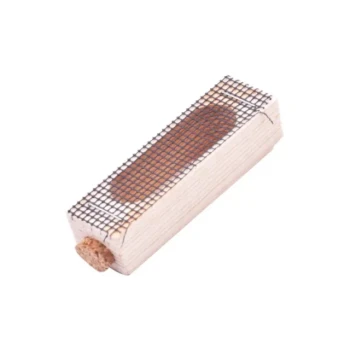
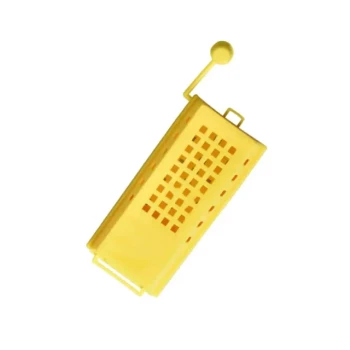
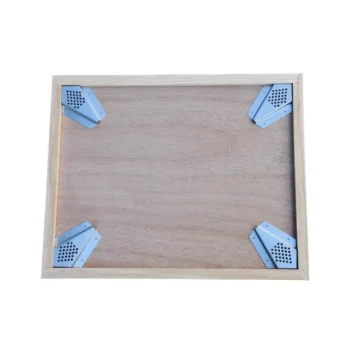
The primary function of a medium wooden bee cage is to create a controlled, stabilized micro-environment for housing groups of 100 to 200 Apis mellifera (honey bees) in a laboratory setting. By accommodating this specific population density, the cage facilitates natural social clustering, which minimizes confinement stress and significantly improves survival rates for downstream biological analysis.
In indoor rearing, experimental success relies on mimicking natural social structures to maintain insect health. The medium wooden cage optimizes group size to induce clustering behavior, directly translating to lower mortality and higher quality physiological samples.
The Role of Population Density
Optimized Group Size
This cage format is specifically engineered to accommodate a cohort of 100 to 200 bees. This range is not arbitrary; it represents a critical mass required to replicate semi-natural colony conditions within an artificial setting.
Facilitating Social Structure
Bees are obligate social insects that suffer when isolated. The medium cage provides the necessary volume to allow these 100-200 bees to interact naturally, forming a cohesive unit rather than functioning as stressed individuals.
Behavioral and Physiological Benefits
Encouraging Natural Clustering
The most critical function of the wooden cage design is fostering natural clustering behavior. This mechanic allows the bees to huddle together, regulating their immediate thermal environment and social contact as they would in a hive.
Mitigating Physiological Stress
Long-term confinement is inherently stressful for Apis mellifera, often leading to rapid health decline. By enabling clustering, the medium wooden cage drastically reduces the physiological stress associated with captivity.
Lowering Mortality Rates
The reduction in stress has a direct, measurable impact on longevity. Use of this cage design significantly lowers initial mortality rates, ensuring that the majority of the test subjects survive the acclimatization period.
Impact on Experimental Data
Preserving Sample Quality
For experiments involving biological extraction, the health of the live subject is paramount. The environment provided by the cage ensures high sample activity, preventing the lethargy often seen in poorly housed insects.
Enhancing Hemolymph Extraction
High activity levels and low stress are crucial for specific procedures, such as hemolymph (blood) extraction. By keeping the bees physiologically stable, the medium wooden cage ensures the biological samples collected are viable and representative.
Understanding the Operational Constraints
Dependency on Social Mass
It is important to note that the benefits of this cage are tied strictly to the population size. The "function" of the cage fails if the population drops significantly below the 100-bee threshold, as the group loses the critical mass needed to cluster effectively.
Making the Right Choice for Your Experiment
To determine if this rearing method aligns with your specific laboratory protocols, consider the following recommendations:
- If your primary focus is longevity studies: The medium wooden cage is essential to prevent stress-induced mortality from skewing your survival data.
- If your primary focus is physiological analysis: This housing method is required to ensure high sample activity for reliable hemolymph extraction.
By prioritizing natural social behaviors through proper cage sizing, you ensure that your data reflects the biology of the bee rather than the stress of the environment.
Summary Table:
| Feature | Specification/Benefit | Impact on Research |
|---|---|---|
| Capacity | 100 - 200 Bees | Replicates critical social mass for semi-natural conditions |
| Key Behavior | Natural Clustering | Enables thermal regulation and reduces confinement stress |
| Material | Wooden Construction | Provides a stabilized, breathable micro-environment |
| Survival Rate | Significantly Higher | Minimizes mortality to ensure valid longitudinal data |
| Data Quality | High Sample Activity | Ensures viable hemolymph extraction and physiological samples |
Elevate Your Apiary Operations with HONESTBEE
Are you looking to optimize your laboratory research or scale your commercial beekeeping business? HONESTBEE specializes in providing high-quality, professional-grade equipment tailored for commercial apiaries and distributors.
Our extensive portfolio includes:
- Precision Rearing Tools: From specialized wooden bee cages to hive-making machinery.
- Processing Solutions: Advanced honey-filling and extraction machines for high-efficiency production.
- Full-Spectrum Supplies: A comprehensive range of beekeeping hardware and essential industry consumables.
- Merchandise: Unique honey-themed cultural products to expand your market reach.
Whether you need to improve research outcomes with precision-engineered tools or source wholesale equipment at scale, our team is ready to support your success.
Contact us today to explore our wholesale offerings and technical solutions!
References
- Paula Melisa Garrido, Martín J. Eguaras. A standardized method to extract and store haemolymph from <i>Apis mellifera</i> and the ectoparasite <i>Varroa destructor</i> for protein analysis. DOI: 10.3896/ibra.1.52.2.13
This article is also based on technical information from HonestBee Knowledge Base .
Related Products
- Classic Wooden and Mesh California Queen Cage
- Premium Wood and Steel Push In Queen Cage
- Professional Wooden Requeening Frame for Beekeeping
- Wood and Mesh Push-In Queen Cage
- Wholesales Dadant Size Wooden Bee Hives for Beekeeping
People Also Ask
- How are queen cages used to protect newly hatched queens? Secure Your Virgin Queens During Development
- Why are queen cages or grid cages used in bee studies? Achieve Precise Biological Data for Research
- Why are professional queen cages necessary for queen replacement? Secure Your Apiary’s Future
- What should be done if bees damage the queen cage? Secure Your Queen with These Emergency Intervention Steps
- What is the correct procedure for installing a queen cage into a new hive? A Pro Guide for Colony Success