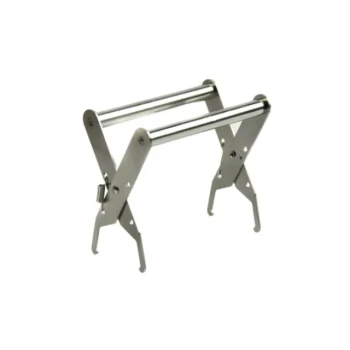
A transparent grid counting frame acts as a bridge between visual observation and statistical data. It is a high-precision measurement tool designed to overlay the hive comb, allowing technicians to convert irregular biological zones into standardized numerical values for the analysis of colony development.
The core value of this tool lies in objectivity; it transforms the subjective visual assessment of complex hive structures—like brood patterns and food stores—into quantifiable square-centimeter data points, ensuring that evaluations of nutritional formulas or colony health are based on evidence rather than estimation.
Transforming Observation into Metric Data
The Challenge of Irregularity
Honeybee colonies do not organize their hives in perfect geometric shapes. Brood areas, honey stores, and bee bread (pollen) are distributed in irregular patterns across the comb.
Visual estimation of these areas is prone to human error and subjectivity. This makes it nearly impossible to accurately compare the performance of one colony against another without a standardized tool.
The Mechanism of Standardization
The transparent frame typically consists of a plastic sheet engraved with a precise grid, often measured in square centimeters.
By placing this frame directly over the honeycomb, the technician can count the specific number of grid squares occupied by a specific biological element. This converts an organic shape into a precise area measurement (e.g., $cm^2$ or $dm^2$).
Key Parameters Measured
The primary reference highlights three critical zones measured using this method:
- Brood Areas: The space occupied by developing larvae and pupae.
- Honey Storage Areas: The volume of energy reserves available to the colony.
- Bee Bread Areas: The stores of protein (pollen) required for brood rearing.
The Role in Scientific Evaluation
Assessing Nutritional Efficacy
The primary function of collecting this data is often to evaluate inputs. Specifically, the tool provides the objective basis needed to determine the effectiveness of different nutritional formulas.
By comparing the expansion of brood or food stores against a control group, researchers can mathematically prove whether a specific diet improves colony performance.
Non-Destructive Analysis
A critical advantage of using a transparent overlay is that it is non-destructive.
Technicians can gather high-precision data regarding colony development and turnover rates without harming the larvae, adult bees, or the physical structure of the comb.
Understanding the Trade-offs
Precision vs. Speed
While grid counting offers high precision, it is a manual and time-consuming process compared to visual estimation. It requires the physical removal of frames and careful counting, which extends the time the hive is open.
Variable Grid Scales
It is important to note that while the primary reference specifies square centimeter grids, other standards exist (such as 5x5 cm scales or square decimeters).
Data collected using different grid scales may not be immediately comparable. Consistency in the tools used across a single study or apiary is essential for valid results.
Making the Right Choice for Your Goal
To maximize the utility of a transparent grid counting frame, align your usage with your specific objectives:
- If your primary focus is Research and Development: Use the grid to calculate precise square-centimeter areas to rigorously test the statistical significance of new nutritional formulas or treatments.
- If your primary focus is Colony Management: Use larger grid scales (like the 5x5 cm or 1 dm sections) to quickly gauge general health trends and colony turnover without keeping the hive open excessively long.
Ultimately, the transparency of the tool allows you to see the colony clearly, but the grid allows you to understand it scientifically.
Summary Table:
| Feature | Function & Impact |
|---|---|
| Measurement Type | Converts irregular biological zones into standardized $cm^2$ or $dm^2$ data. |
| Core Parameters | Accurately measures brood areas, honey storage, and bee bread (pollen) zones. |
| Key Benefit | Eliminates subjective visual error to provide objective evidence for R&D. |
| Research Use | Vital for testing the efficacy of nutritional formulas and colony health treatments. |
| Safety | Non-destructive analysis; allows data collection without harming larvae or bees. |
Scale Your Beekeeping Success with HONESTBEE
Are you looking to enhance your apiary's productivity with scientific precision? HONESTBEE specializes in supporting commercial apiaries and distributors with high-quality, professional-grade equipment. From specialized hardware like hive-making and honey-filling machines to essential measurement tools and consumables, we provide everything you need to optimize colony performance.
Whether you are a commercial beekeeper refining nutritional formulas or a distributor seeking a comprehensive wholesale partner, our portfolio is designed to add value to your business. Contact HONESTBEE today to discuss our wholesale offerings and discover how our expertise can drive your growth in the beekeeping industry!
References
- Hatem Sharaf El-Din, M. A. Abd Al-Fattah. The type of protein supplement or substitute and its location from brood affect honeybee colony performance. DOI: 10.21608/sjas.2022.114530.1179
This article is also based on technical information from HonestBee Knowledge Base .
Related Products
- Ergonomic Plastic Frame Spacer Tool for Rapid Hive Management Beekeeping
- Professional Engraved Round Hive Number Tags for Beekeeping
- HONESTBEE AC Powered Wire Embedder with Alligator Clips
- Durable Plastic Hive Number Set for Beekeeping
- Professional Large-Format Hive Number Set for Beekeeping
People Also Ask
- What specific challenges do beekeeping hive tools address during hive maintenance? Essential Solutions for Apiaries
- How do specialized beehive management tools assist in the routine maintenance of bee colonies? Boost Hive Efficiency
- How do specialized beehive management tools support high-purity honey production? Master Monofloral Isolation
- How do traditional harvesting tools like axes and machetes negatively affect bee colonies? Upgrade to Professional Gear
- What additional equipment might be useful for beekeeping? Boost Hive Health & Efficiency