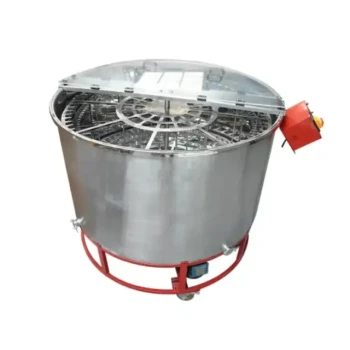
Industrial vacuum freeze-drying equipment functions as a critical preservation mechanism for high-value bee products, specifically designed to bypass the damaging effects of heat. By utilizing sublimation dehydration under high vacuum (approximately -0.8 bar) and low temperatures (ranging from -10°C to -60°C), this technology removes moisture to below 5% without allowing the substance to pass through a liquid phase. This converts perishable, temperature-sensitive raw materials into stable powders while retaining their full biological potency.
Core Takeaway: The central function of this equipment is to "lock in" the therapeutic value of fragile compounds—such as melittin in bee venom and 10-HDA in royal jelly—by removing water through sublimation. This ensures the final product remains biologically active, highly soluble, and shelf-stable without the need for continuous cold-chain storage.
The Mechanism of Preservation
Industrial freeze-drying (lyophilization) is not merely about drying; it is about halting biological degradation. The equipment creates a specific environment that prevents the chemical breakdown common in traditional processing.
Sublimation Dehydration
The equipment freezes the raw material and then lowers the pressure to create a vacuum. Under these conditions, the frozen water in the bee venom or royal jelly turns directly into vapor (sublimation), skipping the liquid phase entirely.
Thermal Protection
Operating at temperatures between -10°C and -60°C protects the product from thermal shock. Traditional heat drying would denature the delicate proteins found in these substances, rendering them therapeutically useless.
Prevention of Autolysis and Oxidation
For bee venom specifically, this process performs a vital protective function. It prevents autolysis (where internal proteases "digest" the venom) and stops oxidation caused by air exposure. This transforms the venom into a stable crystalline powder that retains its original biochemical structure.
Impact on Bioactive Components
The primary reason for using this complex equipment is to preserve specific, high-value markers of quality that are otherwise volatile.
Preserving Royal Jelly Integrity
Royal jelly is highly acidic (pH ~3.5) and contains unstable proteins. Freeze-drying preserves 10-hydroxy-2-decenoic acid (10-HDA), the primary quality marker of royal jelly, as well as essential amino acids that would decompose under heat.
Stabilizing Bee Venom Potency
The equipment ensures the stability of melittin, the principal active peptide in bee venom. By removing moisture without heat, the equipment ensures that the venom's anti-inflammatory and therapeutic properties remain potent for pharmaceutical use.
Logistical and Physical Enhancements
Beyond bioactivity, the equipment alters the physical state of the product to solve industrial handling challenges.
Shelf-Life Extension
Fresh royal jelly and liquid bee venom require strict refrigeration to prevent spoilage. Freeze-drying removes this constraint, allowing the resulting powder to be stored at room temperature for extended periods without degrading.
Improved Rehydration and Solubility
The porous structure created by sublimation ensures the final powder rehydrates instantly. This is superior to heat-dried products, which often shrink or harden, making them difficult to dissolve in pharmaceutical or cosmetic formulations.
Understanding the Trade-offs
While freeze-drying is the gold standard for high-value bee products, it is important to understand where it sits in the broader processing landscape.
Investment vs. Quality
Freeze-drying is significantly more expensive and energy-intensive than convective drying (using heated air). Convective drying is suitable for less sensitive products like bee pollen, but it is destructive to the enzymes in venom and royal jelly.
Processing Time
The lyophilization process is slow, often taking significantly longer than heat drying. This bottleneck is the necessary cost for maintaining the "fresh" biochemical profile of the dry product.
Making the Right Choice for Your Goal
To determine if this equipment aligns with your processing needs, consider your end-product requirements.
- If your primary focus is Pharmaceutical Grade Potency: You must use freeze-drying to prevent the denaturation of heat-sensitive peptides like melittin and 10-HDA.
- If your primary focus is Supply Chain Flexibility: Use this technology to convert products into shelf-stable powders, eliminating the costs and risks associated with cold-chain transport.
- If your primary focus is Formulation Versatility: Rely on freeze-drying to produce porous powders that dissolve instantly in serums, creams, or supplements.
In summary, industrial vacuum freeze-drying is the only viable commercial method for transforming volatile bee secretions into stable, bioactive commodities without compromising their therapeutic value.
Summary Table:
| Feature | Function in Processing | Impact on Bee Products |
|---|---|---|
| Sublimation Dehydration | Removes moisture < 5% without liquid phase | Preserves fragile compounds like 10-HDA and Melittin |
| Thermal Protection | Operates at -10°C to -60°C | Prevents denaturation of delicate proteins and enzymes |
| Vacuum Environment | Eliminates oxygen and atmospheric pressure | Stops oxidation and autolysis (self-digestion) of venom |
| Physical Transformation | Creates a porous, stable crystalline structure | Ensures instant solubility and long-term shelf stability |
Elevate Your Apiary’s Output with HONESTBEE Professional Equipment
For commercial apiaries and distributors looking to maximize the market value of high-potency bee products, HONESTBEE provides the industrial-grade machinery you need. Beyond our specialized vacuum freeze-drying units, we offer a comprehensive wholesale portfolio including:
- High-Precision Machinery: From honey-filling lines to specialized hive-making hardware.
- Beekeeping Tools: A full spectrum of professional-grade hardware and equipment.
- Industry Consumables: Every essential needed to maintain a high-volume operation.
Ready to transform your raw royal jelly and bee venom into premium, shelf-stable commodities? Let our experts help you select the right tools for your business.
Contact HONESTBEE Today for a Wholesale Consultation
References
- A El-Tanahi, ashraf sharoba. Physiochemical characteristics and therapeutic effects of lyophilized Bee venom and Royal jelly. DOI: 10.21608/assjm.2014.111636
This article is also based on technical information from HonestBee Knowledge Base .
Related Products
- Full Set Beekeeping Electronic Bee Venom Collector Machine Device for Bee Venom Collecting
- Plastic Chinese Queen Grafting Tool for Bee Queen Rearing
- High Quality Honey Dehumidifier Dryer Thickening Machine for Beekeeping
- Oxalic Acid Vaporizer 12V for Bee Varroa Mite Treatment
- HONESTBEE 72 Frame Industrial Electric Honey Extractor for Beekeeping
People Also Ask
- How does the glass plate integrated into a bee venom collector contribute to maintaining quality and purity?
- What is the function of specialized collection equipment in the production process of bee venom? Expert Guide
- What is the significance of using specialized bee venom collection devices in commercial beekeeping operations?
- Why are bee venom collection devices typically mounted on specialized wooden carrier boards? Maximize Yield & Purity.
- How does a dedicated bee venom collection device operate? Extract Pure Venom Safely Without Harming Your Bees