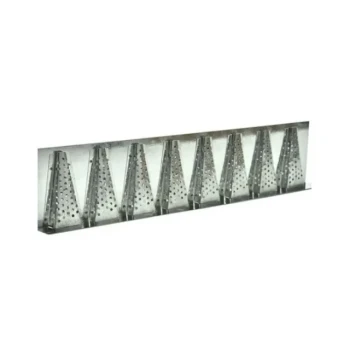
The primary function of metal screens within modified hive entrance sampling tubes is to create an immediate physical barrier that segregates bee traffic. By blocking passage at the specific moment of sampling, these screens effectively isolate foragers returning to the hive from those attempting to depart. This mechanical separation is the foundational step required to analyze distinct behaviors and parasite loads in different segments of the colony's workforce.
By physically separating incoming foragers from outgoing bees, metal screens allow researchers to measure Varroa mite carriage rates independently for each group. This distinction is crucial for determining if mites are invading the colony from external sources or spreading outward from an internal infestation.
The Mechanics of Separation
Physical Blocking of Passage
The metal screen serves as a hard stop within the sampling tube. When deployed, it physically prevents bees from moving through the entrance mechanism.
This ensures that the population inside the tube at the moment of sampling is static. It prevents the mixing of populations that naturally occurs at a busy hive entrance.
Isolating Directionality
By stopping the flow of traffic, the screen allows the observer to distinguish the direction of travel.
Bees trapped on the exterior side of the screen are confirmed as returning foragers. Bees trapped on the interior side are confirmed as departing workers. Without this screen, these two distinct groups would be indistinguishable in a mixed sample.
Why Separation Matters for Mite Analysis
Independent Detection Rates
The core value of this modification is the ability to calculate independent mite-carrying rates.
Researchers can analyze the "incoming" sample separately from the "outgoing" sample. This granular data provides insights that a bulk sample of entrance bees could never offer.
Distinguishing Invasion vs. Spread
The screen allows scientists to diagnose the source of infestation.
If incoming bees have high mite counts, it suggests external drifting or invasion from other colonies. If outgoing bees have high counts, it indicates the colony is internally infested and potentially spreading mites outward.
Understanding the Trade-offs
Disruption of Colony Flow
The use of metal screens creates a temporary bottleneck in hive operations.
Because the screens physically block passage, they stop the natural flow of foraging, waste removal, and guard duty. This sampling method is generally intended for momentary data collection rather than continuous monitoring.
Complexity of Equipment
Implementing this method requires modified hardware rather than standard beekeeping equipment.
The sampling tubes must be specifically designed to house the screens and fit the hive entrance securely. This adds a layer of logistical complexity compared to simple visual inspections or sticky board counts.
Making the Right Choice for Your Goal
To maximize the value of this sampling method, consider your specific research or management objectives:
- If your primary focus is detecting external threats: Focus your analysis on the "incoming" bees trapped by the screen to identify if mites are drifting in from neighboring apiaries.
- If your primary focus is internal colony health: Analyze the "outgoing" bees to determine if your hive is acting as a vector, spreading mites to the surrounding environment.
The metal screen is the critical tool that transforms a chaotic hive entrance into two distinct, analyzable data streams.
Summary Table:
| Feature | Primary Function | Research Value |
|---|---|---|
| Physical Barrier | Blocks bee passage at the entrance | Stops traffic for static sampling of specific bee groups |
| Traffic Segregation | Separates incoming from outgoing foragers | Allows independent calculation of Varroa mite carriage rates |
| Directional Analysis | Confirms bee travel orientation | Distinguishes between external invasion and internal spread |
| Data Granularity | Provides segmented colony workforce data | Diagnoses if the hive is a victim of drift or a vector of infestation |
Elevate Your Beekeeping Operations with HONESTBEE
At HONESTBEE, we understand that precision is the key to managing productive commercial apiaries. Whether you are conducting advanced research on Varroa mite migration or managing thousands of colonies, we provide the industrial-grade tools you need to succeed.
Why Partner with HONESTBEE?
- Comprehensive Wholesale Solutions: From specialized hive-making and honey-filling machinery to high-quality consumables, we cater to the scale and durability requirements of commercial distributors and large-scale beekeepers.
- Expert Hardware Portfolio: We supply everything from protective gear to modified entrance equipment, ensuring your team has the best tools for efficient colony management.
- Commitment to Quality: Our equipment is designed to streamline your workflow and enhance colony health across your entire operation.
Ready to scale your apiary or restock your distribution inventory? Contact us today to discover how our wholesale beekeeping equipment can drive your business forward.
References
- Gloria DeGrandi‐Hoffman, Emily Watkins deJong. Population growth of Varroa destructor (Acari: Varroidae) in honey bee colonies is affected by the number of foragers with mites. DOI: 10.1007/s10493-016-0022-9
This article is also based on technical information from HonestBee Knowledge Base .
Related Products
- Beehive Entrance Reducer Guardian Metal Hive Entrance for Bees
- 8-Cone Galvanized Steel Bee Robber Guard
- Steel Round Disc Entrance Reducer for Flexzion Bee Hive Nuc Box Gate
- Professional Reversible Beehive Hive Entrance
- Multi-Functional Sliding Hive Entrance for Beekeeping
People Also Ask
- Why are entrance reducers used to counter hornet infestations? Protect Your Hive with Strategic Choke Points
- What is the purpose of an entrance reducer for a beehive? Strengthen Colony Defense and Prevent Robbery
- What are the proper guidelines for using hive entrance reducers? Master Temperature Control & Colony Defense
- Why is it critical to maintain a smaller entrance for a newly established bee hive? Boost Colony Growth and Security
- What is the physical mechanism behind the use of hive entrance reducers? Protect Your Bees from Vespa velutina