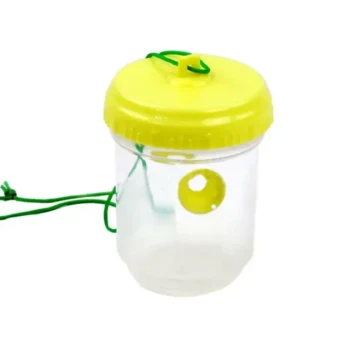
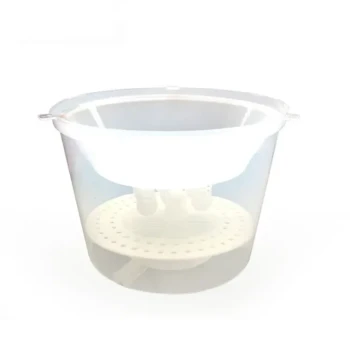
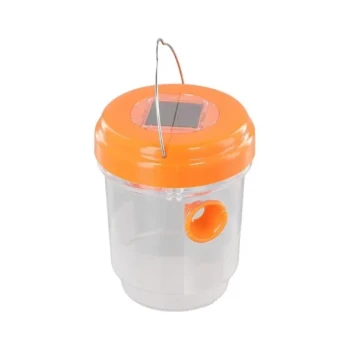
Within the structure of a wax moth trap, the plastic jars act as the central capture and retention system. They utilize old honeycomb fragments as a specific olfactory attractant to lure wax moths into the container. Simultaneously, the soapy water reduces surface tension, ensuring that entering insects are immediately submerged and unable to escape.
This system relies on a dual-action mechanism: the biological scent of the honeycomb targets the specific pest, while the chemical property of the soapy water guarantees retention for accurate population monitoring.
The Mechanics of Attraction and Retention
To understand the effectiveness of this trap design, one must separate the biological lure from the physical capture method.
The Role of Old Honeycomb
The honeycomb fragments are not mere filler; they serve as the primary bait.
By using old honeycomb, the trap releases specific volatile compounds that mimic the scent of a hive. This acts as a targeted olfactory attractant, ensuring the trap appeals specifically to wax moths rather than indiscriminate garden insects.
The Physics of Soapy Water
Water alone is often insufficient to trap an insect due to surface tension, which allows lightweight pests to float and potentially escape.
Adding soap drastically reduces this surface tension. When a moth attempts to land on or touch the water, the weakened surface tension causes it to sink immediately, drowning the pest and preventing escape.
Ensuring Data Integrity
For a trap to be useful, it must provide an accurate count of the pest population.
If insects can land on the water and fly away, the trap fails to reflect the true density of the infestation. The quick submersion ensures that every moth entering the jar remains there, maintaining the accuracy of the captured insect count.
Understanding the Trade-offs
While plastic jar traps are effective for monitoring and reducing adult populations, they are not a standalone solution for total hive hygiene.
Monitoring vs. Prevention
Traps excel at catching adult moths before they lay eggs, but they do not address larvae already present in stored equipment.
The supplementary reference notes that wax moth larvae are the primary destroyers of honeycombs. Therefore, traps should be viewed as a defensive perimeter, not a cure for infested combs.
The Necessity of Storage Management
Relying solely on traps to protect valuable wax assets is a common pitfall.
To fully interrupt the pest's life cycle, you must combine trapping with specialized cold storage or airtight fumigation. These processes kill the destructive larvae that the liquid traps cannot reach.
Integrating Traps into Your Management Strategy
To effectively protect your apiary assets, you must align your tools with your specific objectives.
- If your primary focus is population monitoring: Ensure your jars are baited with old, aromatic honeycomb to maximize the specific attraction of adult moths.
- If your primary focus is asset preservation: Combine trapping with cold storage protocols to eliminate larvae and protect combs for future flowering seasons.
By using soapy water traps to intercept adults and climate control to manage larvae, you create a comprehensive barrier that protects your operational investment.
Summary Table:
| Component | Primary Function | Scientific/Practical Mechanism |
|---|---|---|
| Old Honeycomb | Olfactory Attractant | Releases volatile scents mimicking hives to lure wax moths. |
| Soapy Water | Retention Agent | Reduces surface tension to ensure immediate submersion/drowning. |
| Plastic Jar | Capture Housing | Serves as the central retention system for population monitoring. |
| Trap System | Pest Management | Intercepts adult moths to prevent egg-laying and hive damage. |
Secure Your Apiary with Professional-Grade Solutions
Protecting your honeycomb assets requires more than just traps—it requires the right infrastructure. HONESTBEE empowers commercial apiaries and distributors with high-performance beekeeping tools, specialized machinery, and essential consumables.
Whether you need advanced honey-filling machines, hive-making hardware, or bulk supplies to safeguard your operational investment, we provide the wholesale expertise you need to scale.
Ready to upgrade your beekeeping operation? Contact HONESTBEE today to explore our comprehensive equipment portfolio and see how we can drive value for your business.
References
- Mahmoud Mabrouk, Mohamed Mahbob. Effect of Different Coloured Light Traps on Captures and Controlling Wax Moth (Lepidoptera: Pyralidae).. DOI: 10.21608/eajbsa.2015.12883
This article is also based on technical information from HonestBee Knowledge Base .
Related Products
- Professional Bucket Style Wasp and Moth Pheromone Trap
- Compact Multi-Funnel Hanging Wasp Trap
- Gourd Shaped Hanging Wasp Trap Professional Wasp Catcher
- 30 cm Plastic Entrance Hole Bee Pollen Trap and Collector
- Professional Multi-Component Bucket Wasp Trap
People Also Ask
- What is the function of Pheromone Traps in the biosecurity monitoring of apiaries? Precision Tools for Pest Control
- What role do Pheromone Traps play in the IPM for Large African Hive Beetles? Essential Surveillance & Control Tips
- How do professional wasp traps function? Master Physical Control of Oriental Hornets to Protect Your Apiary
- What are the practical advantages of using professional wasp traps and protective equipment in apiary management? Scale Up
- Why replace sugar syrup bait in wasp traps every three days? Ensure Maximum Attraction and Catch Rates