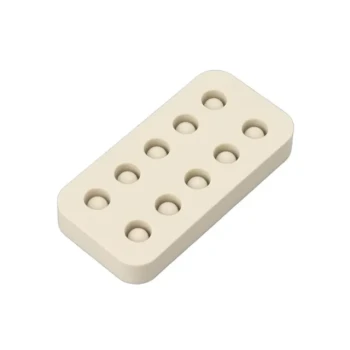
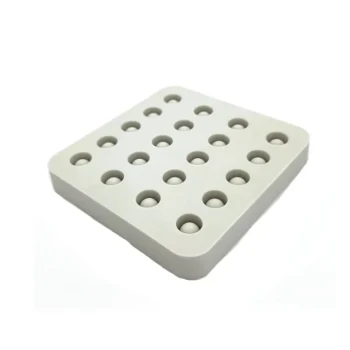
Standardized Artificial Queen Cells function as precision-engineered bio-mimetic containers designed to trigger the natural nursing instincts of a honeybee colony. By replicating the physical geometry of natural queen cells, they induce nurse bees to fill the cups with royal jelly to feed grafted larvae, effectively converting a biological impulse into a scalable industrial process.
Core Takeaway Artificial Queen Cells bridge the gap between biological behavior and industrial efficiency. They provide a uniform foundation that standardizes yield per unit, maximizes larval acceptance, and enables the use of professional tools for rapid mass harvesting.
The Mechanics of Induced Production
Simulating the Natural Environment
The primary function of an Artificial Queen Cell is biological mimicry. In nature, bees build queen cells irregularly; in production, these standardized cups simulate that specific environment to convince nurse bees that a queen is being reared.
Triggering the Nursing Instinct
Once a worker larva is grafted into the artificial cell, the colony perceives it as a future queen. This induces the nurse bees to secrete and deposit massive quantities of royal jelly into the cup, far exceeding what is needed for simple nutrition.
Serving as a Collection Vessel
Unlike natural honeycomb, which is destructive to harvest, these cells act as independent, removable containers. They hold the accumulated jelly and the larva, allowing for systematic removal without damaging the hive structure.
The Role of Standardization
Ensuring Consistent Yields
In large-scale operations, predictability is vital. Standardized cells ensure that every unit has the exact same specifications, leading to a stable output of royal jelly per cup.
Facilitating Mechanical Processing
Uniformity allows for the integration of professional beekeeping tools. Because the dimensions are fixed, producers can use specialized equipment to transfer larvae and harvest jelly rapidly, which is impossible with irregular natural cells.
Enabling Modular Scalability
These cells are designed to fit onto wooden cell bars within rearing frames. This modularity allows producers to precisely control the number of cells introduced to a hive, adjusting the scale of production based on colony strength.
Understanding the Trade-offs: Material Selection
While the geometry is standardized, the material of the cell dictates specific production advantages and limitations.
The Advantage of Wax Affinity
Beeswax cells (or plastic cells coated in wax) offer the highest biological acceptance rate. Because the material smells and feels natural to the bees, they are less likely to reject the grafted larva, ensuring the production process begins successfully.
The Precision of Plastic
Dark plastic cups offer superior durability and standardization. Unlike wax, which can deform or vary in weight, plastic cups are rigid and identical. This consistency allows for precise tare calibration, enabling producers to accurately weigh the royal jelly yield inside the cell without removing it.
Making the Right Choice for Your Goal
The selection of a specific type of Artificial Queen Cell depends on whether your operation prioritizes biological acceptance or data precision.
- If your primary focus is Maximum Acceptance: Prioritize wax cells or wax-coated cups, as the material affinity significantly increases the likelihood of worker bees nursing the grafted larvae.
- If your primary focus is Process Efficiency and Measurement: Utilize dark plastic cells, which resist deformation and allow for accurate weighing and tare calibration during harvest.
Success in royal jelly production relies on using these cells to perfectly balance the biological needs of the bee with the logistical needs of the producer.
Summary Table:
| Feature | Function in Production | Primary Benefit |
|---|---|---|
| Biological Mimicry | Replicates natural queen cell geometry | Triggers nurse bees' feeding instinct |
| Standardized Dimensions | Uniform cup size and shape | Enables predictable yields and mechanical processing |
| Modular Design | Fits onto wooden cell bars | Allows for scalable production and easy removal |
| Material Selection | Plastic vs. Wax-coated options | Balances high larval acceptance with durability |
| Collection Vessel | Independent, removable container | Facilitates rapid harvesting without hive damage |
Maximize Your Royal Jelly Yield with HONESTBEE Professional Solutions
Success in large-scale beekeeping requires the perfect balance between biological precision and industrial efficiency. At HONESTBEE, we specialize in supporting commercial apiaries and distributors with high-performance equipment designed for maximum productivity.
From precision-engineered artificial queen cells and specialized hive-making machinery to advanced honey-filling systems, our comprehensive wholesale portfolio covers every need of the modern honey-themed industry. Whether you are scaling up your royal jelly production or sourcing essential consumables, HONESTBEE provides the tools and expertise to ensure your success.
Ready to upgrade your apiary’s efficiency? Contact us today to discuss your wholesale needs and discover how our specialized beekeeping hardware can grow your business.
References
- Dimitrios Kanelis, Chrysoula Tananaki. The Impact of Grafted Larvae and Collection Day on Royal Jelly’s Production and Quality. DOI: 10.3390/app15158200
This article is also based on technical information from HonestBee Knowledge Base .
Related Products
- 10-Cell Silicone Beeswax Bee Queen Cups Forming Mold
- JZBZ Type Wide Base Plastic Queen Cell Cups for Base Mounting and Queen Rearing
- Clear Black Plain Polystyrene Queen Bee Grafting Cell Cups No Lug for Bee Queen Cup
- JZBZ Push-In Queen Cell Cups for Beekeeping
- Brown Nicot Queen Cell Cups for Breeding Queen Bees Beekeeping
People Also Ask
- How do beeswax queen cell cups function? Optimize Queen Rearing with Biological Mimicry
- What is the biological function of beeswax queen cell cups? Boost Acceptance in Artificial Queen Rearing
- What role do specialized queen rearing tools play in developing mite-resistant honeybee stock? Master Genetic Selection
- What materials are used to make artificial queen cell cups for grafting? Beeswax vs. Plastic Guide
- What roles do specialized queen cell cups play in royal jelly production? Optimize Your Hive's Secretion and Yield