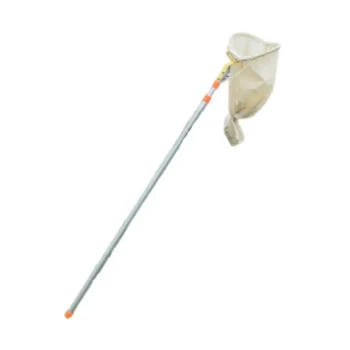
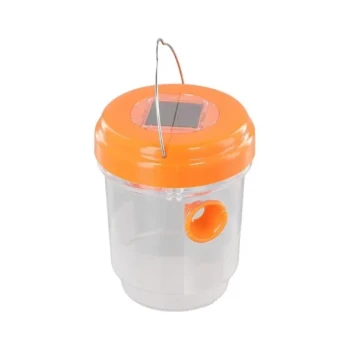
Swarm traps serve as critical interception points used to monitor the movement and establishment of honey bee populations across vast landscapes. By deploying these devices along specific geographic borders and altitude gradients, researchers can capture migrating colonies to generate concrete data on how fast a population is spreading and which routes it utilizes.
The Core Function Swarm traps convert anecdotal observation into measurable data, allowing experts to precisely track migration paths and colonization preferences across diverse climatic zones to inform regional control strategies.
Analyzing Migration Dynamics
To understand how honey bee populations—such as Africanized Honey Bees (AHBs)—move through an environment, researchers rely on the specific data points swarm traps provide.
Measuring Diffusion Speed
Swarm traps allow for the calculation of diffusion speed, which is the rate at which a population spreads into new territory. By recording when swarms arrive at specific trap locations, scientists can determine the velocity of the migration front.
Mapping Migration Pathways
Bees do not move randomly; they follow specific geographic corridors. Placing traps along borders allows researchers to identify the exact migration paths colonies prefer as they navigate through a region.
Evaluating Environmental Preferences
Beyond simple movement, swarm traps help determine where bees are likely to settle and thrive.
Altitude and Climate Analysis
Traps are positioned across varying altitudes to test colonization viability. This data reveals whether a specific bee population prefers tropical lowlands or if it is adapting to temperate highlands.
Climatic Zone Adaptation
By monitoring capture rates in different environments, researchers can assess a population's ability to survive in diverse climatic zones. This insight is vital for predicting the future range of invasive or migrating species.
Operational Limitations and Trade-offs
While swarm traps are powerful monitoring tools, their effectiveness relies heavily on execution strategy.
Dependency on Strategic Placement
The data derived from swarm traps is only as reliable as the deployment strategy. If traps are not positioned correctly along relevant geographic borders or altitude gradients, the resulting data may fail to detect significant migration corridors.
Capture Specificity
Swarm traps are designed to capture migrating colonies looking for a new home. They do not necessarily reflect the health or status of established colonies already present in the ecosystem, limiting the data strictly to migratory and colonization activity.
Making the Right Choice for Your Goal
The utility of swarm traps depends on whether your objective is immediate containment or long-term biological study.
- If your primary focus is tracking invasive spread: Focus on deploying traps along geographic borders to calculate the diffusion speed of the incoming population.
- If your primary focus is environmental biology: Prioritize placing traps across vertical altitude gradients to understand the climatic preferences and limitations of the bees.
By systematically analyzing the contents of these traps, you transform a passive capture method into a proactive management strategy.
Summary Table:
| Monitoring Metric | Primary Function | Strategic Application |
|---|---|---|
| Diffusion Speed | Measures the rate of population spread | Tracking invasive species like AHBs |
| Migration Pathways | Identifies preferred geographic corridors | Determining movement through borders |
| Altitude Gradient | Tests colonization viability at various heights | Assessing climate adaptation and range |
| Climatic Zone Data | Records survival across different environments | Predicting future habitat expansion |
Elevate Your Beekeeping Operations with HONESTBEE
Are you a commercial apiary or a distributor looking for professional-grade solutions to monitor and manage bee populations? HONESTBEE is your premier partner for high-quality beekeeping tools and industrial machinery. We provide everything from specialized hive-making and honey-filling machines to essential industry consumables and cultural merchandise.
Whether you need robust hardware for large-scale production or reliable tools for population monitoring, our comprehensive wholesale offering is designed to support your growth and efficiency.
Ready to scale your business with the industry experts? Contact HONESTBEE today for specialized wholesale solutions!
References
- Ernesto Guzmán‐Novoa, José Javier G. Quezada‐Euán. The Process and Outcome of the Africanization of Honey Bees in Mexico: Lessons and Future Directions. DOI: 10.3389/fevo.2020.608091
This article is also based on technical information from HonestBee Knowledge Base .
Related Products
- HONESTBEE Collapsible Tiered Bee Swarm Catcher for Beekeeping
- HONESTBEE Professional Telescopic Pole Bee Swarm Catcher
- Reusable Clear Small Hive Beetle Traps for Beehives Beetle Trapping Tools
- Removable Washable Hive Beetle Trap Attractants for Small Hive Beetles
- Professional Bucket Style Wasp and Moth Pheromone Trap
People Also Ask
- What should be done if the swarm is situated on the bottom of a tree limb? A Guide to Methodical Bee Capture
- What role do swarm catchers play in maintaining the production scale of an apiary? Turn Colony Loss into Growth.
- What role does a Swarm Catcher play in the process of expanding apiary colony scale? Optimize Growth & Reduce Costs
- What information should be gathered before attempting to catch a swarm of bees? A Safe and Successful Guide
- What precautions can be taken to prevent a newly captured swarm from absconding? Secure Your Swarm with Proven Methods