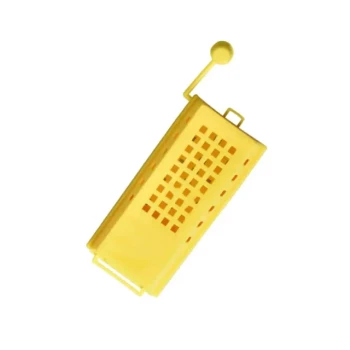
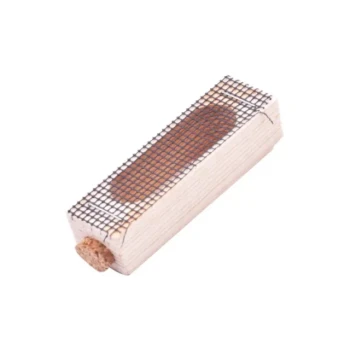
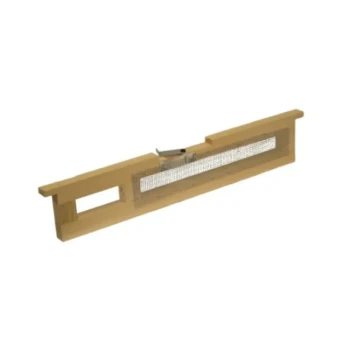
The candy release tube functions as a biological time-delay mechanism. It blocks the exit of the queen’s cage with a plug of firm sugar fondant. To free the queen, the worker bees from the colony must eat through this barrier, creating a mandatory waiting period that typically lasts between one and three days.
The delay created by the candy plug is the single most critical factor in acceptance. It forces the colony to acclimate to the new queen's pheromones slowly, neutralizing their aggressive defense instincts before she physically enters the hive.
The Mechanics of Safe Introduction
Facilitating Pheromone Integration
A honeybee colony relies on chemical signals, or pheromones, to identify members of their hive. A new queen initially smells like a stranger, which triggers an attack response known as "balling."
The candy tube ensures the queen remains protected inside the cage while her unique scent permeates the hive. By the time the workers chew through the obstruction, her pheromone signature has integrated with the colony, signaling that she is the rightful leader rather than an intruder.
The Collaborative Release
The removal of the candy plug is an active process involving bees on both sides of the mesh.
Worker bees from the hive chew the candy from the outside, while the queen and her attendants often consume it from the inside. This activity fosters interaction between the colony and the new queen without allowing direct physical contact that could lead to stinging.
Secondary Function: Nutritional Support
Sustenance During Transport
While the release function is paramount during introduction, the candy tube serves a vital purpose before the cage ever reaches the hive.
The sugar paste provides essential carbohydrates and hydration for the queen and her attendant bees during shipment. It ensures they survive the 36 to 48 hours of transit without an external food source.
Understanding the Trade-offs
The Risk of Premature Release
The primary "failure mode" of the candy tube occurs if the barrier is breached too quickly.
If the candy is too soft or the tube is too short, the queen may be released before her pheromones have fully dispersed. This often results in the colony identifying her as an invader, leading to immediate rejection or death.
The Consequence of a Hardened Plug
Conversely, environmental factors can sometimes make the fondant too hard for the bees to chew through effectively.
If the delay extends beyond three or four days, the queen remains trapped, delaying her egg-laying and potentially stressing the bees. This requires the beekeeper to manually intervene to finish the release process.
Making the Right Choice for Your Goal
When managing a queen introduction, your actions regarding the candy tube should align with the colony's current state.
- If your primary focus is Maximum Acceptance Rates: Leave the candy plug intact and allow the bees to chew through it naturally over several days to ensure full pheromone acclimatization.
- If your primary focus is Rescue or Emergency Re-queening: Monitor the cage daily; if the candy has not been consumed after three days, carefully assist the release to prevent prolonged confinement.
Trust the timing of the mechanism; the delay is not an inconvenience, but the bridge between rejection and acceptance.
Summary Table:
| Feature | Primary Function | Benefit to the Colony |
|---|---|---|
| Pheromone Integration | Slow release delay | Neutralizes aggressive instincts and prevents "balling." |
| Collaborative Release | Interaction via mesh | Allows safe communication between workers and the new queen. |
| Nutritional Support | Sustenance source | Provides carbs/hydration for the queen during transit. |
| Acceptance Control | Managed timing | Minimizes the risk of queen rejection or premature death. |
Secure Your Apiary’s Future with HONESTBEE
Successful queen introduction is the cornerstone of a thriving apiary. At HONESTBEE, we understand the precision required for commercial beekeeping success. Whether you are a distributor looking to stock high-quality queen cages or a commercial apiary in need of robust honey-filling machines and hive-making equipment, we provide the full spectrum of professional tools and consumables.
From specialized hardware to honey-themed cultural merchandise, our wholesale offerings are designed to enhance your efficiency and yield. Contact HONESTBEE today to discuss how our comprehensive beekeeping solutions can empower your business!
Related Products
- Durable Plastic Push In Queen Bee Cage
- Plastic Long Marker Device for Catching and Marking Bees Queen Bee Marking Tube and Cage
- Plastic Queen Marking Tube Cage with Plunger for Beekeeping
- One Hand Yellow Queen Marking Catcher Tube Cage Beekeeper Tool Accessory for Queen Bee
- Queen Bee Marking Tube Cage Bottle Catcher Holder with Clear Plastic Plunger Marker
People Also Ask
- What advantages do push-in queen cages offer? Boost Acceptance Rates for Artificially Inseminated Queens
- What is a push-in queen cage and how does it differ from a standard queen cage? Boosting Your Queen Acceptance Rates
- How can a beekeeper obtain a push-in queen cage? DIY vs. Professional Sourcing Guide
- Why are specialized queen bee cages used for the banking of mated queen bees? Maximize Commercial Apiary Storage Efficiency
- What is a push-in queen cage and how does it differ from standard cages? Achieve Higher Queen Acceptance Rates