Gravity acts as the primary architectural guide for honey bees during comb construction. Because bees instinctively build comb that hangs perfectly vertical (plumb) relative to the earth, any tilt in the hive box causes the comb to drift away from the intended frame or top bar, leading to cross comb that connects adjacent frames.
Honey bees ignore the physical orientation of the hive box and align their construction solely with gravity. Therefore, leveling the hive side-to-side is not merely an aesthetic choice; it is a structural necessity to ensure comb stays centered within the frames.
The Mechanics of Comb Alignment
The "Plumb Line" Instinct
Honey bees do not use the walls of the hive as their primary reference for straightness. Instead, they rely on gravity to determine the vertical direction. They build downward, effectively following an invisible plumb line.
The Consequence of a Tilted Hive
If a hive is not placed on level ground, the wooden frames lean with the box, but the comb remains vertical. This creates a geometric conflict where the comb eventually crosses the gap between frames. Once the comb bridges this gap, it fuses the frames together, making inspection impossible without destroying the comb.
Critical Leveling Requirements
Side-to-Side Orientation
To prevent cross comb, the side-to-side orientation of the hive must remain perfectly level. This ensures that the gravitational pull aligns exactly with the center of the frames or top bars. Even a subtle lean to the left or right is enough to cause the bees to build comb at an angle that deviates from the guide.
The Forward Tilt Exception
While lateral leveling is non-negotiable, a slight forward tilt is sometimes permissible with solid bottom boards. This tilt facilitates water drainage out of the hive entrance. Because frames typically run front-to-back, a minor forward pitch does not usually cause the comb to cross into adjacent frames, provided the side-to-side level is exact.
Common Pitfalls to Avoid
Neglecting Bee Space
While gravity dictates direction, bee space dictates volume. You must maintain a precise gap of approximately 3/8 inch between frames and hive walls. If this space is too wide or too narrow, bees will build burr comb or cross comb regardless of how level the hive is.
Failure to Inspect Early
In systems like Top Bar Hives, relies heavily on the bees following the bar guide. If the hive settles unevenly after installation, cross-combing can start immediately. It is critical to inspect early construction; if the comb becomes crooked, you must gently push it back into alignment before it hardens and spans multiple bars.
Making the Right Choice for Your Goal
To ensure manageable, straight comb, apply the following standards based on your hive configuration:
- If your primary focus is Standard Langstroth Hives: Ensure the hive is perfectly level side-to-side to prevent frame fusion, while allowing a minor forward tilt for drainage if using solid bottom boards.
- If your primary focus is Top Bar Hives: Verify the stand is level before introducing bees, and inspect the first combs immediately to correct deviations before they become permanent.
- If your primary focus is Hive Construction: strict adherence to the 3/8 inch "bee space" between all internal components is required to prevent bees from bridging gaps with irregular comb.
Ultimately, you cannot train bees to ignore gravity, so you must adjust your equipment to work in harmony with it.
Summary Table:
| Factor | Influence on Comb | Alignment Strategy |
|---|---|---|
| Gravity | Primary vertical guide for bees | Must align with the frame's center |
| Side-to-Side Level | Critical for straight comb | Must be perfectly level (0° tilt) |
| Forward/Back Tilt | Affects drainage (Langstroth) | Slight forward tilt allowed for water run-off |
| Bee Space | Prevents bridging/burr comb | Maintain a precise 3/8 inch gap |
| Early Inspection | Corrects minor deviations | Check Top Bar hives immediately after installation |
Optimize Your Apiary with HONESTBEE Precision Equipment
Preventing cross-comb is the foundation of efficient hive management. At HONESTBEE, we empower commercial apiaries and distributors with high-quality beekeeping tools and machinery designed to work in harmony with honey bee biology.
Whether you need specialized hive-making machines to ensure perfect bee space or industrial honey-filling equipment for your harvest, our comprehensive wholesale portfolio has you covered. From essential consumables to honey-themed cultural merchandise, we provide the tools you need to scale your beekeeping business effectively.
Ready to elevate your production? Contact us today to explore our wholesale solutions!
Related Products
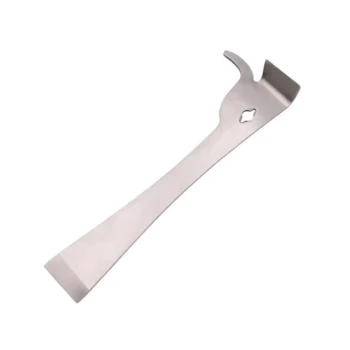
- Stainless Steel J Hook Hive Tool for Beekeeping
- Professional Multi-Function Stainless Steel Hive Tool
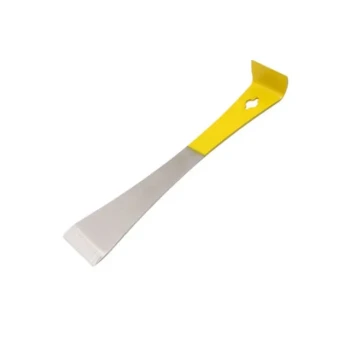
- HONESTBEE Classic Pry Bar Hive Tool with High Visibility Finish for Beekeeping
- Professional Stainless Steel Pry-Bar Hive Tool
- HONESTBEE Professional Long Handled Hive Tool with Precision Cutting Blade
People Also Ask
- What specific challenges do beekeeping hive tools address during hive maintenance? Essential Solutions for Apiaries
- What are the features of a J-hook hive tool? Effortlessly Lift Frames with Superior Leverage
- What is a J-hook hive tool and why is it favored by some beekeepers? Master Gentle Frame Handling
- What is the purpose of the J-hook hive tool? Effortlessly Lift Frames with Superior Leverage
- How is a J-hook hive tool designed and what is its primary use? Master Effortless Hive Inspections